Overview & Specifications
What Are Medicine Boxes?
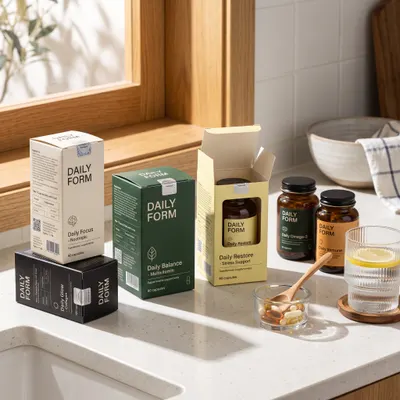
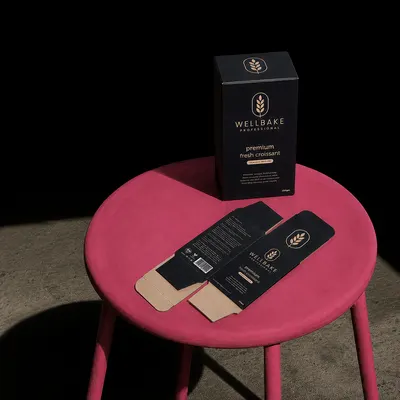
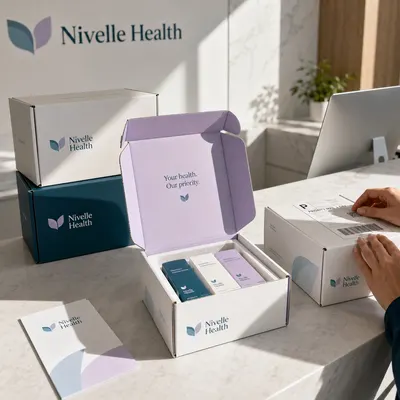
Medicine boxes are the printed outer cartons that hold a medicine's primary container. The bottle or blister keeps the product; the carton carries the information panels, organizes any leaflet and identifies the product on the shelf. For over-the-counter drugs sold in a carton, the Drug Facts label goes on the outside carton.
They are part of the Tuck Boxes range and Packaging Dock's Pharma Packaging.
What it has to do
What a Medicine Carton Has to Do
A medicine carton has to fit the primary container, carry the required label copy legibly, hold the leaflet, close in the way the product requires and keep each version's artwork under control. Each need below is matched to the option that meets it.
01
Fit
Fit the Primary Container
Bottles, blister cards, tubes and devices each need their own inside size. The carton is cut around the exact primary pack plus any leaflet, so the product neither rattles nor jams.02
Carry
Carry the Required Copy Legibly
When an OTC drug is sold in a carton, the Drug Facts label goes on that carton. Panels are sized for the approved copy at a readable type size before decoration is added.03
Hold
Hold the Leaflet or Insert
Patient leaflets and instructions need a place that does not crush the product. Leaflet space, partitions or a paperboard insert are planned with the inside size.04
Close
Close the Way the Product Requires
A tuck end opens and recloses; a glued Seal End stays shut until opened. FDA guidance states that glued end flaps alone do not meet the OTC tamper-resistant packaging requirements, so any tamper-evident feature is specified and validated separately.05
Keep
Keep Versions and Codes Controlled
Strengths, counts and markets each need their own approved artwork. Carton artwork is produced only from approved files, with space for lot and expiry codes where required.
Which Tuck Structure Fits a Medicine Box
Reverse Tuck and Seal End are the two carton structures used for medicine boxes. Choose by how the carton should close and how it is filled.
| Structure | How It Closes | Choose When |
|---|---|---|
| Reverse Tuck | Tucks on opposite sides, reclosable | The carton is opened and closed during use |
| Seal End | Glued end panels | The carton should stay closed until first opened |
Neither structure is tamper-evident on its own. For supplements see Supplement Packaging; for shipping cartons see Pharmaceutical Shipping Boxes.
Medicine Box Specifications
Medicine boxes are specified around the primary pack, the approved copy and the closure. Review the specifications below to plan the carton.
| Specification | Available Configuration |
|---|---|
| Product Type | Secondary folding carton for pharmaceutical and healthcare products |
| Category | Tuck Boxes |
| Structure | Reverse Tuck or Seal End, chosen by closure and filling process |
| Dimensions | Customized around the bottle, blister, tube, device and any leaflet |
| Board | Paperboard 14–18 pt, 20–24 pt or 26–28 pt; E/F-flute or B-flute corrugated |
| Closure | Reverse tuck or glued seal end; tamper-evident features specified and validated separately |
| Interior | Leaflet space, partitions, inserts or product supports where required |
| Production | Material, artwork, codes and closure requirements confirmed before manufacture |
| Inserts | Paperboard, foam/EVA or molded pulp |
| Print Coverage | Exterior only, exterior + interior, or full inside and outside |
| Print / Finishes | CMYK and Pantone spot color from approved artwork; finishes selected for readability of required copy |
| Starting Price | From $1.25 / unit; final price depends on size, board, print and quantity |
| Minimum Order | 500 units |
| Standard Production | 7 days from approved proof |
| Rush Production | Available on request |
| Shipping | Ships flat, USA and worldwide |
What Size Medicine Box Do I Need?
Size the carton from the primary pack and any leaflet, then add a fit allowance. Measure the actual bottle with its cap, or the blister card stack, rather than catalog dimensions. The Reverse Tuck sizing guide lists carton allowances.
| Primary Pack | What to Record |
|---|---|
| Bottle | Diameter and height with the cap |
| Blister cards | Card length, width and stack height for the card count |
| Tube | Length, crimp width and cap diameter |
| Leaflet | Folded leaflet size and thickness |
Check With the Filled Primary Pack
Pack a filled bottle or the full blister stack with its leaflet, then close the carton. Check fit, copy legibility and code position.
What to Check Before Bulk Production
Review a packed sample with the final primary pack, leaflet and approved artwork. Record the approved size, closure and code area on the signed-off sample.
| If the sample shows | Review before approval |
|---|---|
| Required copy crowded or small | Enlarge the carton panel or move secondary copy |
| Leaflet crushes the product | Add leaflet space or an insert |
| No space for lot and expiry codes | Reserve a code area on an end or side panel |
| Tamper evidence needed | Specify a separate feature and validate it |
Seven days covers standard production from approved proof once the specification is confirmed; delivery timing is confirmed separately.