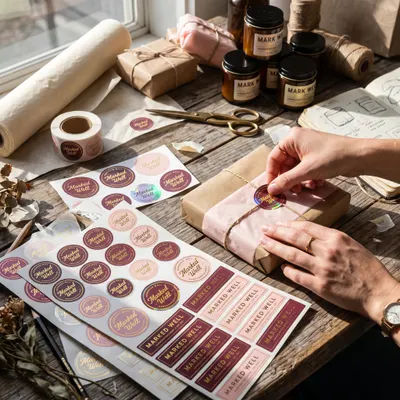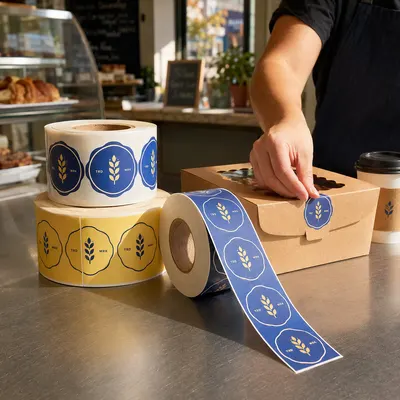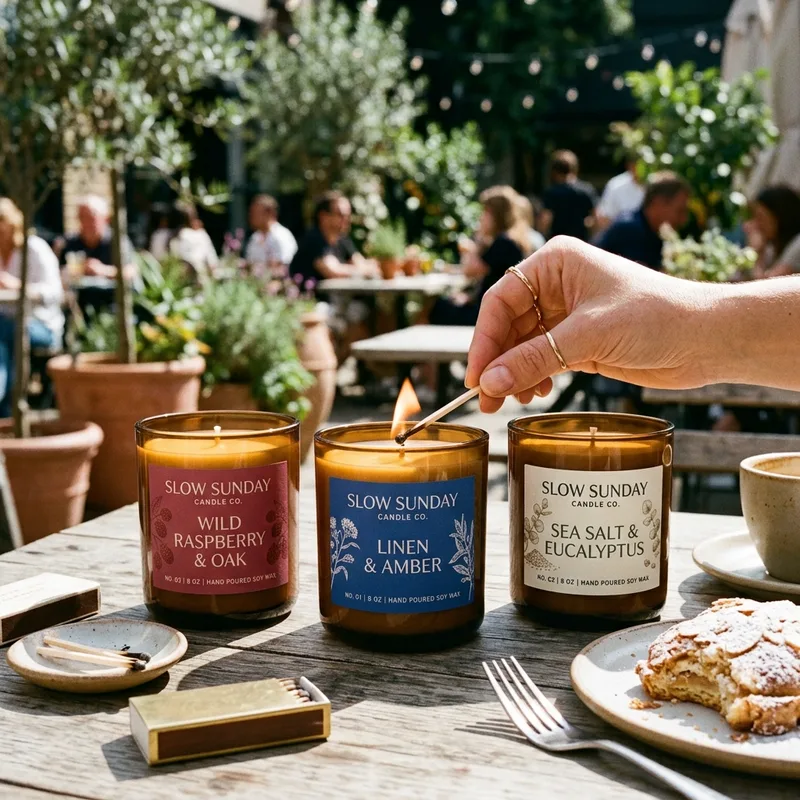
Overview & Specifications
What Are Candle Labels?
Candle labels go on the vessel: a front label for the brand and scent, and often a base or side label for warnings, weight and burn instructions. The vessel's shape and surface decide the material and adhesive.
Candle Labels sit in the Labels & Stickers range and under Candle Packaging.
What it has to do
What Candle Labels Need to Get Right
Candle labels need a fit to the vessel's shape, an adhesive for its surface, room for warning copy and a material that suits handling. Each need below is matched to the option that meets it.
01
Fit
A Fit to the Vessel Shape
Straight-sided jars take wraparound labels; tapered vessels need a curved label shape.02
Adhesive
An Adhesive for the Surface
Glass, tin and ceramic each take adhesive differently. Samples are tested on the vessel.03
Room
Room for Warning Copy
Burn warnings, weight and instructions often sit on a base or back label; the brand supplies and approves the copy.04
Material
A Material for Handling
Paper for a matte look; film or clear where the label is handled or wiped.
Front Labels vs Warning Labels
Most candles carry two labels: a front label for brand and scent, and a warning label for safety copy. The table compares the two.
| Attribute | Front Label | Warning Label |
|---|---|---|
| Position | Front or wrap | Base or back |
| Content | Brand, scent, design | Warnings, weight, burn instructions |
| Material | Paper, film, clear or foil | Paper or film |
| Copy | Brand artwork | Supplied and approved by the brand |
Candle Labels Specifications
Candle Labels are specified around the surface, the material, the adhesive and the format. Review the specifications below to plan the label.
| Specification | Available Configuration |
|---|---|
| Product Type | Labels for candle jars, tins and vessels |
| Category | Labels & Stickers |
| Format | Roll, sheet or individual stickers, by application method |
| Dimensions | Custom width × height and shape |
| Material | SBS, kraft, metallic, holographic, pearlescent or textured paper; PET, vinyl/PVC or BOPP film; clear and foil options |
| Adhesive | Permanent or removable, matched to the surface |
| Surfaces | Glass, tin, ceramic and validated alternatives |
| Use Conditions | Material, print and adhesive confirmed for expected vessel temperatures and use |
| Warning Copy | Content and placement approved by the brand |
| Print Methods | Offset, digital, UV, screen or flexographic printing; full-color CMYK, spot color, white ink plus color |
| Coatings and Finishes | Matte, gloss or soft-touch lamination, aqueous coating, foil stamping, emboss/deboss, Spot UV and raised 3D UV |
| Starting Price | From $1.25 / unit; final price depends on size, material, print, finishes and quantity |
| Minimum Order | 500 units |
| Standard Production | 7 days from approved proof |
| Rush Production | Available on request |
| Shipping | USA and worldwide |
How Do You Size a Candle Label?
Measure the label area on the vessel: height of the straight section and circumference for a wrap. Tapered vessels need a curved template. Size is set on the approved proof.
| Measurement | What to Record |
|---|---|
| Vessel | Jar, tin or ceramic |
| Label area | Height and circumference |
| Shape | Straight or curved for tapers |
| Labels | Front, warning or both |
Apply a Sample to the Vessel
Apply samples to a filled, cured candle and check the wrap, edges and warning legibility. Confirm label material, print and adhesive for expected vessel temperatures and use conditions. The brand approves warning content and placement.
What to Check Before Bulk Production
Review samples on the real vessel. Record the approved size, shape, material and adhesive on the signed-off proof. Bulk production starts after that sign-off.
| If the sample shows | Review before approval |
|---|---|
| Wrap label wrinkles on a taper | Review label shape on a curved template |
| Edges lift | Review adhesive on the vessel |
| Warning copy too small | Enlarge type or label |
| Label scuffs | Review lamination |
Seven days covers standard production from approved proof once the specification is confirmed; delivery timing is confirmed separately.