Overview & Specifications
What Are Food Packaging Bags?
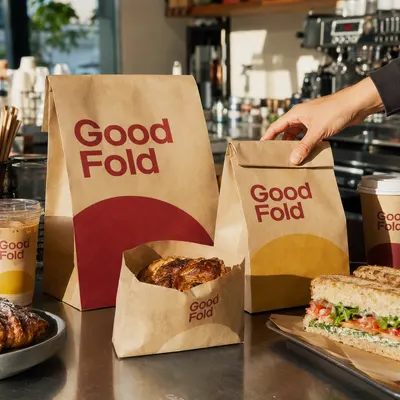
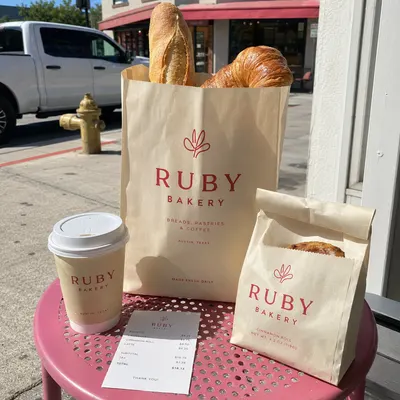
Food packaging bags are the paper bags a food product is sold in. The brand fills the bag, closes it and puts it on the shelf, at a market stall or in an online order, so the printed bag is the product's packaging, not a carry bag for an order.
Food Packaging Bags sit in the Paper Bags range and under Food & Beverage Packaging, as Custom Flat Paper Bags or gusseted flat-bottom bags.
What it has to do
What a Packaged Food Needs from a Paper Bag
A food packaging bag holds one product, is closed after filling and sits on a shelf with the brand facing out. Each need below is matched to how it is met.
01
Shape
The Right Shape for the Product
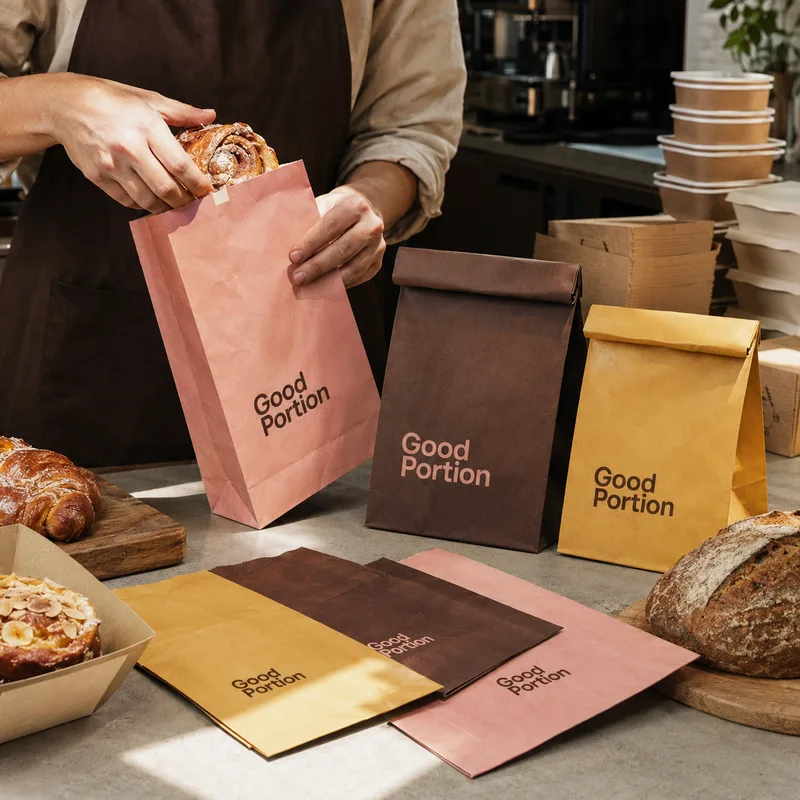
Flat bags suit cookies, snacks and light items. Flat-bottom bags with side gussets are built to stand and hold more, for larger packs where the paper suits the food.02
Closure
A Closure That Fits the Packing
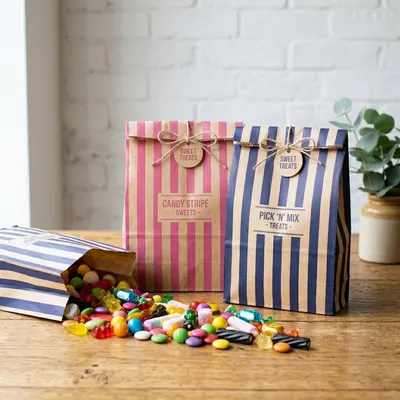
A fold-top is folded over after filling. A tin tie lets the customer fold the top closed again; it is not an airtight seal. A sticker seal closes the fold and carries the brand.03
Paper
Paper Checked for the Food
Dry foods touch the paper directly. Food-contact paper is available on request, and the paper, inks, adhesives, any paperboard bottom insert and the closure components (tin tie or sticker seal) are checked for the food type, contact time and temperature, including possible migration. Plain paper is not a moisture, air or grease barrier, so it suits only foods whose storage needs it meets; foods that need a barrier belong in Food Safe Mylar Bags. Grease resistance depends on the paper.04
Room
Room for Product Information
The front carries the brand and product name. The back and gussets carry ingredients, net weight and other required labeling, which the brand supplies and confirms.
Food Packaging Bags vs Paper Food Bags
Choose food packaging bags for a product you fill and sell; choose paper food bags for takeout and restaurant orders carried away. The table compares them.
| Attribute | Food Packaging Bags | Paper Food Bags |
|---|---|---|
| Job | The product's own packaging | Carry bag for an order |
| Filled by | The food brand, before sale | Staff, at the counter |
| Closure | Fold-top, tin tie or sticker | Usually open or folded |
| Printed with | Brand, product name, required labeling | Brand and menu panels |
| Page | This page | Paper Food Bags |
Food Packaging Bags Specifications
Food Packaging Bags are specified around the product, the paper, the bag format and the closure. Review the specifications below to plan the bag.
| Specification | Available Configuration |
|---|---|
| Product Type | Paper food packaging bag |
| Category | Paper Bags |
| Formats | Custom Flat Paper Bags, or flat-bottom bags with side gussets |
| Construction | Paper only; no liner or film layer |
| Dimensions | Custom width × gusset × height, built around the product and fill |
| Paper | Standard kraft, grease-resistant paper or white art paper |
| Paper Weight | About 50–150 gsm, matched to the fill weight |
| Closures | Fold-top, tin tie or sticker seal |
| Add-ons | Open die-cut window (no film), paperboard bottom insert, optional handles |
| Food Contact | Food-contact paper available on request; paper, inks, adhesives, bottom insert and closure components (tin tie, sticker seal) checked for the food type, contact time and temperature, including possible migration |
| Barrier | None; plain paper is not a moisture, air or grease barrier. Suitability confirmed against the food's storage needs |
| Labeling | Ingredients, net weight and required labeling supplied and confirmed by the brand |
| Print Methods | Offset, digital, screen or flexographic printing; CMYK and Pantone spot colors |
| Finishes | Uncoated printed paper; emboss/deboss according to the paper |
| Starting Price | From $1.25 / unit; final price depends on size, paper, closure, print, finishes and quantity |
| Minimum Order | 500 units |
| Standard Turnaround | 7 days from proof approval |
| Rush Turnaround | Available on request |
| Shipping | Ships flat, USA and worldwide |
What Size Food Packaging Bag Do I Need?
Size the bag to the product and the fill weight, plus room for the closure. Final dimensions are set on the approved dieline.
| Measurement | What to Record |
|---|---|
| Product | Item size, or volume and weight of the fill |
| Format | Flat, or flat-bottom with gussets |
| Closure | Fold-top, tin tie or sticker, and how far the top folds |
| Panels | Space needed for labeling |
Fill a Sample
Fill a sample with the real product and close it as you will in production. Check that it closes cleanly and a flat-bottom bag stands.
What to Check Before Bulk Production
Review a sample filled with the real product and printed with the final artwork. Record the approved paper, format and closure on the signed-off sample. Where a sample shows a problem, review the cause, revise the specification and confirm it on another filled sample.
| If the sample shows | Cause to review |
|---|---|
| Oil marks the paper | Paper against the food, contact time and temperature; barrier format if the food needs one |
| Flat-bottom bag does not stand | Gusset size, fill level and bottom insert |
| Top will not fold closed | Bag height against the fill |
| Tin tie misaligned | Tie position on the dieline |
Standard turnaround is 7 days from proof approval, and US shipping typically takes 3–7 business days after dispatch.