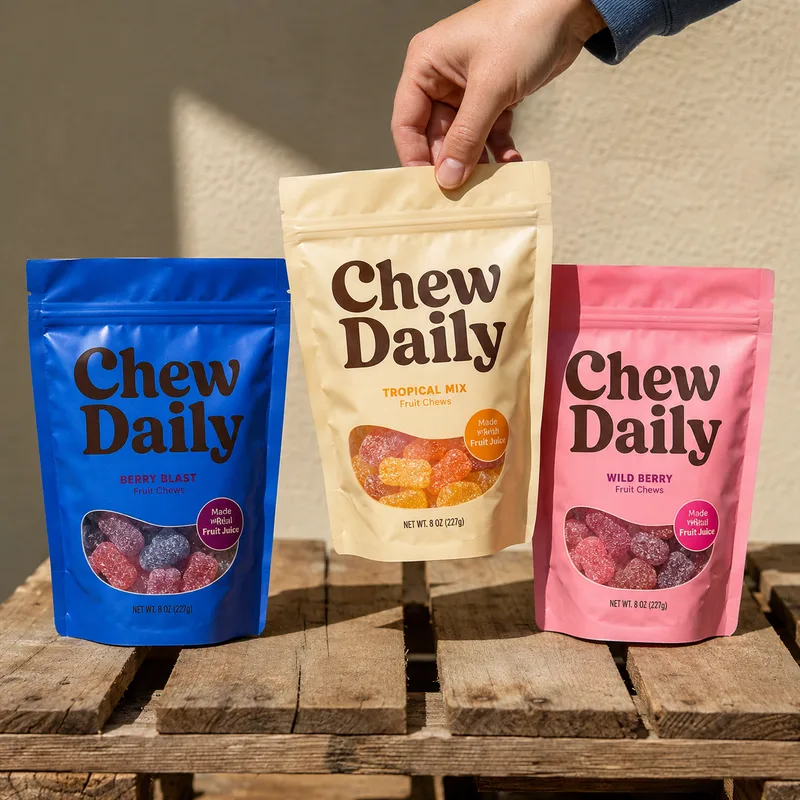
Food-Safe Mylar Bags
Barrier pouches in Stand Up, Flat Bottom, 3 Side Seal, Spout or Back Seal, with components selected for the food.
From $1.25/unit
14 answers →Packaging Guides/Food & Beverage
Packaging GuideWhy oil marks a paper bag, snacks go stale or labels peel off chilled packs, which pouch, bag, box or carrier suits each food, what food contact really covers and what a US food label needs. Each answer gives the cause first, then the packaging that solves it.
Which Food Bag, Pouch or Box Do You Need?Browse food & beverage packaging →
Each answer below is linked to the product it applies to. Pick a product to see its answers, open its page for sizes and pricing, or compare the full food & beverage packaging range.
Barrier pouches in Stand Up, Flat Bottom, 3 Side Seal, Spout or Back Seal, with components selected for the food.
From $1.25/unit
14 answers →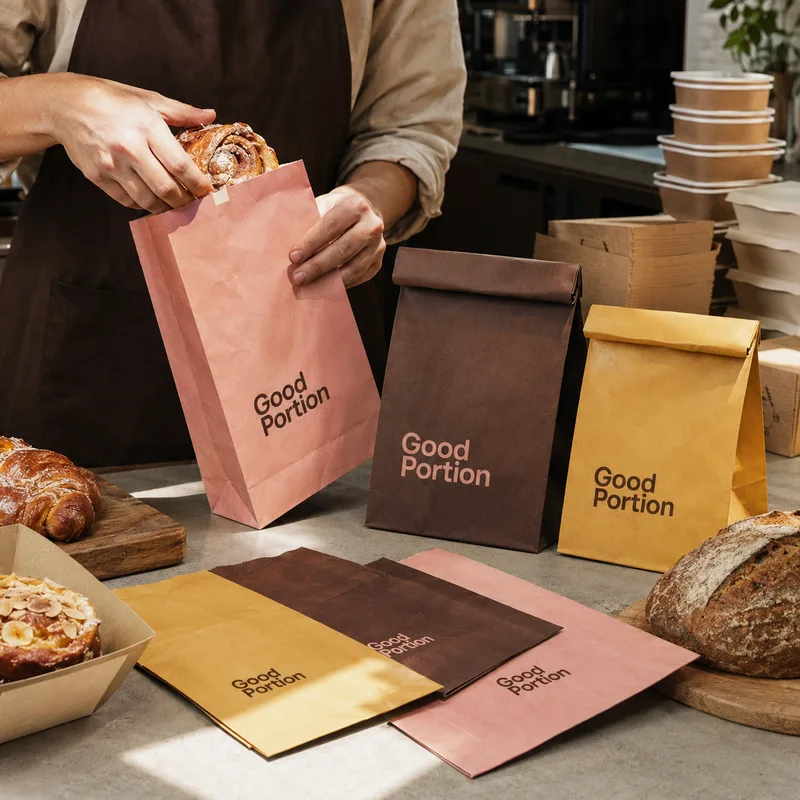
Paper-only retail bags, flat or flat-bottom, closed with a fold-top, tin tie or sticker.
From $1.25/unit
12 answers →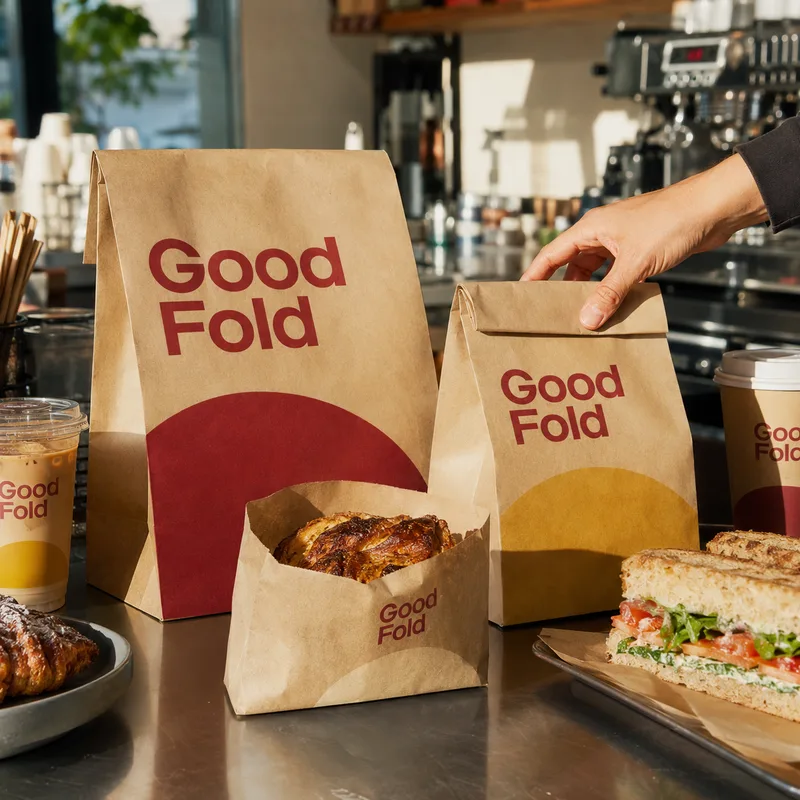
Flat, gusseted or tote bags for takeout and counter orders.
From $0.76/unit
6 answers →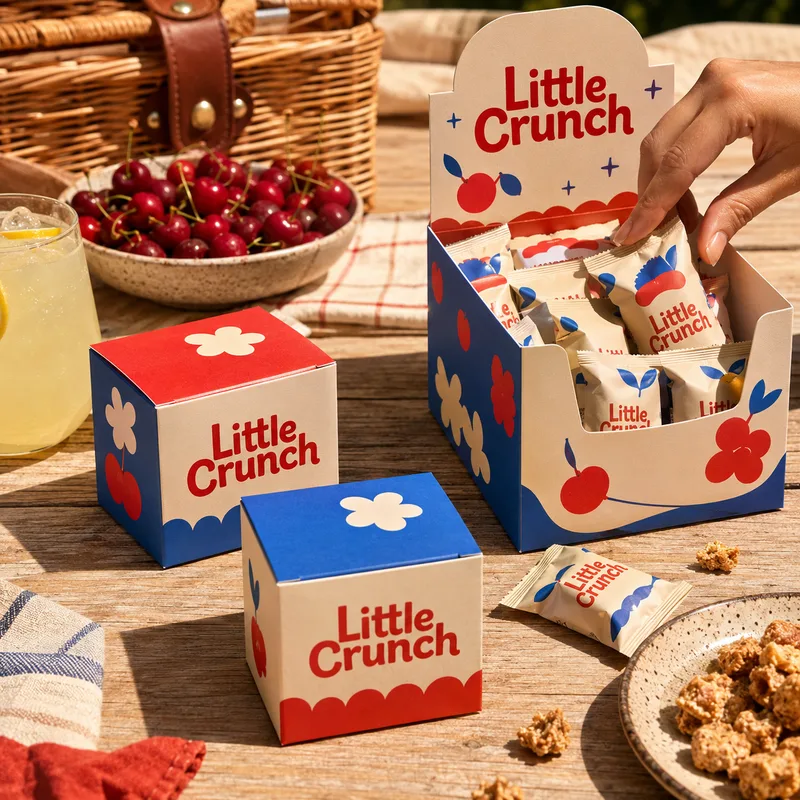
Retail cartons sized to wrapped bars and snack packs, with a wide front panel.
From $0.81/unit
3 answers →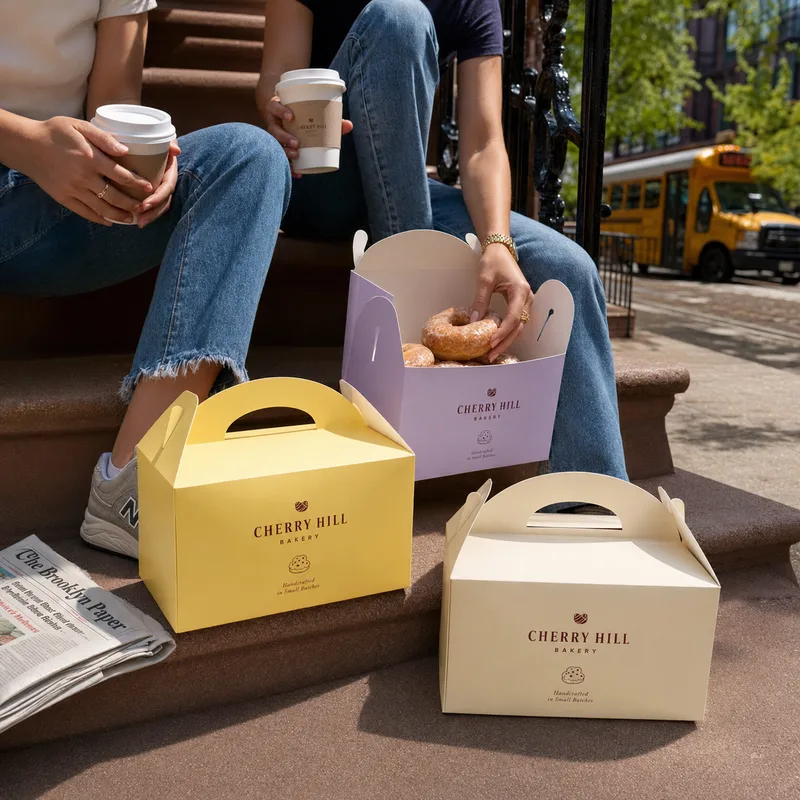
Open a problem to see why it happens and how to fix it.
Why it happensPlain paper fibers draw oil in; the hotter and oilier the food and the longer it sits in the bag, the further the mark spreads.
How to fix itChoose paper for the food, contact time and temperature, such as a grease-resistant grade, or move to a barrier format.
Why it happensPaper and board let moisture and oxygen through, so crisp snacks absorb humidity and fats oxidize.
How to fix itUse a barrier pouch with the film and sealant chosen for the food, sealed after filling.
Why it happensWithout dividers, containers have room to slide and tip when the box is carried by the handle.
How to fix itAdd a divider or insert sized to the containers.
Why it happensThe carton height was set below the tallest container with its lid.
How to fix itSize height to the tallest container with lid, checked on a packed sample.
Why it happensThe base only opens square when the gusset is fully formed and the fill sits low and evenly.
How to fix itReview the gusset, fill level and any bottom insert, and test with your actual fill.
Why it happensCondensation forms a film of water between a standard adhesive and the pack, so it can't bond properly.
How to fix itUse film with a cold-temperature adhesive and test it on the chilled pack.
Why it happensA pouch flexes as it's handled; paper can't bend with the film, so it creases and lifts at the edges.
How to fix itUse a film label with an adhesive for the pouch film.
Dry foods that must stay fresh need a barrier pouch. Bakery-style and dry goods sold by the bag can use a paper food packaging bag. Counter orders go in paper food bags or a gable box with dividers. Wrapped bars and snack multi-packs suit a snack box.
| Food | Packaging |
|---|---|
| Dry foods needing a barrier | Food-Safe Mylar Bags |
| Dry goods sold in their own paper bag | Food Packaging Bags |
| Counter and takeout orders | Paper Food Bags |
| Wrapped bars, snack packs, multi-packs | Custom Snack Boxes |
| Takeout meals, boxed lunches, snack kits | Food Gable Boxes |
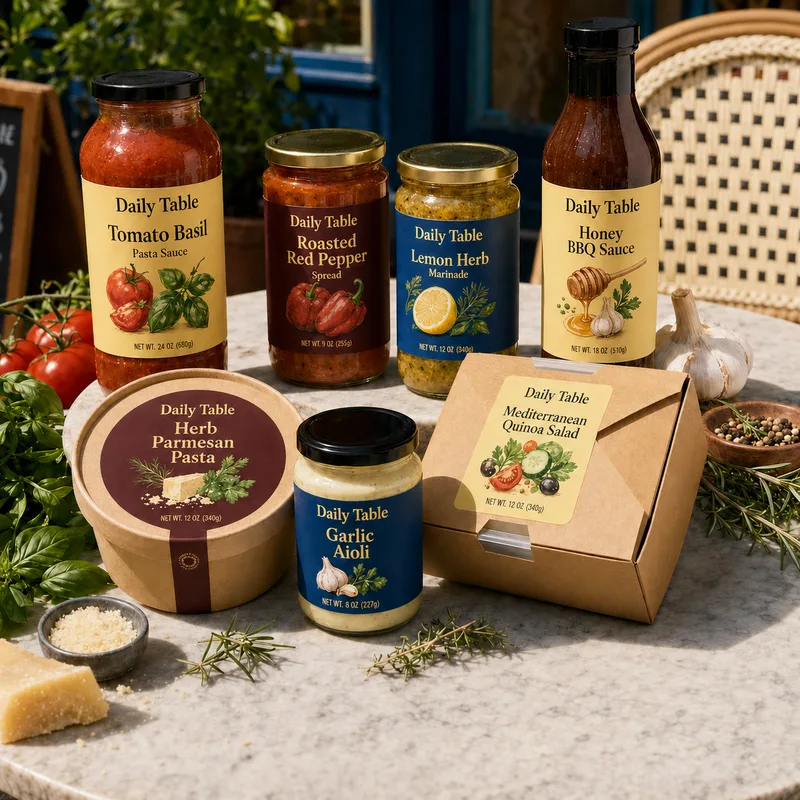
| Jars, tubs, bottles, pouches, boxes | Custom Food Labels |
From $0.76 per unit.
Packaging types: Mylar bags for foods that need a moisture, oxygen or aroma barrier · Paper bags for bakery-style and counter goods · Gable boxes for carry-out with a handle · Labels & Stickers for ingredient and seal labels.
Paper and paperboard protect shape and presentation but are not moisture, air or grease barriers. Foods that go stale, absorb moisture, oxidize or lose aroma need a barrier pouch, with the film and sealant chosen for the food. Paper suits bakery-style goods, counter orders and foods packed inside their own wrap.
| Food-Safe Mylar Bag | Food Packaging Bag (paper) | Snack Box | |
|---|---|---|---|
| Barrier | Moisture, oxygen, aroma, light, grease by film | None | None |
| Closure | Heat seal, zipper | Fold-top, tin tie or sticker | Tuck end |
| Best for | Dry foods needing shelf life | Product sold in paper | Wrapped bars, multi-packs |
Structure detailMylar Bags guide →Paper Bags guide →
It means every surface that touches the food (board, paper or film, coatings, inks, adhesives, inserts, window film and closures) is confirmed for that food type, contact time and temperature, including possible migration. Food-contact materials are available on request, and applicable documentation is arranged per order.
Note: We make no general "free of" claim (such as BPA- or PFAS-free); material requirements are confirmed per project.
Packaged food labels generally need a statement of identity and net quantity on the principal display panel, an ingredient list in descending order by weight, the major food allergens declared, the name and place of business, and Nutrition Facts unless an exemption applies. The brand supplies and owns the label data.
Note: Check FDA rules for your product. Labels: Custom Food Labels.
Send the food, its storage (pantry, chilled or frozen), whether it touches the packaging, the fill and the label area. Quotes typically come back within 24 hours; orders dispatch 7 days after proof approval, plus shipping time, with rush available, and orders start at 500 units.
Have these seven answers ready and your quote starts from the right specification. To compare every product side by side, see the food packaging range.
Packaging Dock makes custom food packaging to order from 500 units and ships across the USA and worldwide. These are the questions food brands, restaurants and makers ask most. Everything is on the food and beverage packaging page.
No answers for this product in this topic.
It depends on the food. Dry foods that go stale need a barrier pouch. Dry goods sold in paper use a printed food packaging bag. Counter and takeout orders use paper food bags or a gable box with dividers. Wrapped bars and multi-packs use a snack box. Every pack needs a label with the required food data.
Packaging made to your food’s size, fill and storage, printed with your brand: barrier pouches, paper bags, snack boxes, gable boxes and labels, with food-contact materials available on request.
Food-safe Mylar bags, food packaging bags, paper food bags, snack boxes, food gable boxes and food labels all start from $0.76 per unit. Every order is made to your specification and priced by quantity.
What does 500 cost? From $380.00 for 500 units at the starting price.
500 units, with a standard turnaround of 7 days from proof approval to dispatch, plus shipping time and rush turnaround available on request.
Yes. Count the per-unit packaging price, labels and any inner pack in your cost per item, so the price covers what the customer takes home.
It means every surface that touches the food (board, paper or film, coatings, inks, adhesives, inserts, window film and closures) is confirmed for that food type, contact time and temperature, including possible migration. Food-contact materials are available on request and documentation is arranged per order.
There’s no blanket “FDA approved” status for a finished package. Food-contact substances are used under applicable regulatory pathways and conditions of use, and we confirm materials per order for your food.
We make no general “free of” claim. Material requirements are confirmed per project for the food and the market you sell in.
Only where the print, inks and coatings on that surface are confirmed for the food and conditions. Most food touches an unprinted inner layer or its own wrap.
That’s a food-safety question about the food itself, not the packaging. Follow the date and storage guidance for the product.
Paper and paperboard protect shape and presentation but aren’t moisture, air or grease barriers. Foods that go stale, absorb moisture, oxidize or lose aroma need a barrier pouch with film and sealant chosen for the food. Paper suits counter orders and foods eaten soon.
Use a barrier pouch chosen for what the food is sensitive to (moisture, oxygen, aroma, light, grease), seal it reliably, and add a zipper for multi-use packs. We give no shelf-life figure; it depends on the food, barrier, seal and storage.
Paper lets aroma compounds pass through it. A sealed barrier pouch holds strong smells in and keeps others out, as long as the seal stays intact.
Product in the seal area, the wrong sealing temperature or a sealant that doesn’t suit the food. Wipe the seal area and use a heat sealer set for the film; a zipper recloses but the first seal is heat.
Yes. Food-safe Mylar bags take zippers, tear notches and hang holes according to the format.
Yes. Vacuum seal Mylar bags are printed barrier pouches developed around your vacuum equipment, product and seal requirements.
Warm food releases steam; once the pack is closed, it condenses on the cooler inside surface. For ordinary carry-out and bakery-style packs, let food cool before closing. Hot-filling or sealing food warm is a controlled process with its own food-safety requirements for that food, not a matter of packing faster.
3 Side Seal pouches suit single portions and small spice fills; Stand Up pouches with a zipper suit retail packs. Dry grains, rice and beans suit Flat Bottom bags. Paper suits spices only where the food’s storage needs allow it.
In a Stand Up pouch with a zipper and a film chosen for moisture, oxygen and grease. A window shows the product but lets in light.
A barrier pouch for loose granola, a snack box for wrapped bars, or a paper bag for baked snacks eaten soon.
Pouches are used for refrigerated or frozen products only when the complete structure is developed and validated for those conditions. Labels for chilled or frozen packs use film with an adhesive chosen for cold.
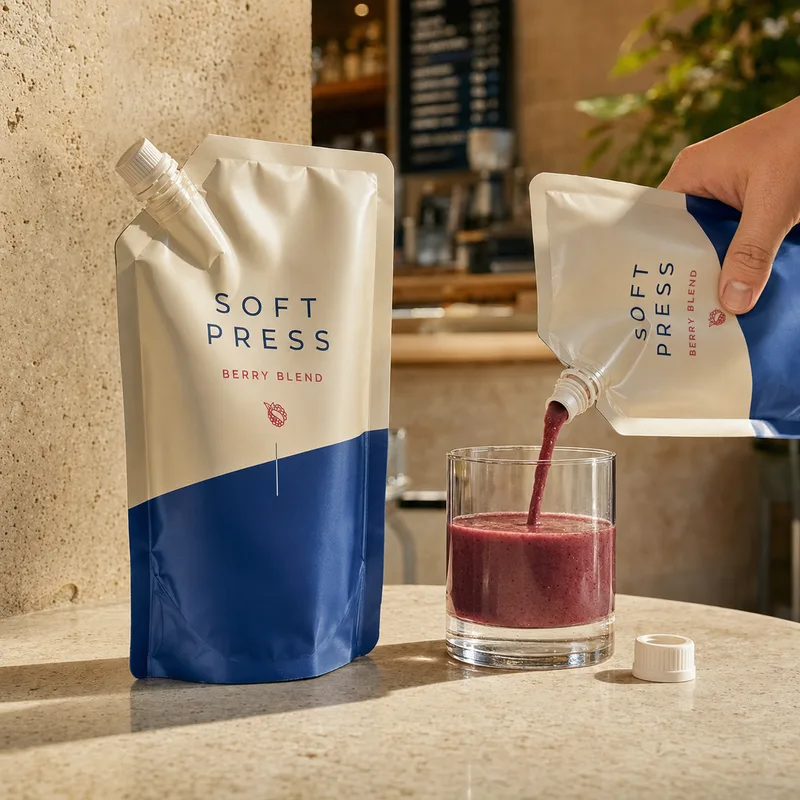
Spout pouches pour or dispense sauces, purées and drinks through a fitment and cap, once film, spout and cap are validated for the product. Paper bags and boxes aren’t leak-proof.
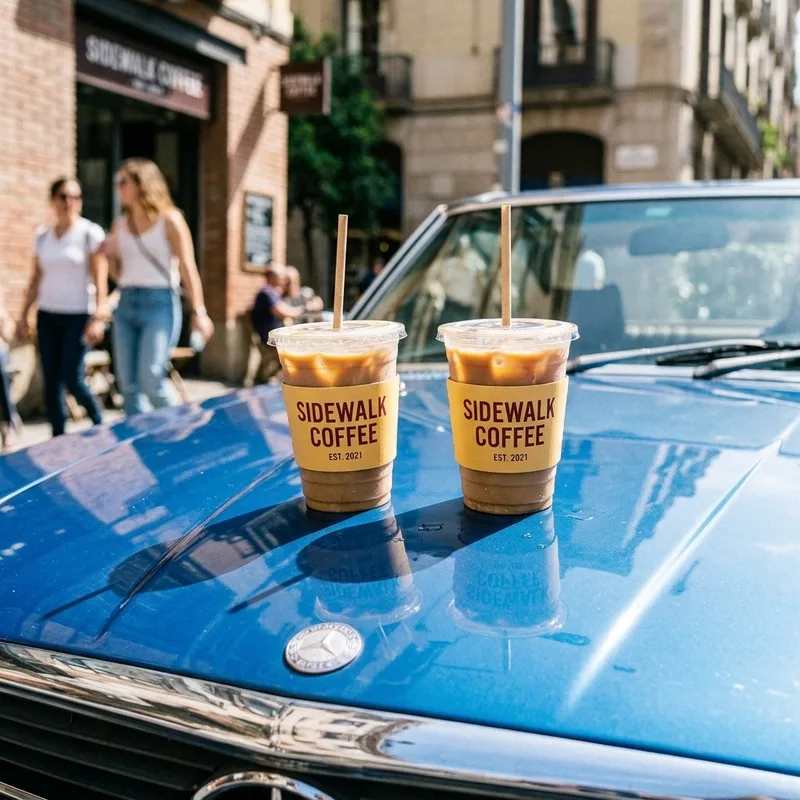
No. We print labels for bottles and make cup sleeves for drinks.
Yes, from $0.30 per unit, sized to the cup’s diameter, taper and sleeve height, in paperboard or E/F-flute corrugated.
A snack box stands with a wide front and recloses with a tuck, for wrapped bars, multi-packs and party or kids’ snack packs. A pouch suits loose snacks and single servings, with a zipper where specified.
3 Side Seal pouches for single portions; Stand Up and Flat Bottom bags for family and bulk sizes. Plan sizes by fill weight and confirm with a trial fill.
Paper food bags (flat, gusseted or tote) for counter orders, and food gable boxes with dividers for meals, boxed lunches and snack kits. Paper is chosen for the food, temperature and steam.
Yes. Food gable boxes have a built-in handle and are sized around the containers, dividers and packed weight, in Auto Lock, Interlock or Seal End bases.
We make no microwave or oven-safe claim. The gable carton isn’t described as heat-proof; hot food goes in a suitable inner container.
No. Liquids need their own sealed container. Leaks come from the inner container, not the carry bag or box.
Paper bags and gable boxes are single-use carry packaging; we make no reuse claim.
Packaging Dock makes paper food bags only, not plastic food bags.
Plain paper and board absorb oil. Choose grease-resistant paper or a grease-resistant coating, or a barrier format, for the food, contact time and temperature.
A statement of identity and net quantity on the principal display panel, ingredients in descending order by weight (every ingredient), the major allergens declared, the name and place of business, and Nutrition Facts unless an exemption applies.
Milk, eggs, fish, shellfish, tree nuts, peanuts, wheat, soybeans and sesame.
Unless a small-business or other exemption applies. On small packs, plan the panel’s space before artwork. The brand supplies and is responsible for the nutrition data; we print it.
A printed bag carries everything in one piece. A plain pack with a label per product is the lower-cost way to start a range, and labels change with recipes without reprinting bags.
Measure the label area on the jar, pouch or box: width and height, or the wrap. Labels are cut to a custom width, height and shape.
The adhesive wasn’t chosen for cold, damp surfaces. Use film with an adhesive chosen and tested for cold.
No. Required items and formats differ, so label each market to its own rules.
Pick the format by the food’s needs, then design for the shelf: a kraft look for natural foods, a window for snacks that sell on sight, flavor colors across a range. Each order gets a custom dieline, free design support and a proof.
A window shows the food but gives less light protection than an opaque or metallized panel. Food packaging bags take an open die-cut window with no film to stay paper only.
Markets suit paper bags and labeled pouches; retail shelves suit standing pouches or snack boxes with full label panels and barcodes.
Paper and board mostly are, depending on finishes, but many programs reject food-soiled board; check local rules. Multi-layer pouches depend on the film construction.
We don’t publish an industry figure. We state what each of our products is made of.
The food, its storage (pantry, chilled or frozen), whether it touches the packaging, the fill weight and the label area.
Yes. A pre-production sample can be arranged when the project needs physical approval before the full run, so you can trial-fill it with your food.
Ready to put it together?
Answer a few questions and get a packaging setup with the reason for every choice, or browse every food & beverage product.