Packaging Guide
Mylar Bags Packaging Guide
Why a pouch tips over, a seal pulls open or a bag looks half empty, which of five formats and four films suit your product, how to size by volume and how to seal and validate a pouch. Each answer gives the cause first, then the pouch that solves it.
In this guide
Products This Guide Covers
Each answer below is linked to the product it applies to. Pick a product to see its answers, open its page for sizes and pricing, or compare the full mylar bags packaging range.
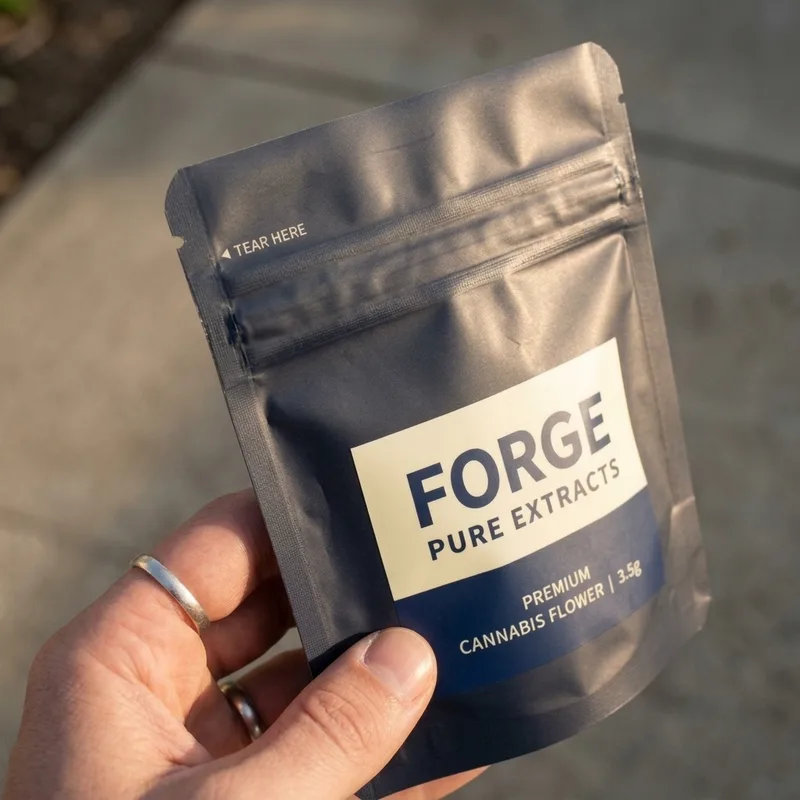
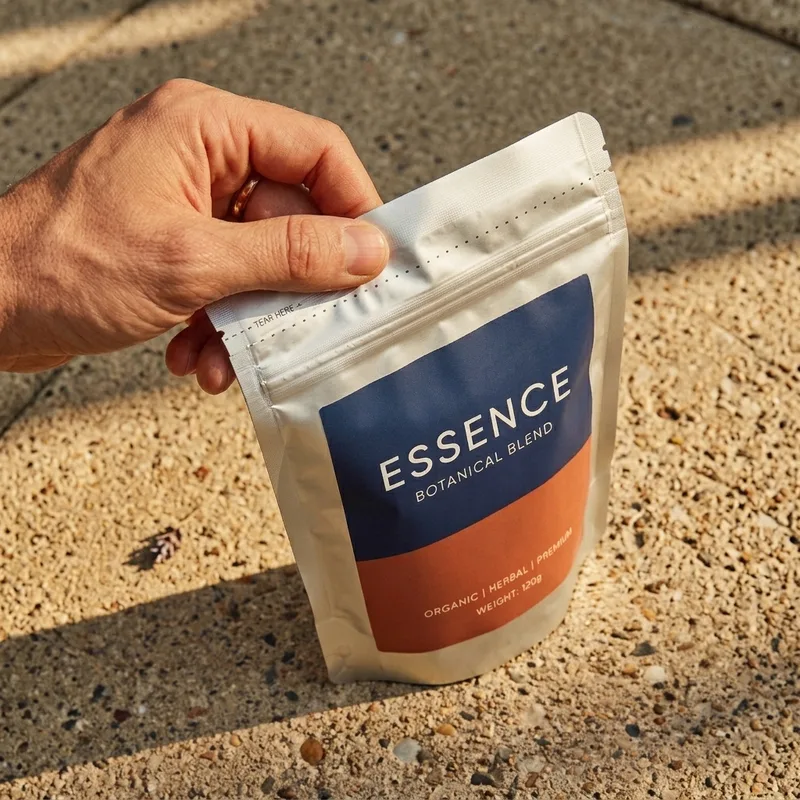
3 Side Seal Pouch
Slim flat pouch with two clean faces, up to about 1 kg.
From $0.51/unit
6 answers →
Back Seal Bag
Rear seam with top and bottom seals, for form-fill-seal lines.
From $0.57/unit
6 answers →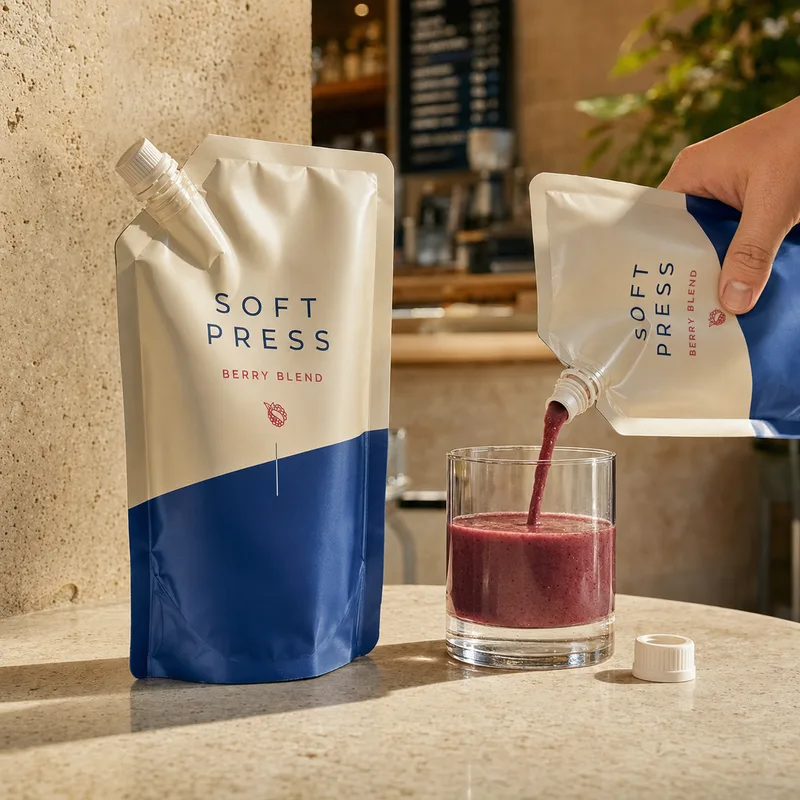
Child-Resistant Mylar Bags
CR zipper on Stand Up or 3 Side Seal; tested on the finished package.
From $0.65/unit
3 answers →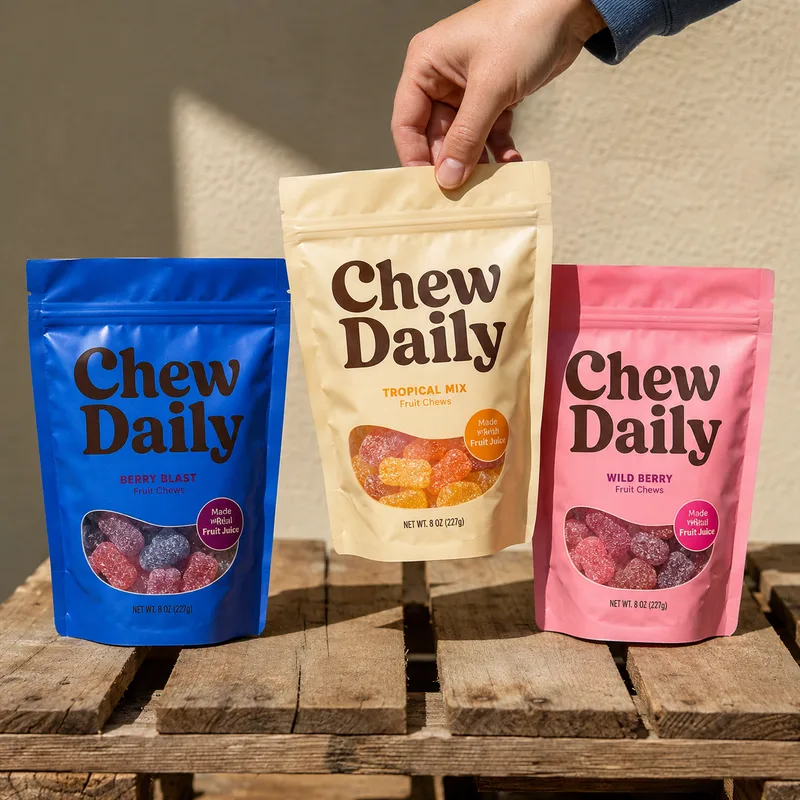
Food Safe Mylar Bags
Materials specified for the food; documentation arranged per order.
From $1.25/unit
3 answers →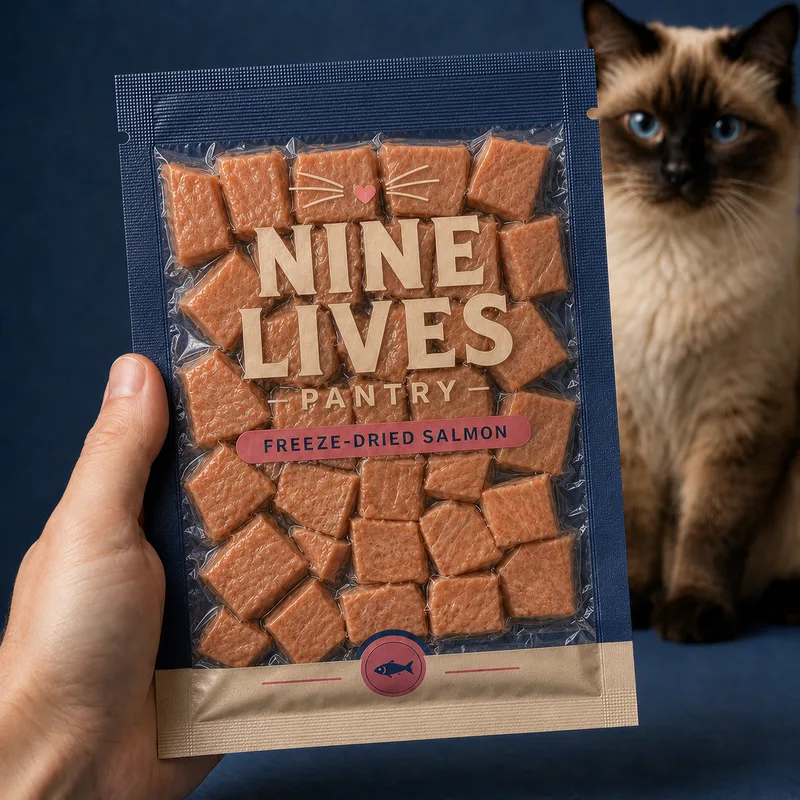
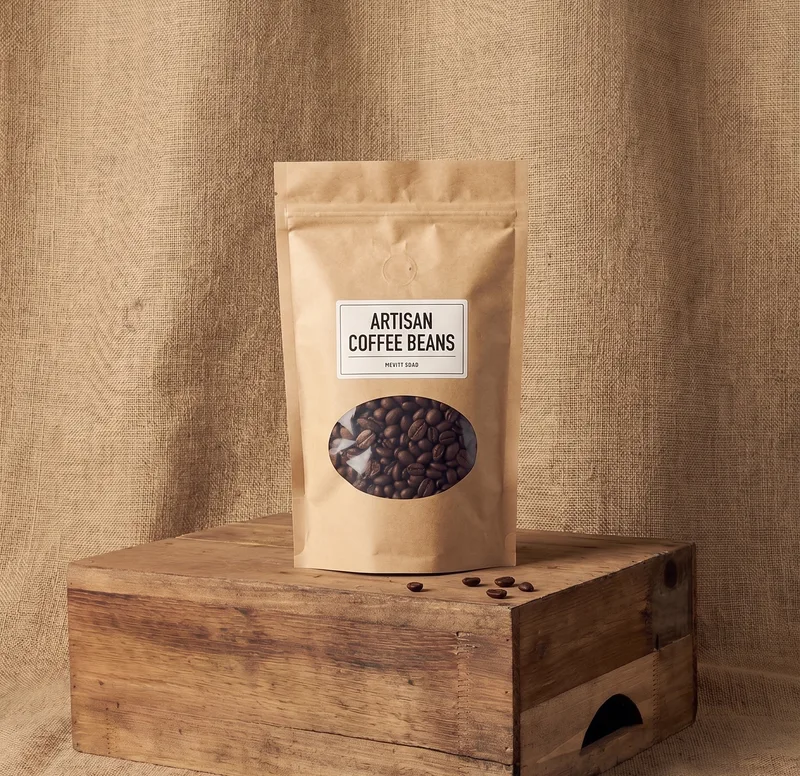
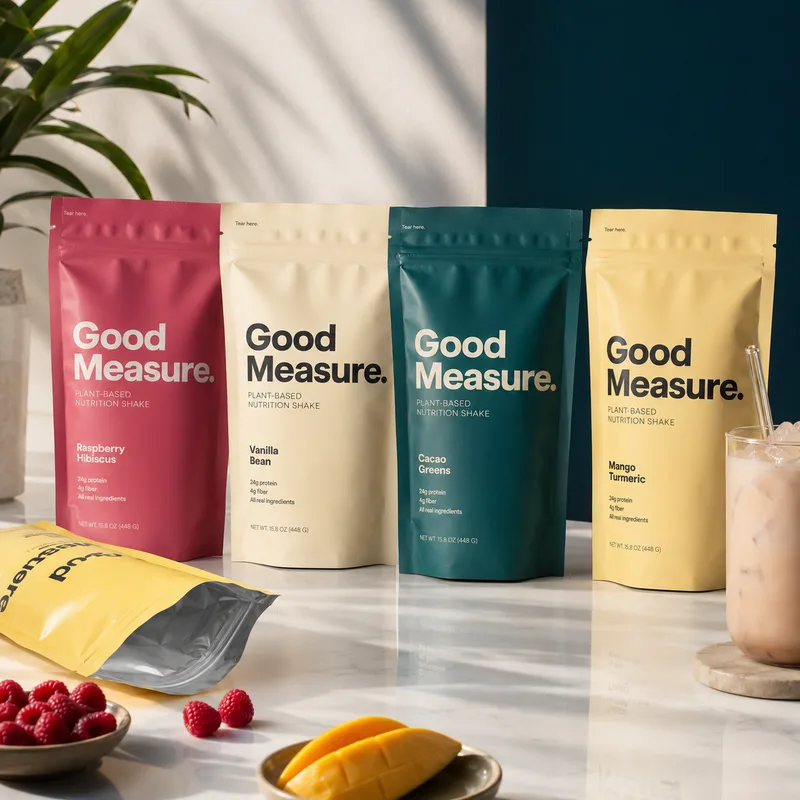
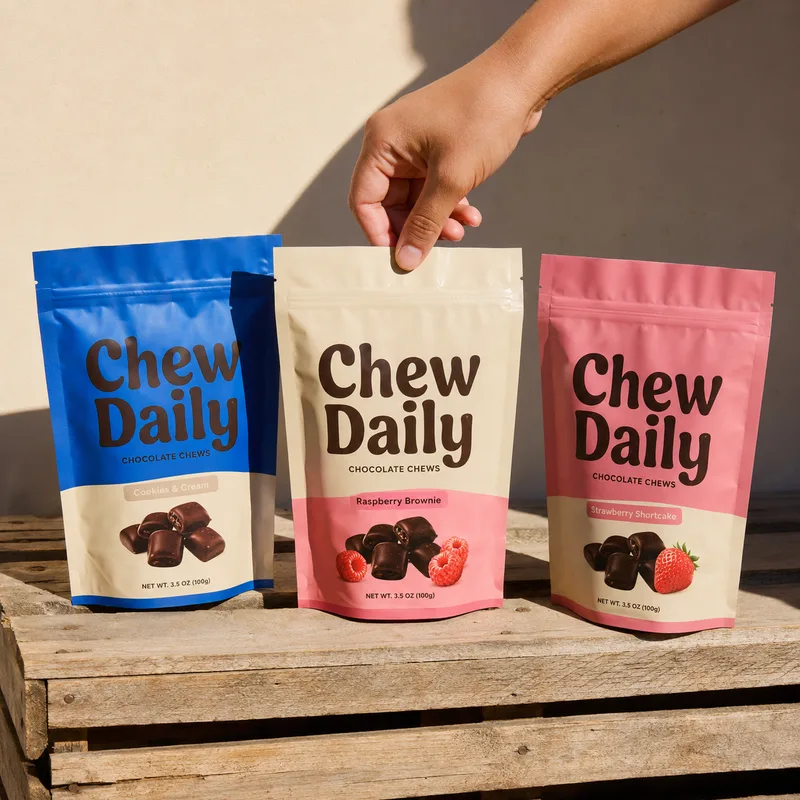
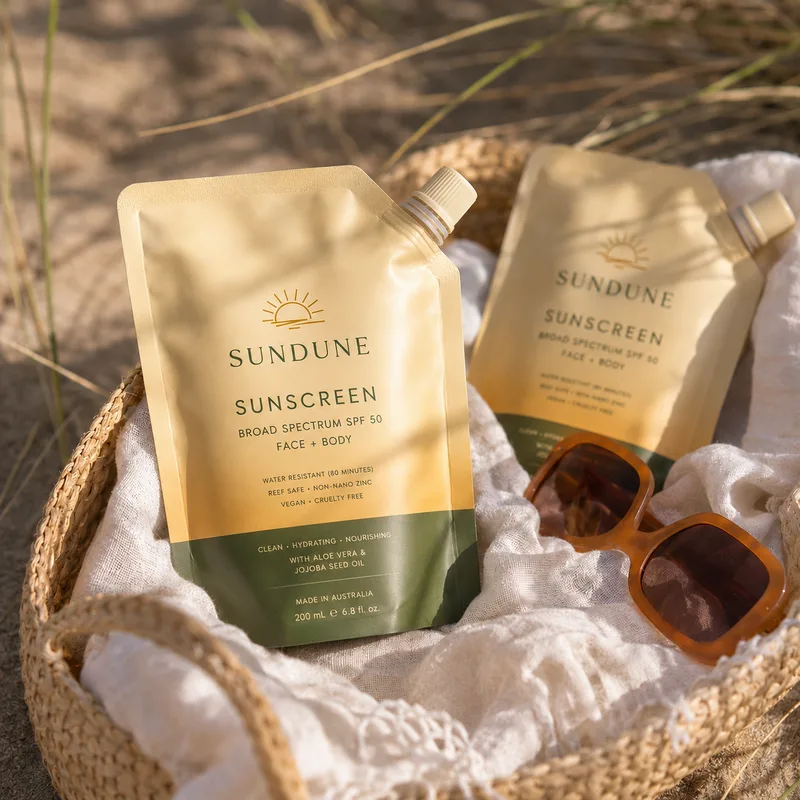
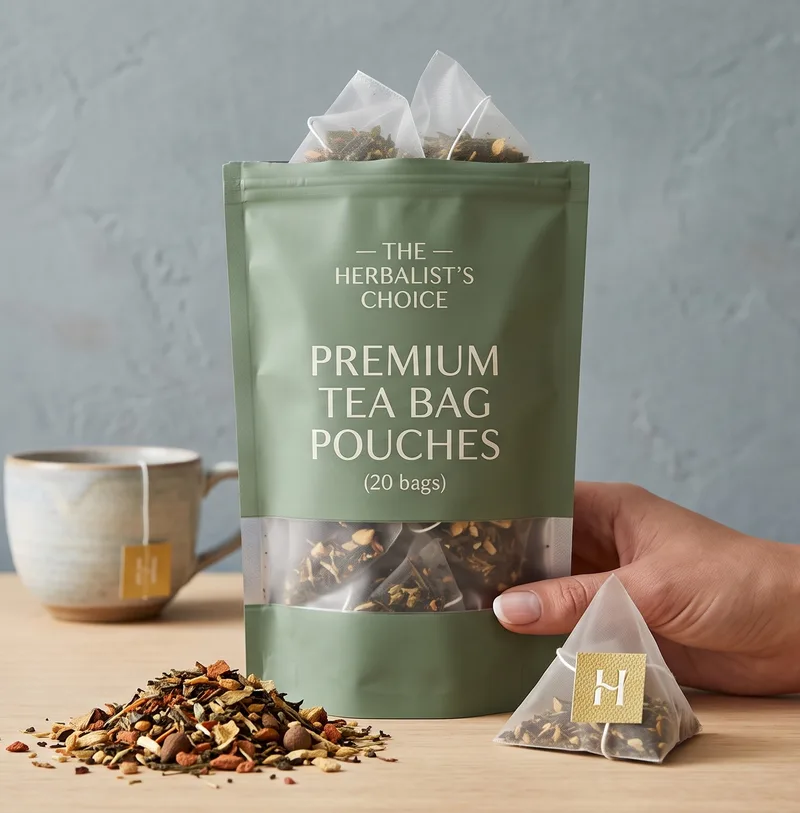
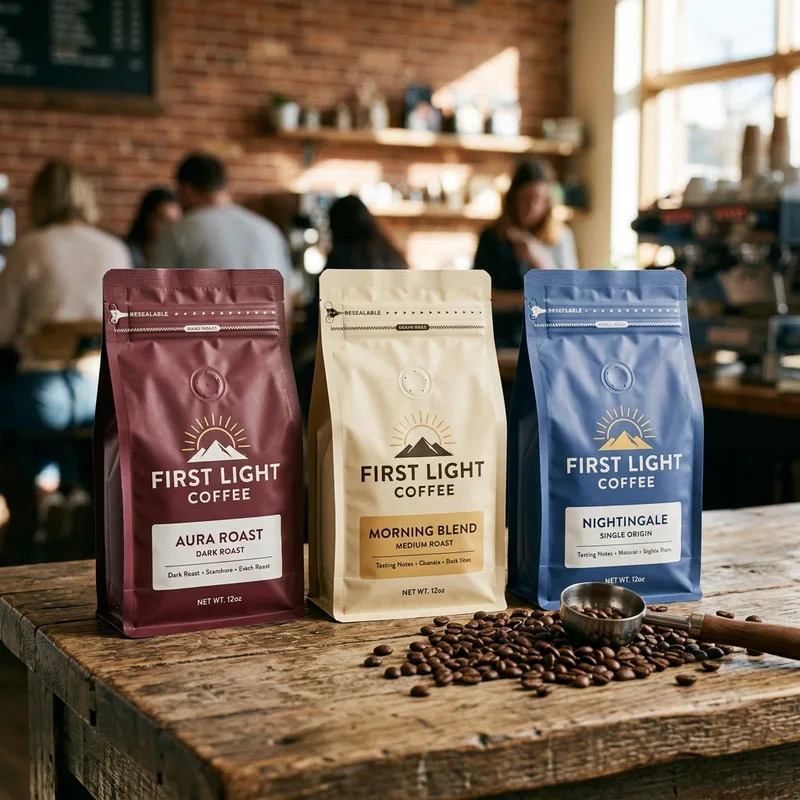
Coffee Bags with Valve
One-way degassing valve for fresh roasted coffee.
From $1.01/unit
1 answers →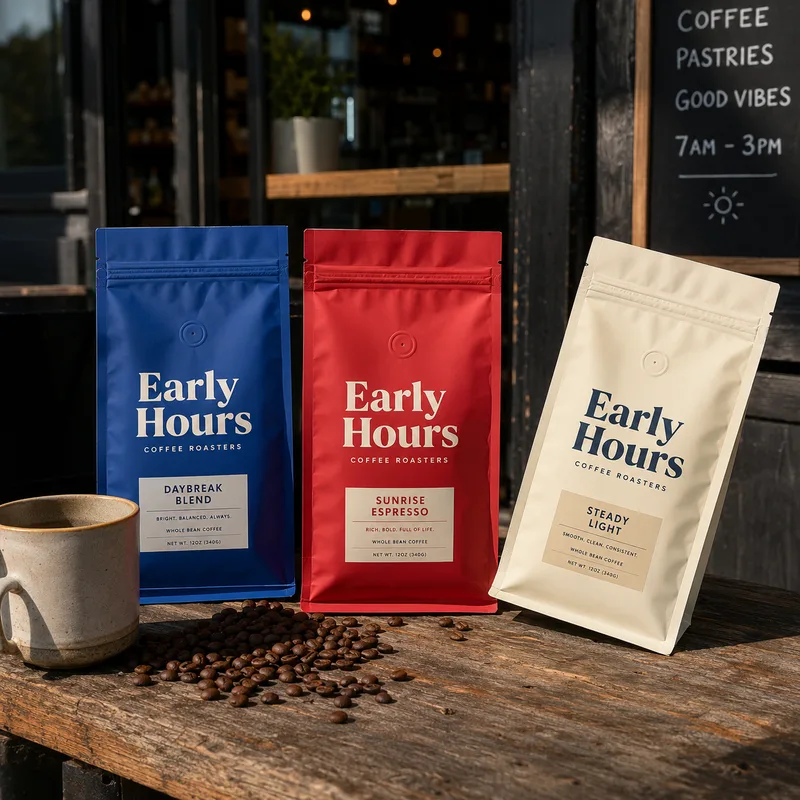
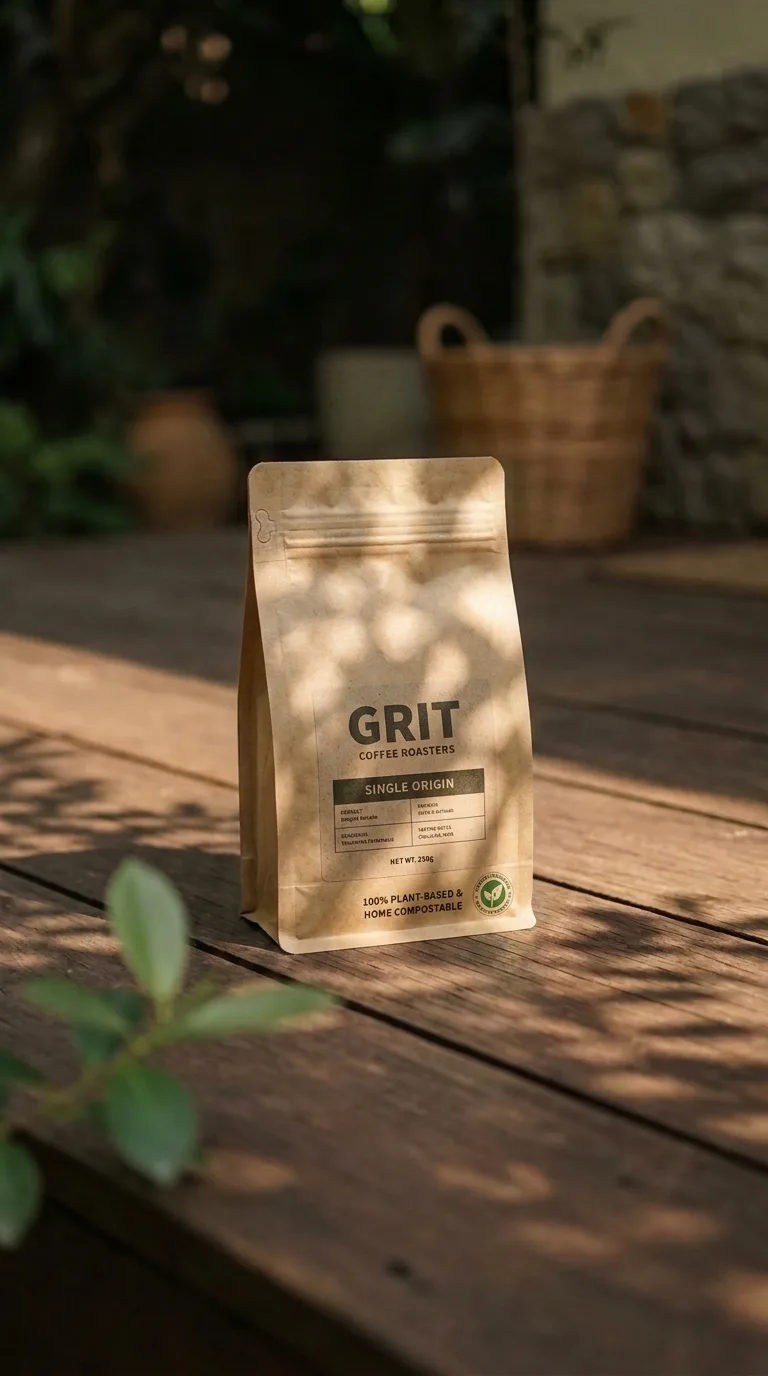
Compostable Stand Up Pouches
Kraft paper with a PLA-based compostable layer, certified per order.
From $1.25/unit
1 answers →What Is a Mylar Bag?
A Mylar bag is a pouch made from laminated barrier film, usually PET, metallized PET or a kraft paper laminate, with interior aluminum foil where a higher barrier is needed. The layers limit the moisture, oxygen, light and aroma that reach the product, and the pouch is sealed with heat after filling.
Key terms
01
Is "Mylar" a material or a bag?
A brand name for PET film, now used for any PET-based barrier pouch.
02
Metallized PET vs aluminum foil
Metallized PET carries a thin metal coating; interior foil is a separate, stronger layer.
03
Mylar bag vs zip storage bag
A zip bag is one thin film; a Mylar pouch is a printed multi-layer laminate.
04
How it's made
Printed film is laminated, then converted into pouches with seals, gussets and closures.
Why Do Mylar Bags Tip Over, Leak or Lose Their Seal?
Open a problem to see why it happens and how to fix it.
My pouch tips over on the shelf
Why it happensThe fill sits high, the gusset didn't open, or the gusset style is too light for the weight.
How to fix itSettle the product before sealing, and choose the gusset style for the fill weight: round (Doyen) for about 1 lb or less, K-seal for about 1–5 lb, plow bottom for dense fills such as flour or rice.
The bag looks half empty
Why it happensThe size was set for a lighter or bulkier product than yours.
How to fix itSize by volume and density, not by the weight on the size name, and confirm with a trial fill.
Sizes ↓ →
The seal pulls open or leaks
Why it happensDust, powder or oil in the seal area, too little heat, time or pressure for the laminate, or film wrinkled in the jaws. A sealant not matched to an oily or powdery product also weakens the seal.
How to fix itKeep the seal area clean, flatten the pouch, and test heat, dwell time and pressure on spare bags of the same laminate. Then validate filled samples under your real storage and shipping conditions.
Powder jams the zipper
Why it happensProduct lands on the zipper track while filling.
How to fix itFill below the zipper with a funnel, then seal above it.
Sharp products puncture the bag
Why it happensThe film was chosen for barrier, not puncture resistance.
How to fix itSpecify a puncture-resistant film for bones, shards or hard edges.
The window clouds over
Why it happensFine dust or oil settles against the clear film.
How to fix itPlace the window away from where the product settles.
Which Mylar Pouch Format Should You Choose?
Choose by product, fill weight, shelf display and filling method. Stand Up suits most retail dry goods, Flat Bottom gives a box-like base and five print panels, 3 Side Seal suits samples and portions, Back Seal suits form-fill-seal lines, and Spout suits liquids.
Formats
- Stand Up Pouch: Best for: retail dry goods. Upright pouch, about 1 oz–2 lb, from $0.55.
- Flat Bottom Bag: Best for: larger packs and shelf presence. Flat base, five printable panels, about 8 oz–5 lb, from $0.95.
- 3 Side Seal Pouch: Best for: samples and single portions. Slim flat pouch with two clean faces, up to about 1 kg, from $0.51.
- Back Seal Bag: Best for: pillow packs on form-fill-seal lines. Rear seam with top and bottom seals, from $0.57.
- Spout Pouch: Best for: liquids, sauces and refills. Sealed-in spout with a resealable cap, about 250 mL–2 L, from $0.74.
Side by side
| Stand Up | Flat Bottom | 3 Side Seal | Back Seal | Spout | |
|---|---|---|---|---|---|
| Base | Folding bottom gusset | Flat base + 2 side gussets | No gusset | Rear seam, top and bottom seals | Varies; standing bodies available |
| Printable surfaces | 2 faces + gusset | 5 panels | 2 clean faces | Front; back split by seam | 2 faces + gusset |
| Stands up | Yes, sized and filled correctly | Yes, sized and filled correctly | Typically no | Typically no | Standing configurations |
| Filling and use | Premade, filled through the top | Premade, filled through the top | Premade, filled through the open edge | Often formed and filled on form-fill-seal equipment | Pours through the sealed-in spout |
| Reference fill | ~1 oz–2 lb | ~8 oz–5 lb | Sachet to ~1 kg | Single-serve to family size | ~250 mL–2 L |
| From | $0.55 | $0.95 | $0.51 | $0.57 | $0.74 |
Which Barrier Film Does Your Product Need?
Moisture, oxygen, light and aroma spoil most packed products. The film decides how much of each gets through: interior aluminum foil gives the strongest light and oxygen protection, metallized PET is an opaque barrier, and clear PET shows the product but gives the least light protection. The barrier comes from the full laminate and seals, not one layer.
Films
01
Interior aluminum foil
The strongest light and oxygen barrier, for powders, supplements and light-sensitive products.
02
Metallized PET
An opaque barrier with a lighter metallic look, for snacks, spices, coffee and tea.
03
Kraft paper laminate
A paper look outside, barrier layers inside, with foil where required.
04
Clear or holographic PET
Clear shows the product; holographic adds effect. Weigh visibility against light protection.
Product → film table
| Product | Main risk | Typical direction |
|---|---|---|
| Chips and fried snacks | Oxygen, light, grease | Metallized PET, often gas-flushed |
| Spices and seasonings | Aroma loss, moisture, light | Metallized PET or interior foil |
| Powdered drink mixes and supplements | Moisture, oxygen, seal integrity | Interior foil or another high-barrier laminate |
| Candy and confectionery | Moisture, visibility | Clear, metallized or foil, by product |
| Grains and dry mixes | Moisture, puncture | Metallized PET or another moisture-barrier laminate |
| Jerky and fatty snacks | Oxygen, grease | Metallized PET or interior foil, sealant matched to fat content |
Thickness table (total laminate)
| Format | Typical range |
|---|---|
| 3 Side Seal | 50–120 μm |
| Stand Up and Flat Bottom | 80–180 μm |
| Spout | about 100–160 μm |
Note: Thicker means stiffer, not automatically a better barrier. μm ÷ 25.4 ≈ mil.
What Size Mylar Bag Do You Need?
Size by volume and density, not by the weight in the size name. An 8 oz reference Stand Up pouch holds about 8 oz of whole-bean coffee but about 13 oz of flour and about 2 oz of puffed snacks. These are approximate reference fills; confirm with a trial fill of your product before the dieline is approved.
| Size | Stand Up (W × H × G) | Usable volume | Flat Bottom (W × H × G) |
|---|---|---|---|
| 1 oz | 3.5 × 5 × 2 in | ~0.08 L | — |
| 2 oz | 4 × 6 × 2.5 in | ~0.16 L | — |
| 4 oz | 5 × 8 × 3 in | ~0.3 L | — |
| 8 oz | 6 × 9.5 × 3.25 in | ~0.6 L | 4.7 × 8.7 × 2.4 in |
| 12 oz | — | — | 4.9 × 9.1 × 3.1 in |
| 1 lb | 7.6 × 11.75 × 4 in | — | 5.5 × 10.4 × 3.1 in |
| 2 lb | 9 × 14 × 4.5 in | — | 7.1 × 11 × 3.1 in |
| 5 lb | Flat Bottom recommended | — | 7.1–8.7 × 15–16 × 4.7 in |
| 3 Side Seal | Approx. dry fill | Typical use |
|---|---|---|
| 3 × 4 in | ~10–20 g | Spice samples, single portions |
| 4 × 6 in | ~28–50 g | Snack samples, face masks |
| 5 × 8 in | ~100–150 g | Jerky, dried fruit, loose-leaf tea |
| 6 × 9 in | ~250–300 g | Coffee samples, pet treats |
| 8 × 12 in | ~500 g–1 kg | Larger flat packs |
Note: G is the gusset. Usable volume is counted to the fill line, below the zipper and top seal. Custom sizes are available on every format.
Which Closures and Features Can You Add?
Pouches filled through an open edge are heat sealed after filling; Spout Pouches close with their cap. On top of that seal you can add a reclosable zipper, a child-resistant closure, a tear notch, a hang hole or a clear window, placed on the dieline clear of the seals.
Closures and add-ons
01
Ziplock or hook-and-loop zipper
For products used over several openings; keep the track clear of powder.
02
Child-resistant zipper or cap
CR zipper on Stand Up and 3 Side Seal; CR cap on Spout.
03
Tin tie
Available on request for compatible pouch configurations.
04
Tear notch
A clean first opening above the zipper.
05
Hang hole
For peg display, placed above the zipper.
06
Clear window
On Stand Up, Flat Bottom, 3 Side Seal and Spout; reduces light protection where it sits.
08
Heat seal only
No zipper, for single-use packs.
Note: Removing optional features (window, special finishes, zipper) lowers the unit price.
How Do You Heat Seal a Mylar Bag?
Fill the pouch, clean and flatten the seal area, then close it with an impulse heat sealer above the zipper. Settings depend on the laminate, so test on spare bags first. A good seal is flat, wrinkle-free and can't be pulled open by hand.
Steps
- Fill below the zipper with a funnel so no product reaches the seal area.
- Wipe the seal area free of dust or oil.
- Flatten the top so the film enters the jaws without wrinkles.
- Seal with an impulse sealer, starting at low heat on a spare bag.
- Check the seal: pull, squeeze, or submerge a sample and watch for bubbles.
- Validate with filled samples under your real filling, storage and shipping conditions before production.
Note: Steps 5–6: pull and submerge checks are preliminary only. An iron or hair straightener works for a few bags but seals unevenly.
Which Specialty Mylar Bag Fits Your Product?
The 11 application variants start from the five structures and add the film, closure or feature a product needs: a child-resistant closure, chamber-vacuum construction, documented food-contact materials, a window, a matte finish, a spout, a valve or a compostable build.
Cards (Best for · note · link)
- Child-Resistant Mylar Bags: Best for: controlled-access dry products. CR zipper on Stand Up or 3 Side Seal; test documentation is confirmed for your exact size, film and closure.
- Food Safe Mylar Bags: Best for: dry foods. Materials specified for the food; documentation arranged per order.
- Custom Vacuum Seal Bags: Best for: chamber vacuum machines. 3 Side Seal, or Back Seal where seals support vacuum.
- Mylar Bags with Window: Best for: products sold on appearance with low light sensitivity. Custom window size, shape and placement.
- Matte Mylar Bags: Best for: a low-glare look over a metallized or foil barrier.
- Custom Candy Bags: Best for: sticky, oily or irregular confectionery. Barrier and sealant matched to the candy.
- Skincare Pouches: Best for: refills and sachets. Contact layers reviewed against the formula.
- Tea Bag Pouches: Best for: multi-count tea bags. Sized to bag shape, count and wrap.
- Coffee Bags with Valve: Best for: fresh roasted coffee. One-way degassing valve.
- Custom Coffee Bags: Best for: coffee packed without a valve, including 3 Side Seal samples.
- Compostable Stand Up Pouches: Best for: a certified compostable claim. Kraft paper with a PLA-based compostable layer.
Spout diameter table
| Spout inner diameter | Typically suited to |
|---|---|
| About 8.6–10 mm | Thin liquids: juices, water, concentrates |
| About 13–16 mm | Viscous products: sauces, shampoos, lotions |
| About 22–33 mm | Thicker or chunky products, faster pouring |
Are Mylar Bags Food Safe, and How Long Does Food Keep?
Mylar bags are food safe when the construction is specified for food contact: the inner sealant, inks, adhesives and any window or spout. Applicable testing and documentation can be arranged per order. Shelf life has no universal figure; it depends on the food, its moisture, the barrier, the seal and storage temperature.
01
What can I store?
Dry grains, rice, beans and other sufficiently dry foods; moist foods need a processed and validated method.
02
Oxygen absorbers
Used with suitable dry foods to reduce residual oxygen after sealing, sized to package volume. Not for moist foods, and not supplied by Packaging Dock.
03
Smell
Sealed barrier film helps contain odors; no pouch is odor-proof once opened.
04
Freezer
Depends on the laminate and seal; confirm for your construction.
05
Boiling, cooking or microwaving
Not a stated use of any construction; don't, unless it is specified and validated for that process.
06
"Free of" claims
Material requirements are confirmed per project; we make no general BPA- or toxin-free claim.
How Are Custom Mylar Bags Printed?
Digitally, flexographically or by rotogravure, in full-color CMYK and Pantone spot colors. Digital suits shorter runs and several designs; flexo and rotogravure suit longer runs of one design. Artwork is built on a custom dieline and approved on a proof before production.
01
Coverage
Front only, front and back, or full wrap (all five panels on Flat Bottom).
02
Coatings
Gloss, matte or soft-touch.
03
Finishes
Foil stamping, Spot UV and raised 3D UV on selected areas such as the logo.
04
Dieline
Shows printable panels, gussets, seal zones and any zipper, window, valve or spout.
05
Design support
Free, on the dieline.
06
Files
PDF, JPG, PNG, WEBP, TIFF, AI, EPS or PSD; up to 3 files, 8 MB each.
How Do You Order Custom Mylar Bags?
Send the product, fill weight, format, size, film, closure, quantity and deadline. Quotes typically come back within 24 hours, orders dispatch 7 days after proof approval, plus shipping time, and the minimum is 500 units. All applicable production, setup and customization charges are confirmed in your quotation.
Price3 Side Seal from $0.51 · Stand Up $0.55 · Back Seal $0.57 · Spout $0.74 · Flat Bottom $0.95
Minimum order500 units
Multiple designsMay share an order, subject to configuration and quotation
Production7 days from approved proof to dispatch, plus shipping time
RushAvailable on request
US shippingTypically 3–7 business days after dispatch
Quote replyTypically within 24 hours
Sample kitsShip within 2 business days; customer covers shipping
Pre-production sampleAvailable before the full run
Design supportFree, on a custom dieline
Ships toUSA and worldwide
Are Mylar Bags Recyclable or Compostable?
Standard multi-layer Mylar laminates are not compostable, and recycling depends on the film type and the local facility. Mono-material builds (mono-PE or mono-PP with compatible barrier layers) go to flexible-film recycling where accepted. For a certified compostable claim, choose Compostable Stand Up Pouches.
01
Biodegradable?
We don't use "biodegradable" as a claim.
02
Kraft look = recyclable?
No; the full construction decides.
03
Compostable trade-off
Certification is for the finished pouch, per order, to an agreed standard and subject to supplier confirmation; confirm the barrier for your product first.
04
On-pack claims
Print only the disposal instructions your construction supports.
What Should You Decide Before Ordering?
Have these seven answers ready and your quote starts from the right specification.
- Product: what goes in, and whether it is dry, oily, liquid or light-sensitive.
- Fill: weight or volume per pouch, and its density.
- Format: Stand Up, Flat Bottom, 3 Side Seal, Back Seal or Spout, or ask us to suggest one.
- Filling method: by hand, premade on a machine, or rollstock on a form-fill-seal line.
- Closure and features: zipper, CR, tear notch, hang hole, window.
- Designs: how many flavors or SKUs, and whether one pouch with labels will do.
- Quantity and deadline: 500 units minimum; your target delivery date.
Mylar Bags dieline templates
Each structure below has a free template generator: enter your size and download a PDF, SVG, DXF or PNG file with bleed and safe zone marked. Before you order, open it in the 3D mockup generator to see your artwork on the folded pack.
- Stand Up Pouch dieline · see it in 3D: best for snacks, powders, 1 oz to 2 lb
- Flat Bottom Bag dieline · see it in 3D: best for coffee, pet food, larger fills
- 3 Side Seal Pouch dieline · see it in 3D: best for samples, sachets, hanging packs
- Spout Pouch dieline · see it in 3D: best for liquids, purees, gels
- Back Seal Bag dieline · see it in 3D: best for snacks, candy, coffee, bulk fills
All structures in one place: dieline generator.
Mylar Bag Questions, Answered
Packaging Dock makes custom Mylar bags to order (five pouch structures and 11 application variants) from 500 units, and ships across the USA and worldwide. These are the questions food brands, supplement makers, candy and coffee brands ask most. All bags are on the Mylar bags page.
No answers for this product in this topic.
Formats and construction
Is a Flat Bottom bag worth the extra cost?
It costs more (from $0.95 against $0.55 for Stand Up) and gives a squarer shelf footprint, five printable panels and room for larger fills up to about 5 lb.
Which format has the most printable surface? Flat Bottom, with five panels.
What is the difference between Back Seal and 3 Side Seal?
Back Seal has a rear seam with top and bottom seals and fills into a pillow shape, often on form-fill-seal equipment. 3 Side Seal has three perimeter seals, two clean faces and a slim, flat profile, and is filled premade through the open edge.
What is a gusset, and which style do I need?
A gusset is the fold that opens when the pouch is filled: a bottom gusset on Stand Up, side gussets on Flat Bottom. Round (Doyen) suits lighter fills of about 1 lb or less, K-seal about 1–5 lb, and plow bottom dense fills such as flour, rice or grains. The style is confirmed on the dieline.
Do Mylar bags stand when partly filled?
Stand Up and Flat Bottom stand when correctly sized and filled; stability depends on the gusset style chosen for the fill weight. 3 Side Seal and Back Seal typically lie flat.
Pouch, box or paper bag?
Choose a pouch when the product needs a barrier against moisture, oxygen or light, or a resealable or pourable pack. A box adds presentation around an inner pack; plain paper is not a moisture or oxygen barrier. Many brands use both: a sealed pouch inside a printed box.
Materials and barrier
Are Mylar bags airtight and waterproof?
A sealed pouch is a barrier against moisture, oxygen and light, and the film is water-resistant; the seal and closure decide whether it stays sealed. Each reopening lets air in, which a zipper limits between uses. No bag is oxygen-free.
What do OTR and WVTR mean?
OTR (oxygen transmission rate) and WVTR (water vapor transmission rate) measure how much oxygen or moisture passes through a film; lower is better. Compare figures for the finished laminate, not one layer, and compare quotes on the same structure.
Is a kraft-look pouch still a high barrier?
It can be. The kraft paper is only the outer layer; the barrier comes from the film layers laminated inside it, with interior foil where a higher barrier is required. How high the barrier is depends on that inner build, so specify it for your product's moisture, oxygen and light risk, not for the look. See Films.
Which film for protein powder or drink mixes that clump?
Interior aluminum foil or another high-barrier laminate, with a reliable zipper: moisture and seal integrity come first.
Can I use a clear pouch for an oxygen- or light-sensitive product?
Clear film lets light reach the product. Choose an opaque laminate, or keep a window small and away from the most sensitive area.
Is Mylar plastic?
Yes. Mylar is a trade name for PET (polyester) film, and a Mylar pouch is a laminate of plastic films, sometimes with interior aluminum foil or a kraft paper outer layer. The plastic sealant layer is what lets the pouch close with heat. A kraft outer layer doesn't turn the pouch into paper for recycling; see Sustainability and, for a certified compostable build, Compostable Stand Up Pouches.
Sizing and filling
How do I read 9 × 10 × 17 bag sizes?
Usually width × height × gusset. Measure width across the face, height from bottom to top, and the gusset at the fold.
What about 1-gallon or 1-quart Mylar bags?
Those are consumer storage names. Custom pouches are sized to your fill, from the reference table or a custom size.
Does ground product fit more weight in the same pouch?
Yes. Fine and ground products pack denser, so they hold more weight in the same volume than whole or puffed products.
How much headspace should I leave?
Enough for the zipper, spout or valve and a clean seal above the fill line. Two pouches with the same outside size can hold different amounts depending on gusset style and seal widths.
When do I need a new sample?
Whenever you change film, size, zipper, finish or window, since each can change fit or barrier. Fill a sample with your actual product before approving the dieline.
How do I size pouches to shipping cartons?
Size the pouch for the product first, then the case. Flat Bottom and Back Seal pack squarer in cartons than Stand Up. Share the case count and carton size when quoting.
Hand filling, machines, premade pouches or rollstock?
Stand Up, Flat Bottom and 3 Side Seal are premade, filled through the top or open edge, and suit hand filling and small runs. Back Seal is often formed and filled on form-fill-seal lines; printed rollstock for those lines is quoted separately. Machine fit is confirmed against the equipment.
What should I tell my co-packer? Product and fill weight, format and size, closure, machine type, supply format, quantity and deadline.
How do pouches arrive? Premade pouches ship flat; rollstock on rolls.
Sealing and closures
Can you heat seal ziplock or cellophane bags?
Some films seal and others melt; test on a spare bag first.
Do zippers wear out?
They stay usable over repeated openings if the track is kept clear of powder.
Can a window and a zipper go on the same pouch?
Yes, where compatible. A hang hole goes above the zipper, and every feature stays clear of the seal areas on the dieline.
How big can a window be?
As large as the dieline allows, but a larger window lowers light protection. Size it to the product's light sensitivity and plan required label copy around it.
Does an optional heat seal above a zipper add tamper evidence?
It shows first opening: the heat-sealed strip above the zipper has to be torn or cut before first use, so an opened pack is visible. It is a sign of opening, not a certified tamper-evident system.
Press-to-close or hook-and-loop zipper?
A press-to-close zipper closes when its two tracks are pressed together; a hook-and-loop zipper closes along its length without lining the tracks up exactly. Both stay usable if the track is kept clear of powder.
Why does the seal peel open later, or the zipper not close?
A seal that peels later usually had dust or oil in the seal area, or too little heat or pressure. A zipper that won’t close usually has product in the track, so fill below it with a funnel.
Why does oil show through, or the bag smell like plastic?
Oil showing through means the film and sealant weren’t matched to the fat content. A plastic smell is checked against the specific laminate.
Specialty bags
Is a child-resistant pouch certified?
Child resistance belongs to the finished, filled package, not the zipper alone. Test documentation is available for qualifying configurations and is confirmed for your exact size, film and closure during specification. Changing size, film or closure means it is checked again.
Hard for adults with limited hand strength? Choose the closure with the finished-package test in mind.
Do vacuum bags work with a FoodSaver?
Custom Vacuum Seal Bags are developed for chamber vacuum machines. Countertop suction sealers use embossed bags, so they need confirmation with your actual machine.
Losing vacuum? Usually a seal or puncture issue; outgassing products such as fresh coffee won't hold vacuum.
Fragile contents? A chamber machine lets you control the vacuum level.
Which spout pouch for sauces, oils or acidic liquids?
Choose the spout diameter by flow, and the film and sealant by product chemistry. Test filled samples before production.
Will a skincare formula damage the pouch?
Contact layers, adhesives and seals are reviewed against the specific formula, including fragrance, alcohol, oils and actives. Test filled samples for seal strength and delamination before approving the run.
Will gummies stick in the bag?
Sticky or oily confectionery needs a matched sealant. Heat-related sticking is a storage and shipping question: the bag protects against moisture, not heat.
Matte, gloss or soft-touch: which wears best in fulfillment?
Matte and soft-touch usually show rubs less than gloss. Dividers stop packs rubbing in the case. Check barcode scans on the printed proof.
Do you make Mylar bags for jewelry or comics?
Jewelry packaging is on the Jewelry packaging page. Archival comic sleeves are not offered.
Can Mylar bags hold water, sauces, baby food or refills?
Liquids go in Spout Pouches, from about 250 mL to 2 L, with the film and sealant selected around the product. Spout pouches suit sauces, purées, juices and refills; Stand Up pouches are for dry goods.
What is a spout fitment and cap, and where does the spout go?
The fitment is the spout sealed into the pouch; the cap is resealable, with a child-resistant cap available. The spout sits top center or top corner, standing configurations can self-stand once opened, and thick creams or gels suit about 13–16 mm or wider.
Can a spout pouch be hot-filled, sealed with sauce inside, or given a tamper-evident cap?
Hot filling isn’t a stated use, and a tamper-evident cap isn’t listed, so ask before planning on either. A spout pouch closes with its cap; how it is filled is confirmed with your line.
Why are liquid pouches leaking around the spout, and what should I test?
Check that the cap is seated and that the film and sealant suit the liquid. Before production, test filled samples for leaks, seal strength and compatibility with the product.
Skincare, bath salt and thick refill pouches?
Skincare Pouches come in Stand Up, 3 Side Seal and Spout formats, with contact layers reviewed against the formula. Thick refills suit a wider spout.
How do I size a pouch for irregular candy shapes?
Size by volume, not by count or weight alone, and confirm with a trial fill.
Mylar bags for tea, and do wrapped tea bags need the same barrier?
Tea Bag Pouches are sized around the tea bag shape (flat or pyramid), count and wrap, in Stand Up, Flat Bottom, 3 Side Seal and Back Seal. Barrier depends on the tea and on what the inner wrap already gives; pack each flavor in its own sealed pouch to keep aromas apart.
Mylar bags for coffee, and why does the bag puff up?
A one-way degassing valve lets fresh coffee release gas without letting air in; a puffed bag usually means fresh coffee is still degassing. Coffee Bags with Valve come in Stand Up, Flat Bottom and Back Seal.
Mylar bags for cookies and baked goods, or bulk food storage?
Food Safe Mylar Bags cover dry foods, with the barrier chosen for moisture, oxygen, aroma, light and grease. We make custom printed pouches for brands from 500 units; how long any food keeps depends on the food, barrier, seal and storage.
CR zipper or CR cap, and when do I need child resistance?
A CR zipper goes on Stand Up and 3 Side Seal; a CR cap on Spout pouches, so the format decides. Whether your product needs child resistance is the brand’s call under the rules for its market, and the result is tested on the finished, filled package.
Is vacuum packing right for my food, and can a vacuum pouch have a zipper?
Vacuum suits products that don’t outgas; fresh coffee won’t hold vacuum. The pouch is developed for chamber vacuum machines, and a zipper on a vacuum pouch is confirmed per project.
Food storage
Do Mylar bags expire?
The bag carries no shelf life. Store empty stock flat in its carton, cool, dry and out of sunlight, with zippers closed, and use older stock first.
Can I store freeze-dried food or pet treats?
Yes, as sufficiently dry foods; confirm with your product. Flat Bottom lists dry pet food and treats, supplements and protein powder among its applications.
How do I avoid allergen cross-contact when packing?
Keep allergen and non-allergen runs separate, clean equipment between products, keep seal areas free of residue, record which product went into which batch, and declare allergens on the label.
Are all Mylar bags food safe?
Only constructions specified for food contact. Changing the sealant, ink, adhesive, window or spout means the construction is reviewed again.
Can Mylar bags be reused?
Yes, for home storage, if clean and dry; reseal with the zipper or a new heat seal. Wash only if the inner layer allows it, and dry fully before reuse.
How long do pouches keep food after opening, and how do I validate shelf life?
There is no universal figure. Each reopening lets air in, which a zipper limits between uses. Validate your own shelf life with filled samples under your real storage conditions before approving a run.
Can you rehydrate food in Mylar bags?
Adding hot water isn’t a stated use of any construction, so don’t, unless the construction is specified and validated for it.
Do Mylar bags block X-rays or work as a Faraday bag?
We make no X-ray, shielding or detection claim for our pouches.
Print and design
Why does my printed sample differ from the screen?
Screens show RGB; pouches print in CMYK and Pantone on film, foil or kraft, so colors shift with the substrate. The printed sample is the color reference.
Will reorders match the first run?
Reorders use the approved specification and artwork, and Pantone spot colors help hold brand colors between runs. Record the approved spec and proof.
Where do batch numbers, expiry dates and barcodes go?
Leave a clear panel on the dieline for batch and date coding, or use a label. Barcode placement is reviewed on the proof; check scanning on the printed sample, since lamination and finish can affect it.
Printed pouches or stock pouches with labels?
Fully printed pouches give each product one finished look. A shared design plus a label per flavor keeps costs down when the range changes often.
One size for every SKU? Works when products have similar density; otherwise size each by volume.
Which sizes should a new brand start with?
Often two or three: a sample, a core retail size and a larger value pack, based on how the product sells.
Can I print Mylar bags on a home printer?
Not practical for finished packaging; use printed labels instead.
How do labels stick to Mylar pouches?
With an adhesive matched to kraft, foil or film. Place them on the flat face of a filled pouch, clear of seals, zippers and any valve.
Matte lamination or a matte-looking film?
Matte lamination is a surface treatment over the print; a matte film has the look built into the film. Matte is applied according to the selected construction.
Can a holographic effect cover only part of the artwork?
Holographic PET is available as a film, and finishes such as foil and Spot UV go on selected areas like the logo. A partial holographic effect is confirmed per artwork.
Will the product show at full fill, and can a window cross a gusset or seal?
The window is placed at the fill line. Windows stay clear of the seals.
Ordering and suppliers
Does the 7-day turnaround include delivery?
No. Orders dispatch 7 days after proof approval; US shipping typically adds 3–7 business days after dispatch. Specialty materials, testing or complex configurations may need more time.
Can I test a pouch with my product inside first?
Yes. A pre-production sample can be made before the full run, so you can fill it and check fit, seal and look. Sample kits ship within 2 business days.
Do you manufacture the bags?
Packaging Dock manufactures custom Mylar bags to order and ships across the USA and worldwide.
How many spares should I order for filling waste?
A small overage, often a few percent, for setup and rejects; more for machine filling than hand filling.
How do I compare Mylar bag quotes?
On the same specification: format, size, film structure, closure, print method, finishes, MOQ, turnaround and shipping. Ask for a dieline and proof before paying.
Switching suppliers? Send the old spec and a physical sample, then recheck fit with a trial fill.
What is the real cost per filled, shipped bag?
Bag + label + inbound freight + filling time, divided by units sold.
Which adds more cost: structure or finish?
Both add cost and are priced separately on the quote; unit price falls as quantity rises.
Retail and shipping
What do retailers ask for?
Often dimensions, case count, barcode and material information.
Can pouches hang on pegs?
Yes, with a hang hole on compatible sizes; check the filled weight hangs straight.
Do I need a window for an online-only brand?
It helps in photos but matters less than on a shelf. Check the look under store lighting with a printed sample if you also sell in stores.
Can one specification serve wholesale and direct sales?
Yes, with sizes set per channel.
Do refill pouches reduce packaging?
They use less material than rigid containers; their end-of-life route depends on the construction.
Ready to put it together?
Answer a few questions and get a packaging setup with the reason for every choice, or browse every mylar bags product.