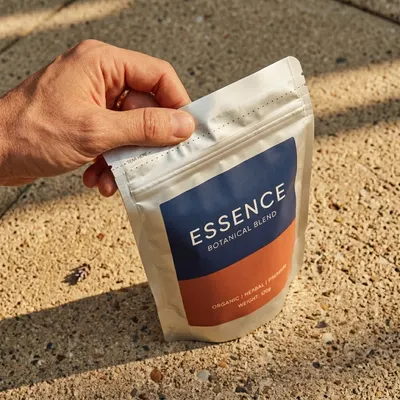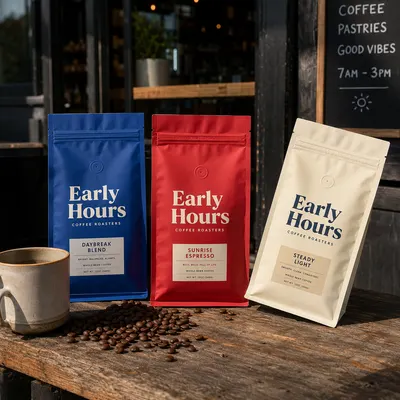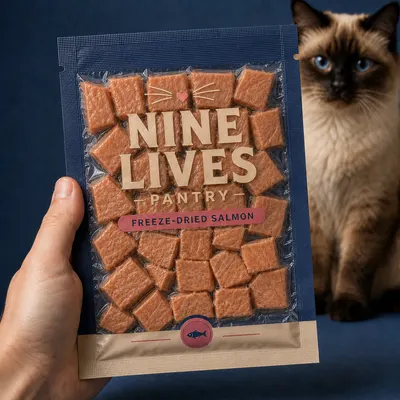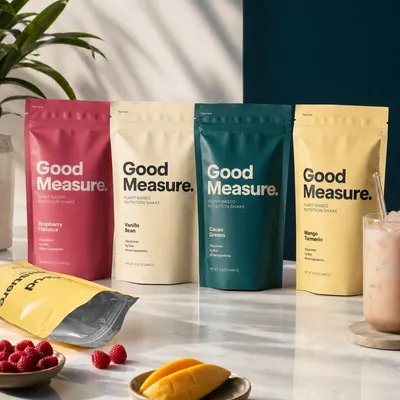
Product Details

Overview & Specifications

What Is a Flat Bottom Bag?

A flat bottom bag is a flexible pouch built from front and back panels, two side gussets and a distinct flat base. When filled, the gussets expand and the base forms a rectangular footprint, creating a box-like profile that separates this format from a conventional Stand Up Pouch with a folding bottom gusset.

How the Flat Base Holds Its Shape

The base panel and side gussets work together so the filled pouch stands on a defined flat surface and forms its characteristic box-like profile.

01

Defined Footprint

The flat base creates the surface that supports the filled pouch. Its width helps determine the finished footprint and gives the bag a defined base rather than a folding bottom gusset.
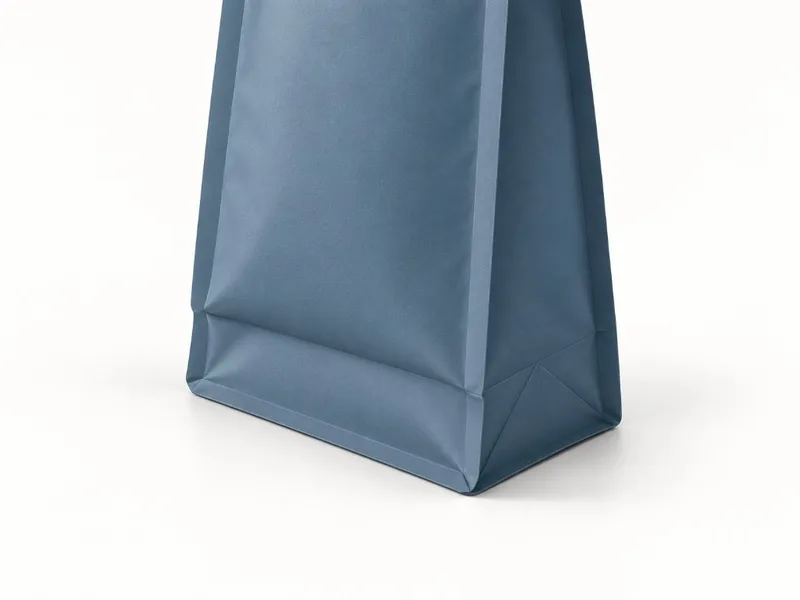
Flat bottom bag showing the defined base footprint that supports the filled pouch

02

Gusset Expansion

The side gussets open as the pouch is filled, creating depth between the front and back panels. Their depth helps form the vertical sides and influences the finished pouch dimensions.

Flat bottom bag side gussets expanding to create depth and vertical sides

03

Filled Stability

Standing performance depends on base width, gusset depth, laminate stiffness, product density and fill level. A stiffer laminate helps the panels hold their shape, and the correct fill level lets the base and gussets open as designed.
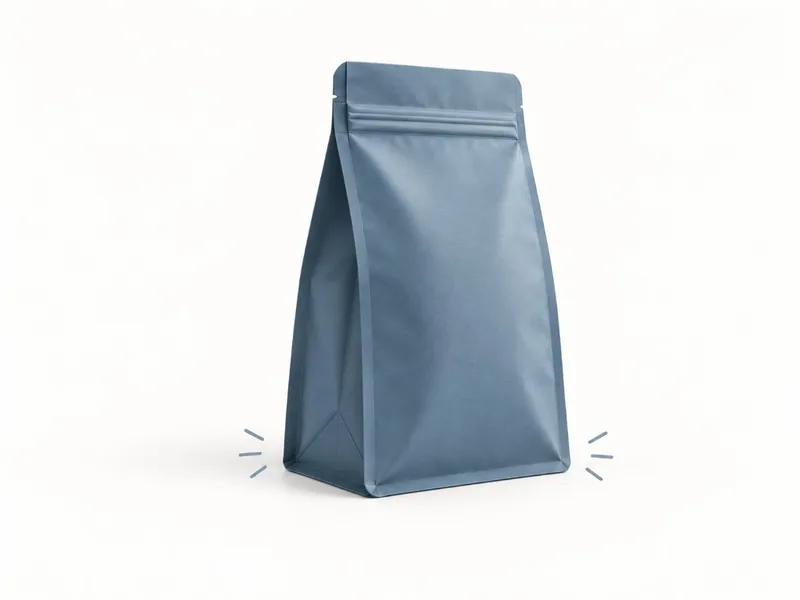
Filled flat bottom bag standing upright with a structured box-like shape

Sizing note: A larger base alone does not guarantee better standing performance if the pouch is undersized, overfilled or built with an unsuitable laminate. Final dimensions are developed around the actual product and fill rather than nominal weight alone.

Anatomy of a Flat Bottom Bag

A flat bottom bag has five printable panels plus a dedicated top filling and closure zone.

  • 01

    Front Panel

    Primary branding, product name and front-facing presentation.
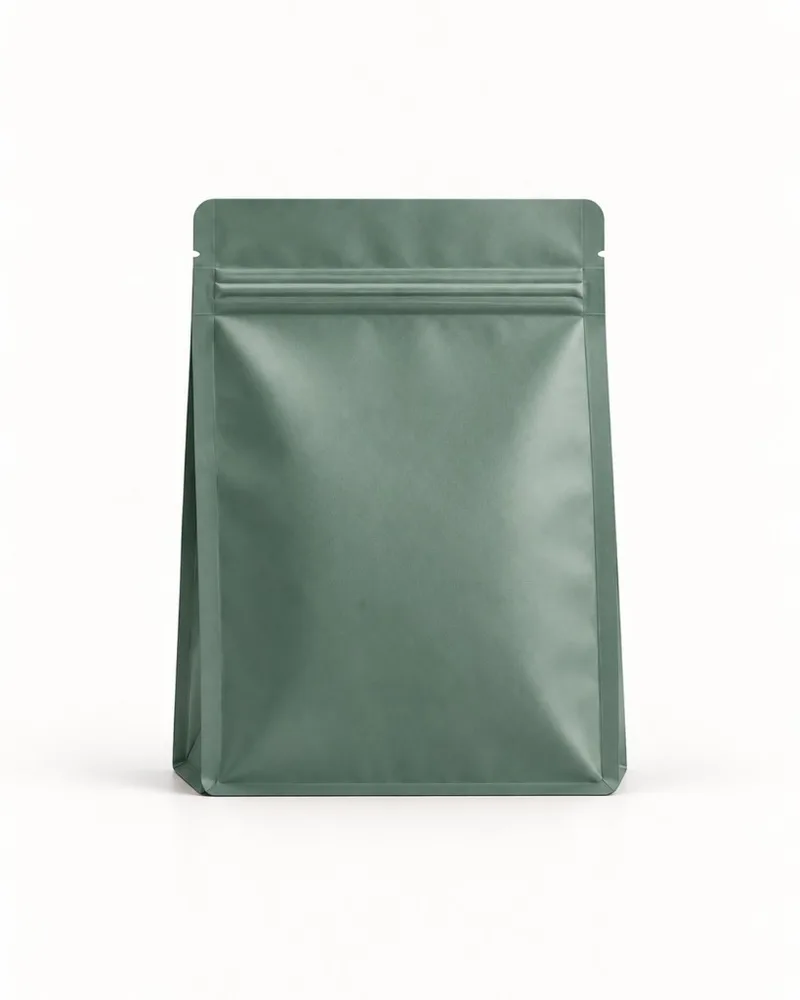
    Front view of a flat bottom bag showing the primary printable branding panel
  • 02

    Back Panel

    Ingredients, directions, barcode, regulatory information and supporting product copy.
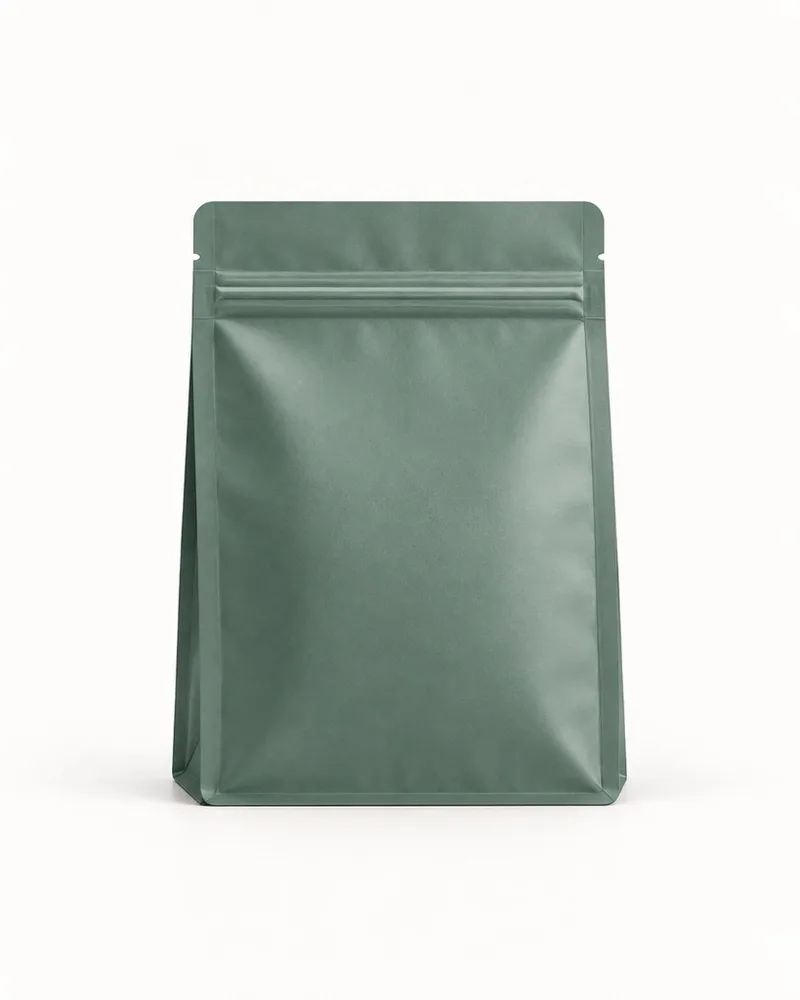
    Back view of a flat bottom bag showing the rear panel for product and regulatory information
  • 03–04

    Two Side Gussets

    Additional space for branding, instructions, product details or supporting graphics.

    Side view of a flat bottom bag showing the two gusset panels that create pouch depth
  • 05

    Flat Base Panel

    Forms the rectangular footprint and provides the fifth printable surface.
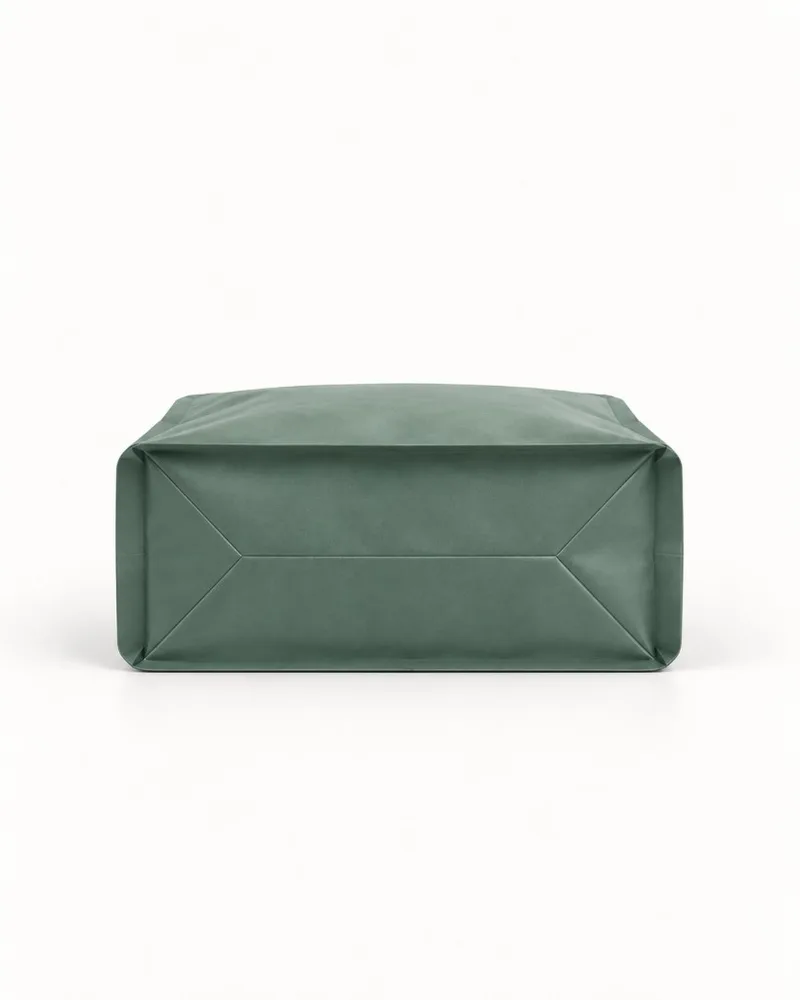
    Bottom view of a flat bottom bag showing the flat printable base panel
  • Top Filling and Closure Zone

    Filling space, reclosure features and the final heat seal.

    Top view of a flat bottom bag showing the filling area, zipper zone and final heat seal
Construction note

Vertical corner seals commonly join the front and back panels to the side gussets, with perimeter sealing around the base. The exact seal layout depends on the pouch design.

Artwork note

Develop artwork across the full dieline, keeping important copy, graphics and barcodes clear of folds, seals, zipper areas and other closure zones.

Application guide

When Is a Flat Bottom Bag the Right Choice?

A flat bottom bag works well when a product needs a defined shelf footprint, more printable surface area and a structured shape for retail display or case packing, such as coffee, pet food, powders and specialty foods.

  • 01

    Shelf

    Box-Like Shelf Stability

    The defined base helps the pouch present consistently across a shelf. Final stability depends on pouch dimensions, laminate stiffness, product density and fill level, which together determine how well the filled shape holds.
  • 02

    Branding

    Five-Panel Brand Presentation

    Two side gussets and a printable base add more usable design space than a typical Stand Up Pouch, giving brands additional room for product information, graphics and supporting communication.
  • 03

    Packing

    Stacking and Case Packing

    The structured filled shape can help pouches sit more consistently side by side in displays and shipping cartons. Case dimensions should be based on the filled pouch because the base and gussets expand during filling.
  • 04

    Alternative

    When Another Format May Fit Better

    Flat bottom construction can use more material and conversion work than simpler pouch formats. For samples, single-serve portions or products that do not need an upright shelf format, a 3 Side Seal Pouch may be more suitable.
Customization

Customize Your Flat Bottom Bags

Flat bottom bags can be configured around the product being packed, the filling method, required barrier performance and intended shelf presentation. Dimensions, film structure, closures, printing, finishes and functional features are developed together so the finished pouch works as one packaging system.

01

Dimensions and Gusset Depth

Width, height, side gusset and bottom depth are developed together around fill weight, product density and desired shelf proportions. Increasing depth changes both capacity and the filled footprint, while changing width or height affects artwork proportions, headspace and case fit.

Seal zones, zipper placement and filling clearance also need to remain inside the usable dimensions. Reference starting sizes and fill weights by product are listed in the size guide.

02

Film and Barrier Structure

Available options include PET Film, Clear PET Film, Metallized PET Film, Holographic PET Film and Kraft Paper Laminate. The complete laminate is selected around what the packed product needs protection from, including moisture, oxygen, aroma, light, grease and physical handling.

Product Main Protection Considerations Typical Direction
Whole-bean or ground coffee Oxygen, aroma, moisture and light Typically metallized PET or interior aluminum foil; one-way valve where degassing is required
Dry pet food and treats Moisture, aroma, grease and handling Typically metallized PET or another high-barrier laminate, with the sealant selected around fat content, product weight and puncture resistance
Supplements and protein powder Moisture, oxygen, light and seal integrity Typically interior aluminum foil, selected around formulation and shelf-life requirements
Snacks and dried fruit Moisture, oxygen and aroma Clear, metallized or foil structures according to the product
Products shown through a window Visibility alongside required product protection Clear PET or a clear window, with the transparent area considered separately in the barrier design

Kraft Paper Laminate provides the external paper appearance, while the film layers beneath it provide the required sealing and barrier performance.

A broader comparison of film structures is available on the Mylar Bags page.

03

Closures and Functional Features

Ziplock, hook-and-loop zipper and child-resistant zipper options can be used where compatible with the project. Tear notches, hang holes and clear windows can be incorporated when the product and pouch specification require them.

Feature What It Does
Ziplock Press-to-close track that reseals the bag after opening
Hook-and-loop zipper Two interlocking fastener strips that reseal when pressed together and pull apart without a track
Child-resistant zipper Uses a controlled opening procedure for qualified child-resistant applications
Tear notch Provides a defined starting point for opening the sealed pouch
Hang hole Allows compatible pouch sizes to display from retail hooks
Clear window Provides product visibility while changing the barrier performance of the transparent area
One-way degassing valve Releases gas from products such as freshly roasted coffee; available through Coffee Mylar Bags with Valve
04

Five-Panel Printing and Finishes

Artwork can use the front, back, two side gussets and bottom as one coordinated design system. Digital, flexographic and rotogravure printing are available according to quantity, material and artwork requirements.

Full-color CMYK and Pantone spot colors can be combined with matte, gloss, soft-touch, foil stamping, Spot UV and Raised 3D UV where compatible with the selected construction.

For better finished artwork:

  • Keep important copy and logos clear of seals and fold lines.
  • Leave adequate clearance around the zipper track.
  • Reserve space around a valve or clear window where used.
  • Place UPC/barcode information on a consistently flat and scannable panel.
  • Design the front, side gussets and back as one connected visual system.
05

Recyclable and Compostable Options

Alternative material routes can be developed when sustainability requirements are part of the project and the required barrier, stiffness, printing and sealing performance can still be achieved.

Option Typical Structure Barrier Direction End-of-Life Route
Recyclable mono-material Mono-PE or mono-PP with compatible barrier layers or coatings Medium to high depending on construction Flexible-film recycling streams where accepted
Industrially compostable Qualified compostable film structures such as PLA/PBAT-based systems Product-dependent Industrial composting facilities
Home compostable Qualified home-compostable film systems Product-dependent Home composting where the selected material is certified for that route

Material selection balances barrier performance, sealability, printing, filling process, end-of-life route and project economics. Minimum quantities and supporting certifications depend on the final material and project configuration.

06

Food-Contact Compliance, Testing and Documentation

Food-contact requirements are handled around the actual product, laminate construction and destination market rather than applying one generic certificate to every pouch.

For U.S. projects, applicable FDA food-contact provisions are selected according to the material involved. For example, olefin polymer layers may fall under 21 CFR 177.1520, while 21 CFR 175.300 can apply to certain resinous or polymeric coatings.

For EU projects, applicable requirements can include Regulation (EU) No 10/2011 for plastic food-contact materials, Regulation (EC) No 1935/2004 and applicable bisphenol requirements under Regulation (EU) 2024/3190.

Child-resistant configurations may require finished-package testing under 16 CFR 1700.20 depending on the application.

Supporting test reports and documentation can be arranged for the selected project configuration when required. A report applies to the material or package actually evaluated. Site, material and program certifications such as ISO 9001, BRCGS, FSC, BPI or TÜV OK Compost may also be available through the selected material, manufacturing partner or project configuration where applicable.

Food-focused configurations are covered in more detail under Food-Safe Mylar Bags.

07

Filling and Case Fit

Share the filling method, target weight, required headspace and distribution requirements so the pouch dimensions, seal areas and finished footprint can be developed around packing and case presentation.

The pouch should be evaluated in its filled state because gusset expansion changes the final width, depth and case footprint. Products that create powder, crumbs, oils or particles around the seal area may also require additional filling and sealing considerations.

Ordering

How to Order Custom Flat Bottom Bags

Ordering custom flat bottom bags takes five steps: share the product requirements, confirm the size and dieline, approve the artwork proof, move into production, and ship. Orders start at 500 units, with standard production in 7 days from approved proof after the final specification is confirmed.

  1. 01

    Request a Quote

    Share the product type, target fill weight or volume, quantity and any requirements for film, barrier, closure, finishes or shelf proportions. Packaging Dock typically responds to quote requests within 24 hours.

  2. 02

    Confirm the Size and Dieline

    Width, height and gusset depth are developed around the product, fill method and required headspace. Packaging Dock then provides a custom dieline showing the printable panels, seal areas, zipper track and any window or valve position.

  3. 03

    Approve the Artwork and Proof

    Artwork is prepared on the dieline with free design support available. The proof is reviewed for panel layout, dimensions, clearances, barcode placement, finishes and other specified features before approval.

  4. 04

    Production

    Production begins after the artwork proof and final pouch specification are approved. Standard production is 7 days from approved proof, with rush production available on request.

  5. 05

    Shipping

    Finished flat bottom bags ship across the USA and worldwide. Transit method, delivery time and shipping cost depend on the destination, order volume and shipment requirements.

Sample note: A pre-production sample can be arranged when the project requires physical approval before the full production run.

Uses

What Are Flat Bottom Bags Used For?

Flat bottom bags are commonly used for coffee and tea, snacks and specialty foods, powders and supplements, and pet food. These products can benefit from a structured pouch, larger multi-panel branding area and a stable retail footprint.

Brands planning shelf displays can explore more formats under Retail Packaging.

  1. 01

    Coffee, Tea and Roasted Beans

    Whole-bean and ground coffee can use the format for structured retail presentation, with side panels carrying origin, roast and brewing details. Fresh coffee that requires degassing can use the Coffee Mylar Bags with Valve configuration.

    Loose and CTC tea use the same format, with film selected around aroma and moisture. More formats are covered under Tea & Coffee Packaging.

  2. 02

    Snacks and Specialty Foods

    Granola, nuts, dried fruit, confectionery and other dry specialty foods can use the box-like footprint for organized shelf presentation, while the five printable panels provide additional room for branding and product information.

    The laminate and closure are selected around the food and its protection requirements. More formats are covered under Food & Beverage Packaging and Candy & Sweets Packaging.

  3. 03

    Powders, Supplements and Dry Mixes

    Protein powders, supplements, powdered ingredients and drink mixes can be sized around actual fill volume, with the front and side panels providing space for branding, serving information, directions and supporting product details.

    Final dimensions should follow the actual product because bulk density can vary significantly between powders.

  4. 04

    Pet Food and Treats

    Dry pet food, freeze-dried treats and specialty pet products can use larger flat bottom formats with dimensions and reclosure options selected around fill weight, handling and retail presentation.

    Film strength, gusset depth, seal design and case fit should be considered together for heavier fills and repeated handling.

Structures

Explore Other Mylar Bag Structures

Flat bottom bags are one of five core Mylar bag structures. Compare the other pouch formats below, or explore the complete Mylar Bags range.

FAQ

Flat Bottom Bag FAQs

What is the minimum order for custom flat bottom bags?

The minimum order is 500 units. Larger quantities are quoted to the final specification, and minimums for some sustainable or specialty material structures may vary with the selected material.

How long does flat bottom bag production take?

Standard production is 7 days from approved proof after the final pouch specification is confirmed. Rush production is available on request. Projects involving specialty materials, testing or more complex configurations may require additional time.

How much do custom flat bottom bags cost?

Pricing starts from $0.55 per unit. Final price depends on bag dimensions, laminate structure, quantity, printing method, closures, valves or other functional features, finishes and any project-specific testing or documentation.

Quote requests typically receive a response within 24 hours.

What size flat bottom bag do I need for 12 oz or 1 lb of coffee?

For whole-bean coffee, a reference 12 oz flat bottom bag is approximately 4.9 × 9.1 × 3.1 in, while a reference 1 lb bag is approximately 5.5 × 10.4 × 3.1 in.

Bean size, roast, grind, settling and required headspace can change the final capacity, so these dimensions are starting references. The size guide above provides volume and fill-weight comparisons for additional products.

What is the difference between a Flat Bottom Bag and a Stand Up Pouch?

A flat bottom bag uses a distinct flat base with two side gussets to create a box-like footprint and five printable panels. A Stand Up Pouch uses a folding bottom gusset to create an upright, more flexible profile.

The better structure for a project depends on the product, fill volume, shelf presentation, material requirements and filling process.

Are flat bottom pouches the same as box pouches or block bottom bags?

Box pouch, block-bottom pouch and square-bottom pouch are commonly used terms for flat bottom pouch formats. Some manufacturers also use the term 8-side seal for certain flat bottom constructions.

Seal layouts can vary between suppliers, so the actual base and seal construction should be confirmed from the dieline. A quad seal bag is a different structure.

Can flat bottom bags hold tea, flour or protein powder?

Yes. Flat bottom bags can be sized for tea, flour, protein powder and many other dry products.

The same pouch volume can carry different weights because bulk density varies. As a reference, the 1 lb coffee-size format in the size guide holds approximately 20 oz of CTC tea, 26 oz of flour or 17.5 oz of protein powder. Final sizing should be confirmed with the actual product and required headspace.

Can flat bottom bags include a zipper?

Yes. Ziplock, hook-and-loop zipper and child-resistant zipper options can be specified where compatible with the product and pouch construction.

Can a Flat Bottom Bag include a degassing valve?

Yes. Freshly roasted coffee and other applications requiring degassing can use a one-way valve. The valve type and position should be developed with the laminate, pouch dimensions and filling requirements.

For coffee-focused configurations, see Coffee Mylar Bags with Valve.

Which film structure should I choose for a flat bottom bag?

The film structure depends on what the product needs protection from. Metallized PET is commonly considered for oxygen, moisture, aroma and light protection, interior aluminum foil for higher-barrier needs, and clear PET or a clear window where visibility matters. The Film and Barrier Structure section above shows typical directions by product.

Are flat bottom bags food safe?

Food-contact materials can be selected around the packed product and destination market. Applicable FDA or EU food-contact testing, declarations and supporting documentation can be arranged per order for the final material and construction when required.

Food-focused material options are covered under Food-Safe Mylar Bags.

Are flat bottom bags recyclable or compostable?

Flat bottom bags can be developed using recyclable mono-material or compostable film structures where the required barrier, sealing, printing and filling performance can be achieved.

Recyclability depends on the final material and the flexible-film recycling streams available in the destination market. Compostability claims and certifications depend on the specific material system selected for the project.

Can I get a sample before ordering?

Yes. Packaging Dock offers complimentary sample kits that ship within two business days; the customer covers shipping. Pre-production samples can also be produced for approval before the full manufacturing run when the project requires physical verification.

Where do you ship flat bottom bags?

Flat bottom bag orders ship across the USA and worldwide. Transit method, delivery time and shipping cost depend on the destination, order volume and shipment requirements.

What artwork file formats can I submit?

The quote form accepts PDF, JPG, PNG, WEBP, TIFF, AI, EPS and PSD files, up to 3 files at 8 MB each.

Packaging Dock also provides a custom dieline and free design support, so artwork can be prepared around the final pouch dimensions, five printable panels, seals, folds, zipper and other specified features.