Overview & Specifications
What Is a Spout Pouch?
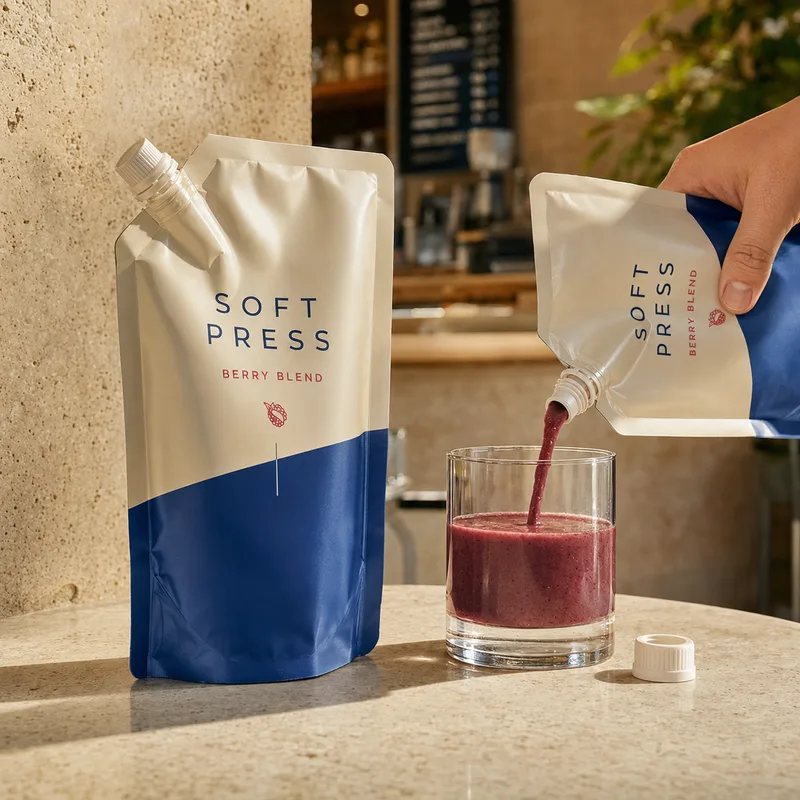
A spout pouch is a flexible pouch with a spout fitment sealed into it and a cap that opens and recloses. The contents are poured or dispensed through the spout instead of through the full pouch mouth, so the pouch works for liquids, sauces, purées and refills that a zipper pouch cannot dispense cleanly. The spout defines the format; the pouch body behind it can vary, and a fitment can be incorporated into compatible stand up or flat pouch constructions.
How the Spout Fitment Works
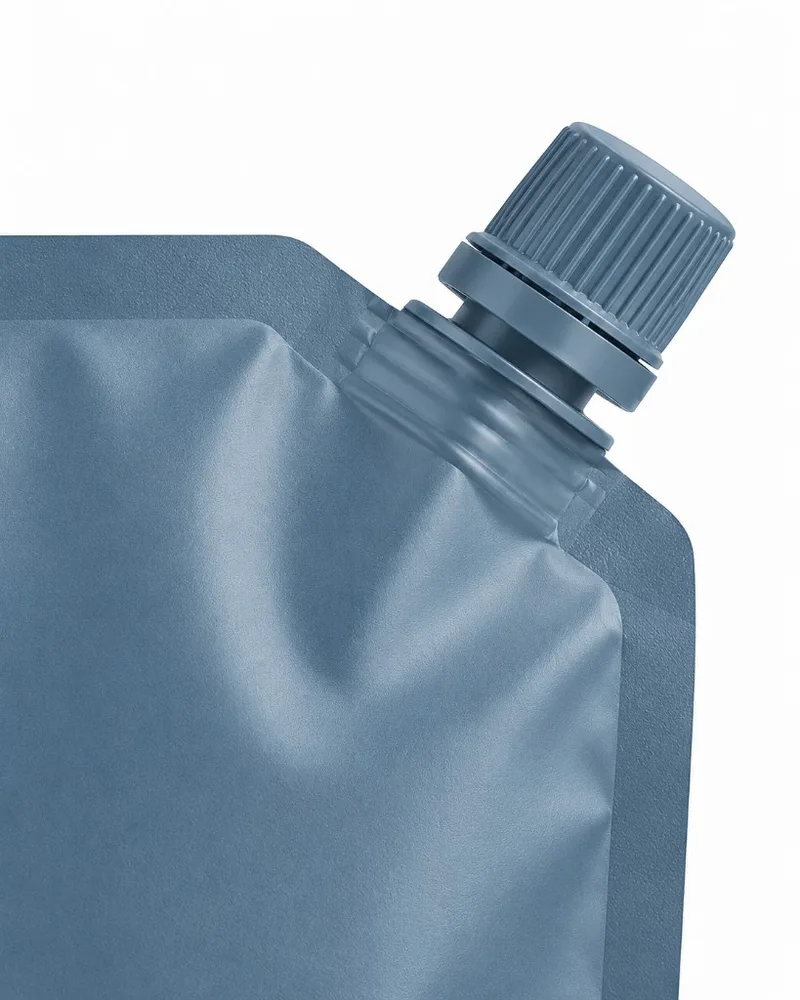
The fitment turns a flexible pouch into a pourable, reclosable container.
01
Sealed-In Fitment
The spout's base is heat sealed between the pouch films, so the fitment becomes part of the pouch rather than an add-on.
02
Defined Outlet
The spout's inner diameter controls how fast and how cleanly the product flows. Thin liquids pour well through a small spout, while thick or particle-containing products need a wider one.

03
Reclosable Cap
The cap screws or snaps back onto the spout between uses, so the pouch can be opened, poured and closed repeatedly without exposing the full contents.

Anatomy of a Spout Pouch
A spout pouch combines a pouch body with a fitment and closure.
-
01
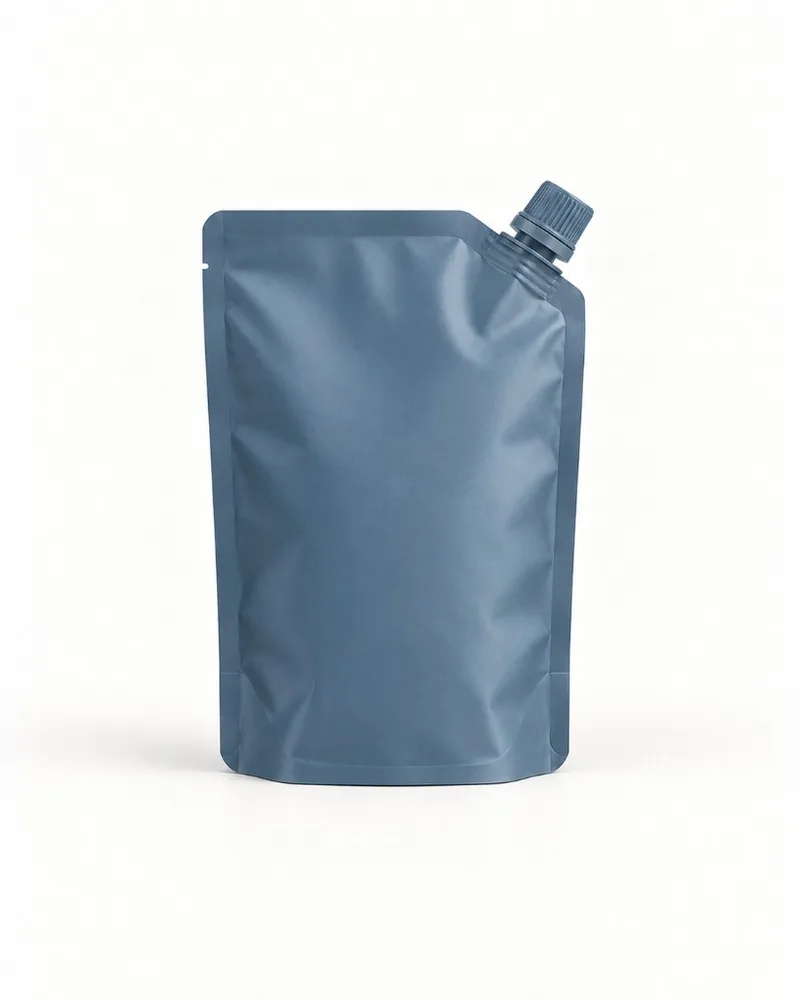
Front Panel
Primary branding, product name and front-facing communication.
-
02
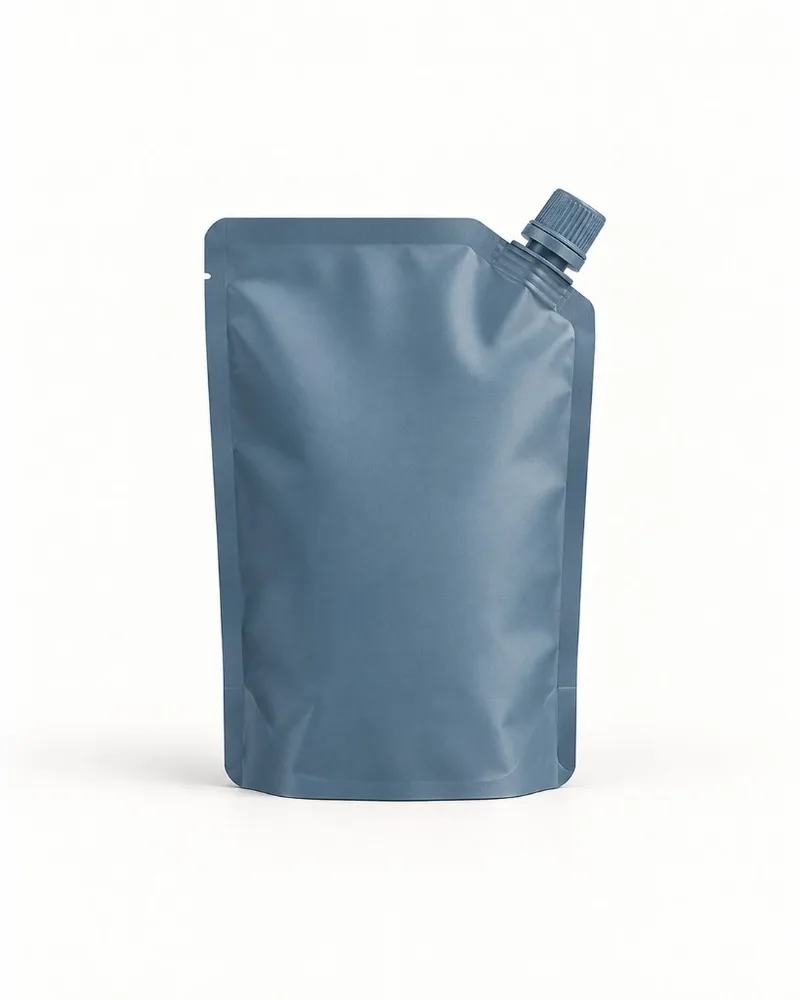
Back Panel
Ingredients, directions, barcode and regulatory information.
-
03
Bottom Gusset
Opens when filled so the pouch stands, on stand up body configurations.

-
04
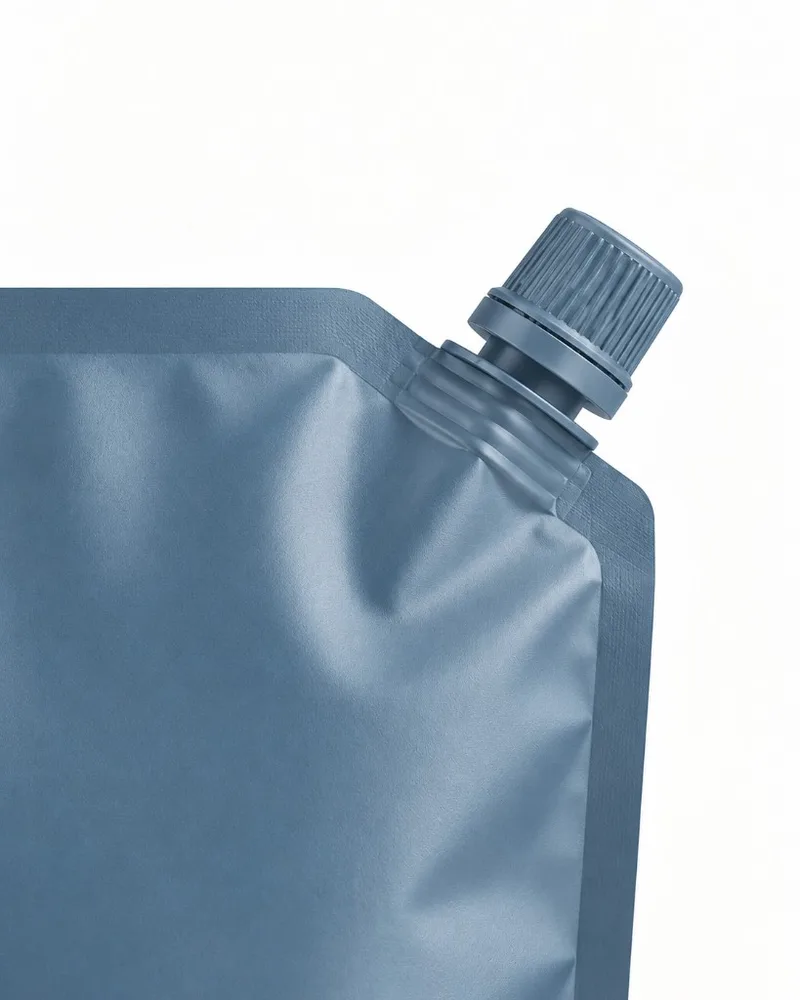
Spout Fitment
The sealed-in outlet, placed at the top center or at a top corner.
-
05
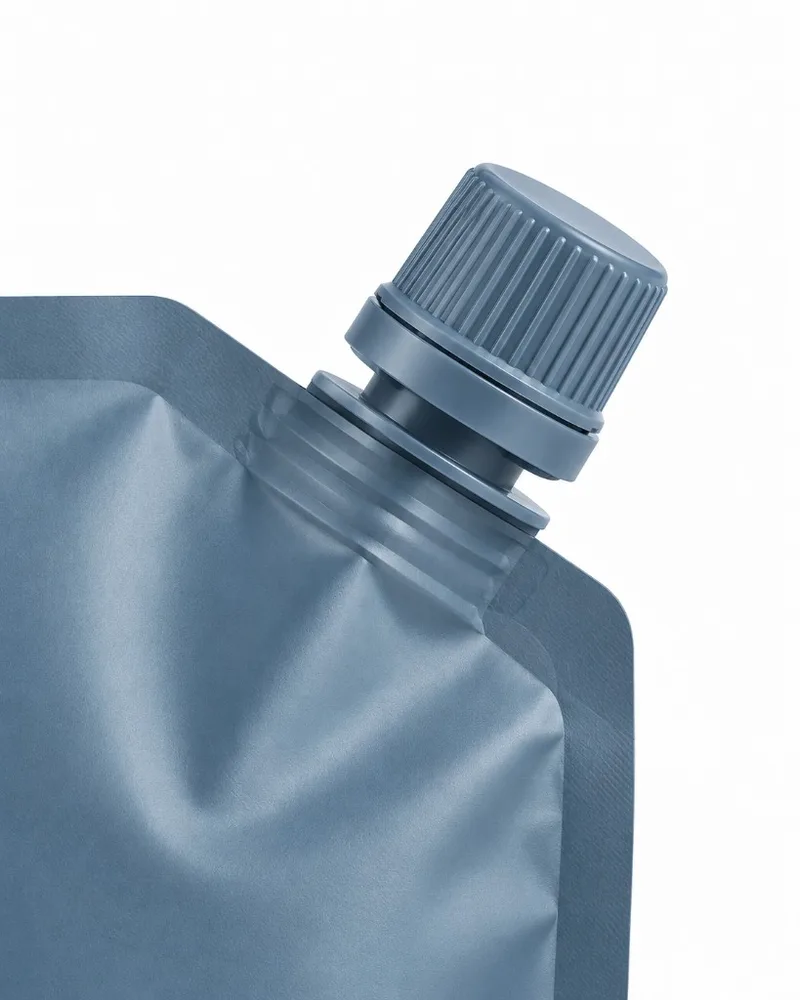
Cap
The reclosable closure; tamper-evident caps can be specified, and child-resistant designs where the complete package is tested for that use.
Keep important copy, logos and barcodes clear of the fitment seal area, the side seals and the bottom gusset fold.
Spout Position and Diameter
Spout position and diameter are chosen around the product and how it will be used.
| Spout Inner Diameter | Typically Suited To |
|---|---|
| About 8.6–10 mm | Thin liquids such as juices, water and beverage concentrates |
| About 13–16 mm | Viscous liquids such as sauces, shampoos, lotions and detergents |
| About 22–33 mm | Larger fills, faster pouring and thicker or chunkier products |
A top-center spout suits upright dispensing and shelf display; a corner spout suits controlled pouring from larger pouches. These diameters are guidelines; the final spout is confirmed against the actual product and filling process.
Application guide
When Is a Spout Pouch the Right Choice?
A spout pouch works well when a liquid or pourable product needs controlled dispensing, reclosure and a flexible package, such as beverages, sauces, purées, personal care liquids and refill products.
-
01
Pour
Controlled Pouring and Dispensing
The spout gives the product one defined outlet, so it pours or squeezes out in a controlled stream rather than spilling from an open pouch mouth. -
02
Cap
Cap-Based Reclosure
A compatible cap reseals the pouch between uses, which suits products used over several servings or refills. -
03
Format
Flexible Alternative to Rigid Containers
The pouch body is flexible film rather than a rigid bottle or jar, and the format collapses as it empties. Final pricing depends on the selected pouch, fitment and cap. -
04
Alternative
When Another Format May Fit Better
For dry or granular products that are scooped or poured from the top, a Stand Up Pouch with a zipper is the simpler format. For samples and single-use portions, a 3 Side Seal Pouch may fit better.
Spout Pouch Specifications
Custom spout pouches are developed around the product, filling method, fitment system, barrier requirements and distribution conditions.
| Specification | Available Configuration |
|---|---|
| Product Type | Spout Pouch |
| Category | Mylar Bags |
| Custom Dimensions | Custom W × H × gusset where applicable |
| Reference Capacity Range | About 250 mL to 2 L, with custom sizing |
| Fitment / Closure | Integrated spout fitment with compatible resealable cap |
| Spout Position | Top center or top corner |
| Spout Inner Diameter | Commonly about 8.6 mm to 33 mm, selected around product flow |
| Materials | PET film, clear PET film, metallized PET film, holographic PET film and compatible laminate structures selected for the application |
| Laminate Thickness | Typical custom range around 100–160 μm total, selected around fill volume, product and handling |
| Functional Features | Tear notch, hang hole and clear window where compatible |
| Print Methods | Digital, flexographic and rotogravure |
| Print Coverage | Front only, front and back, or full wrap |
| Print Colors | Full-color CMYK and Pantone spot colors |
| Coating / Lamination | Gloss, matte and soft-touch; interior aluminum foil where compatible |
| Finishes | Foil stamping, Spot UV and Raised 3D UV where compatible |
| Food-Contact Documentation | Applicable testing and documentation can be arranged per order for the selected pouch, fitment and destination market |
| Starting Price | From $0.55 / unit; final price depends on size, film, fitment, cap, printing, finishes and quantity |
| Minimum Order | 500 units, subject to final fitment and construction confirmation |
| Standard Production | 7 days from approved proof after the final pouch and fitment specification |
| Rush Production | Available on request where the approved specification allows |
| Shipping | USA and worldwide |
How Spout Pouches Compare to Other Pouch Formats
The spout is what separates this format from the dry-product pouches; the clearest differences are in how the product leaves the pack and how it recloses.
| Attribute | Spout Pouch | Stand Up Pouch | Flat Bottom Bag | 3 Side Seal Pouch |
|---|---|---|---|---|
| Dispensing | Through a sealed-in spout | Through the opened top | Through the opened top | Through a torn or cut opening |
| Reclosure | Screw or snap cap | Zipper options | Zipper options | Zipper options where compatible; often single-use |
| Body | Varies by configuration; fitment can be built into compatible stand up or flat pouch bodies | Folding bottom gusset | Distinct flat base + two side gussets | No gusset; three perimeter seals |
| Self-standing | Depends on the pouch body; standing configurations can self-stand | Yes, when correctly sized and filled | Yes, when correctly sized and filled | Typically no |
| Product type | Liquids, sauces, purées and refills | Dry and granular goods | Dry and granular goods | Dry goods, samples and portions |
| Main sizing variables | Pouch dimensions, fill volume, spout diameter and position | Width, height, bottom gusset | Width, height, side gussets and base | Width, height, seal width |
| Main compatibility check | Product flow, fitment and material compatibility | Gusset expansion and closure placement | Base and gusset expansion, case fit | Opening orientation and perimeter seals |
| Best fit | Controlled pouring and reclosable liquids | Versatile upright retail packaging | Defined shelf footprint and five-panel presentation | Samples, portions and compact packs |
What Size Spout Pouch Do You Need?
Size a spout pouch by the liquid volume it must hold, the headspace needed for filling and the space the fitment takes at the top. Liquids fill to a predictable volume, so spout pouches are usually specified in milliliters or fluid ounces rather than by weight.
Common Spout Pouch Sizes and Capacity
These are reference starting points for stand up spout pouches, listed as outside width × height × bottom gusset.
| Capacity | Approx. W × H × Gusset | Typical Spout Inner Diameter |
|---|---|---|
| ~250 mL / 8.5 fl oz | 4.1 × 6.6 × 2.7 in | 16 mm |
| ~500 mL / 16.9 fl oz | 5 × 8.6 × 3.1 in | 16 mm |
| ~1 L / 33.8 fl oz | 6.25 × 10.5 × 3.6 in | 16, 22 or 33 mm |
| ~2 L / 67.6 fl oz | 7.4 × 12 × 4 in | 33 mm |
Smaller sachet-style spout pouches from about 30 mL and larger pouches up to several liters can be developed to custom dimensions.
Important: These capacities are reference values, not guaranteed fills. Product viscosity, fill temperature, required headspace, fitment position and filling method all affect the final dimensions. A trial fill should be completed before the production dieline is approved.
If your product is not listed, share the product, target fill volume and viscosity with the quote request so the pouch and spout can be sized around it.
Why Does Viscosity Change the Spout Choice?
A thin liquid flows easily through a small spout, but a sauce, lotion or purée needs a wider opening to pour without heavy squeezing, and products with particles need a diameter large enough not to clog. Two pouches of the same capacity can therefore need different spouts, and a wider spout can also change the cap, the fitment seal area and the filling method.