
Corrugated Shipping Boxes
RSC cartons in single or double wall, sized by inside dimensions to the packed contents.
From $1.25/unit
11 answers →Packaging Guides/Shipping & Logistics
Packaging GuideWhy heavy cases crush in a stack, a mailer opens in transit or a freight bill jumps, which carton, wall and ECT grade suit your load, and how to show that a parcel was opened. Each answer gives the cause first, then the box that solves it.
Which Shipping Box or Bag Do You Need?Browse shipping & logistics packaging →
Each answer below is linked to the product it applies to. Pick a product to see its answers, open its page for sizes and pricing, or compare the full shipping & logistics packaging range.
RSC cartons in single or double wall, sized by inside dimensions to the packed contents.
From $1.25/unit
11 answers →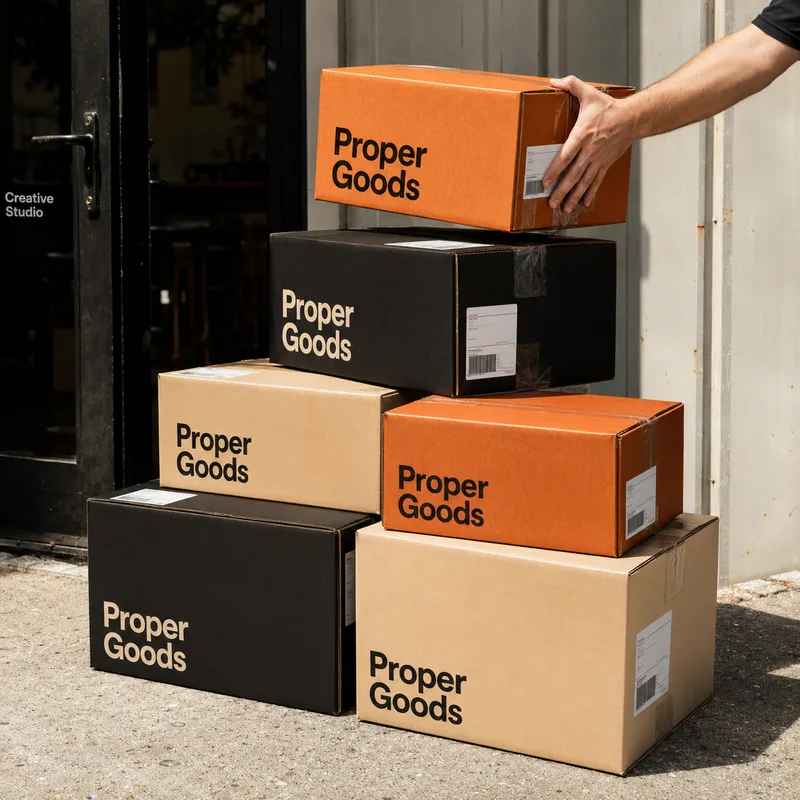
The smallest mailer or small RSC that protects the item.
From $1.25/unit
5 answers →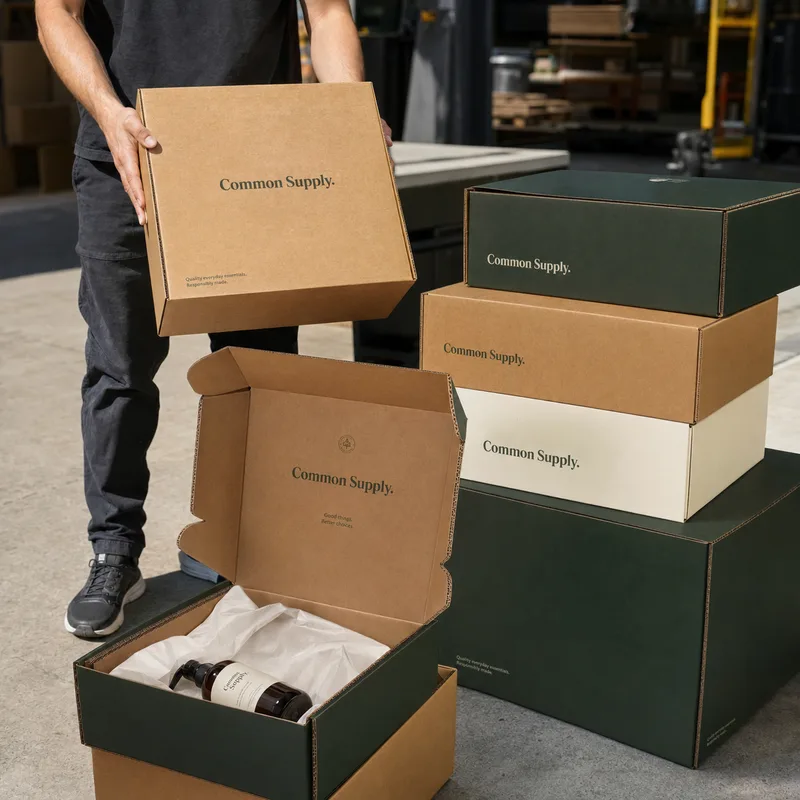
Roll End Tuck Top mailers specified around the packed product, protection and route.
From $1.45/unit
3 answers →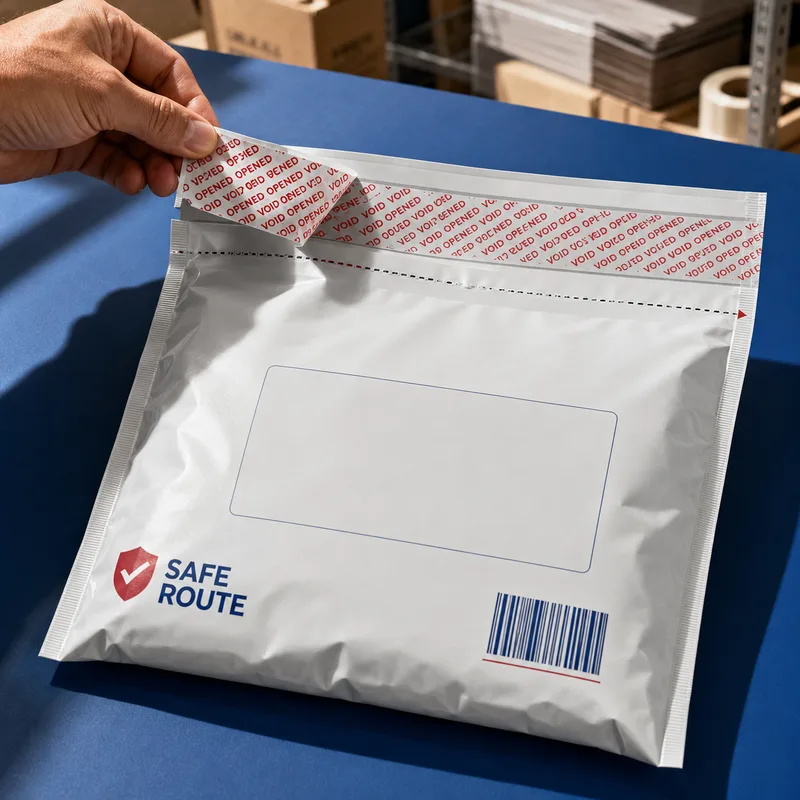
Opaque mailers with a permanent or VOID / OPENED closure.
From $1.25/unit
4 answers →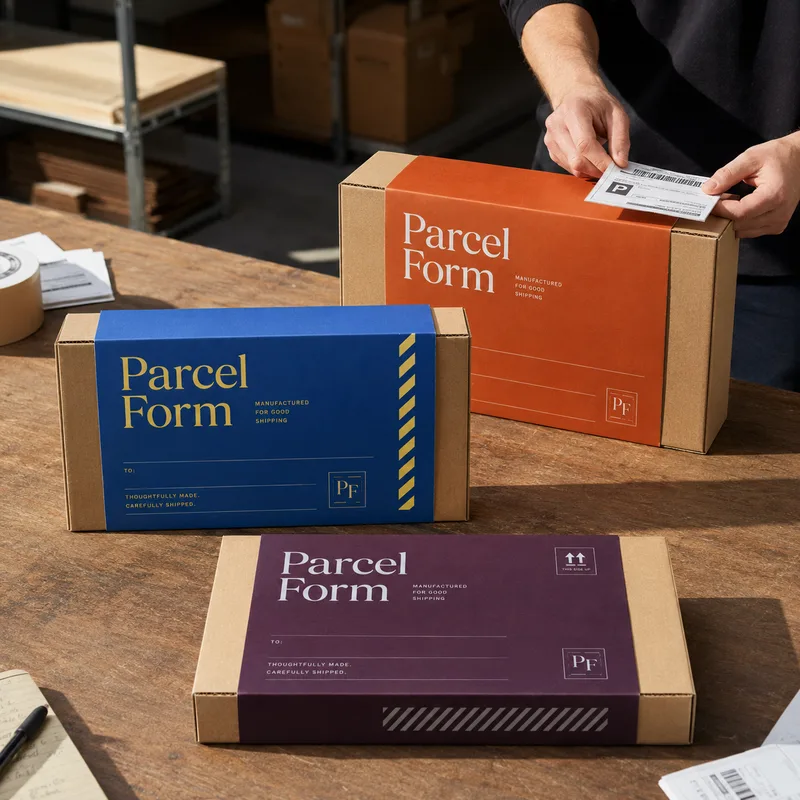
Open a problem to see why it happens and how to fix it.
Why it happensA corrugated wall carries stacking load through its fluted layers. One fluted layer at a common 32 ECT can buckle under heavy or long-stacked cases, and humidity weakens board further.
How to fix itReview double wall; 44 and 48 ECT are common reference grades, and the grade is confirmed per order against your packed weight, stack height and conditions.
Why it happensA tuck lid is held by friction and the tuck flap. Parcel sorting drops and squeezes the box, which can work the lid loose, most of all on heavier orders.
How to fix itClose it with tape or an adhesive strip suited to the carrier and product, and check the closure on a packed sample.
Why it happensCarriers bill the greater of actual weight or dimensional weight (L × W × H ÷ a divisor, commonly 139), so empty space in an oversized box is billed as weight.
How to fix itSize the box to the packed contents, keep a small range of sizes, and check the divisor on your own carrier account.
Why it happensA standard poly closure can often be lifted and pressed shut again without leaving a mark.
How to fix itUse a tamper-evident bag whose permanent peel-and-seal damages the bag when opened, or a VOID / OPENED closure, confirmed on the finished sample.
Why it happensCorrugated is rough and porous, and parcels meet cold, damp and rubbing in transit; an adhesive made for smooth paper loses its hold on that surface.
How to fix itUse a permanent adhesive chosen for corrugated, paper or film and test it on your box.
Why it happensWhen artwork is printed on the board, every design change needs a new box run.
How to fix itUse one plain mailer with a printed shipping sleeve per product, so only the sleeve changes.
An RSC (regular slotted container) has four flaps top and bottom, is cut open and is mostly printed outside, for heavy, bulky or multi-item freight. A roll end tuck top mailer is one piece with a lifting lid, printed inside and out, for parcels with a branded opening.
| Parcel mailer box | Small RSC carton | |
|---|---|---|
| Construction | One-piece roll end tuck top | Four flaps top and bottom |
| Opening | Lid lifts, tear strip where specified | Cut the tape, open flaps |
| Presentation | Printed inside and out | Mostly outside print |
| Sealing | Tape or adhesive strip per carrier | Tape |
LinksCustom Parcel Boxes →Custom Shipping Mailer Boxes →Corrugated Shipping Boxes →Mailer Boxes guide →
ECT (edge crush test) rates how much stacking load a corrugated wall takes. Single wall, one fluted layer between two liners, is commonly 32 ECT, a reference grade often used for ecommerce and lighter cases. Double wall, two fluted layers and three liners, is commonly 44 or 48 ECT, reference grades often used for heavy, bulky or stacked freight.
| Single wall | Double wall | |
|---|---|---|
| Construction | One fluted layer, two liners | Two fluted layers, three liners |
| Common grades | 32 ECT | 44 or 48 ECT |
| Typical use | Ecommerce, lighter cases | Heavy, bulky or stacked freight |
| Box weight | Lighter | Heavier |
Note: Strength for your load is confirmed per order.
Carriers bill the greater of actual weight or dimensional weight: L × W × H in inches ÷ a divisor. UPS and FedEx commonly use 139, and USPS has used 139 since July 12, 2026 for parcels over 1 cubic foot. Divisors can differ by account and rate type, so check yours. A box with less empty space can cost less to ship, so size to the packed contents and keep a practical range of sizes. Worked examples are in the Ecommerce guide.
Mailers seal with tape or an adhesive strip, chosen for the carrier and product. For opening evidence, tamper-evident shipping bags use a permanent peel-and-seal or a VOID / OPENED closure, confirmed on the finished sample, with optional serial numbers and barcodes. High-value goods still need inner protection.
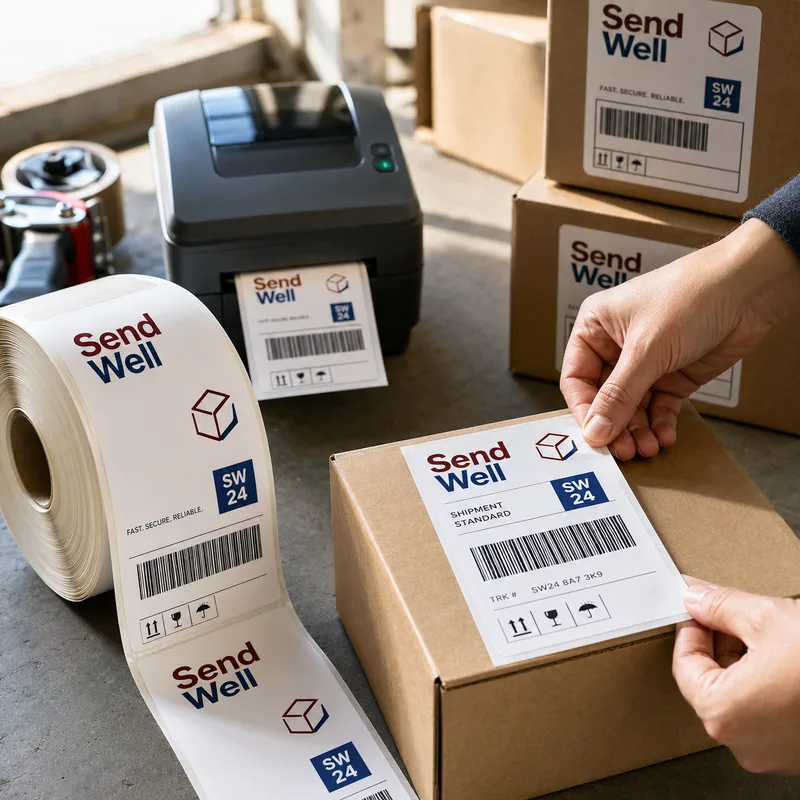
Shipping labels carry the address, tracking and handling marks on paper or film chosen for the printer, with a permanent adhesive for corrugated, paper or film. They're pre-printed with your logo area and handling marks; carrier data is printed by the shipper.
Send the packed contents, weight, units per box, shipping route and stacking needs, and whether parcels need opening evidence. Quotes typically come back within 24 hours; orders dispatch 7 days after proof approval, plus shipping time, with rush available, and orders start at 500 units.
Have these seven answers ready and your quote starts from the right specification. To compare every product side by side, see the shipping packaging range.
Packaging Dock makes custom shipping packaging to order from 500 units and ships across the USA and worldwide. These are the questions brands that ship parcels and freight ask most. Everything is on the shipping and logistics packaging page.
No answers for this product in this topic.
Board made of a fluted (wavy) layer glued between flat liners, which makes it stiff and light. Most shipping boxes are corrugated. An RSC, or regular slotted container, is the standard corrugated carton with four flaps top and bottom whose outer flaps meet at the center.
There’s no single figure. Strength depends on wall, flute, grade, box size, humidity and how the load is stacked, so strength for your load is confirmed per order.
Single wall (one fluted layer, two liners) is commonly 32 ECT, for ecommerce and lighter cases. Double wall (two fluted layers, three liners) is commonly 44 or 48 ECT, for heavy, bulky or stacked freight. Strength for your load is confirmed per order.
ECT (edge crush test) rates the board’s resistance to edgewise compression. 32 ECT is a common single-wall grade; 44 and 48 ECT are common double-wall grades. ECT isn’t the finished box’s stacking strength, which also depends on dimensions, construction, humidity and load.
A Mullen burst rating: the board resists 200 pounds per square inch of bursting pressure. It’s the older way of grading single-wall board; ECT rates stacking-related strength. Grade is set by load and stacking.
Flute is the wave in the middle layer. E and F are thin, for print and mailers; B is thicker; C thicker still; BC combines two flutes in double wall. Flute is selected for load and print.
With the right wall and grade for the load. Boxes at the bottom of a pallet crush when the board is too light; move to double wall. Stack in aligned columns without overhang.
An RSC has four flaps, is taped and mostly printed outside, for heavy, bulky or multi-item freight. A roll end tuck top mailer is one piece with a lifting lid, printed inside and out, for parcels with a branded opening.
Boxes here are made to custom inside dimensions, built around the packed contents, rather than from a size chart. Long and large boxes are sized the same way.
Measure the item with its wrap or insert: length, width and height. Boxes are sized by inside dimensions; the smallest size that protects the item ships cheapest.
Yes, dividers or partitions can be added for several units in one carton. Hand holes aren’t listed as a standard option.
Corrugated shipping boxes, parcel boxes, shipping sleeves, tamper-evident bags start from $1.25 per unit, shipping labels from $0.09; shipping mailer boxes start from $1.45.
500 units, with a standard turnaround of 7 days from proof approval to dispatch, plus shipping time and rush turnaround available on request.
That’s a tax question for your accountant; we don’t give tax advice.
Books ship in a snug RSC or mailer so they can’t slide and dent corners. Clothing packaging is on the apparel page.
Hold the item still with an insert or snug fit (paperboard, corrugated, foam/EVA or molded pulp) and keep it off the walls. For glass, box-in-box packing adds a second layer. Packaging Dock makes inserts and dividers, not loose void fill.
The board or flute is too light for the packed weight, or the box was oversized and moved. Review the board against the shipping specification.
Drop the packed parcel from set heights onto its faces, edges and corners to an agreed protocol, then check the contents. We publish no fixed crush or drop rating without testing the final packed configuration.
Not waterproof. Corrugated is paper, so it absorbs water and loses stacking strength when wet or humid; keep cartons dry in storage and put moisture-sensitive goods in an inner bag. Labels use a permanent adhesive chosen for transit conditions.
The candle, fragrance and cosmetics pages have shipping boxes with supports for glass.
Insulation and cold-chain components need a separate project-specific system; standard boxes aren’t one.
Opaque polyethylene mailers with a permanent peel-and-seal closure that visibly damages the bag when lifted, or an optional VOID / OPENED closure that leaves a message, so a resealed flap still shows it. Seal performance is confirmed on the finished sample.
Yes, as identification add-ons. They identify each bag; they aren’t tamper evidence by themselves.
A standard poly mailer’s closure isn’t opening evidence. A tamper-evident bag shows it was opened; it doesn’t stop opening, so high-value goods still need inner protection. Documents and small goods suit the bag; fragile items need a box.
The closure didn’t hold, or it was opened in transit with no evidence. Seal mailers with tape or an adhesive strip per carrier, and use tamper-evident bags where opening evidence matters. Theft prevention depends on delivery controls beyond the box.
UPS and FedEx bill the greater of actual weight or dimensional weight (L × W × H in inches ÷ 139), and USPS uses the same divisor for parcels over 1 cubic foot. An oversize box is billed for its empty space, so size to the packed contents.
Many shipping systems print 4 × 6 in labels on thermal printers. Ours are cut to the size your software prints, on stock confirmed for your printer’s technology, ribbon and feed.
Yes. Labels are pre-printed with your logo area and handling marks; carrier data is printed by your shipping software.
Yes. Fragile, handle with care and this side up labels are pre-printed.
Paper or film stock is chosen for the printer and surface, with a permanent adhesive for corrugated, paper or film. If labels smear or fall off, review stock, ribbon and adhesive.
Yes. Corrugated cartons print outside from one color to full color; mailers print inside and out. A plain outer box with a branded inner box hides the brand in transit.
One plain mailer serves every product, and a printed sleeve per product carries the design: when a product changes, only the sleeve is reordered, not the box.
Inside-printed mailers and unboxing layers are covered on the ecommerce page.
No. Branded tape isn’t a Packaging Dock product.
Yes. List each item in one quote request; each has its own 500-unit minimum.
Corrugated mostly is, depending on print, coatings and local rules; many programs accept boxes with tape, but check locally. Composting claims need their own evidence.
It depends on the label stock, adhesive and local rules.
The packed contents with dimensions and weight, units per box, the route and stacking needs, and whether parcels need opening evidence.
Ready to put it together?
Answer a few questions and get a packaging setup with the reason for every choice, or browse every shipping & logistics product.