Packaging Guides/Custom Sleeves
Packaging GuideCustom Sleeves Packaging Guide
Why a sleeve slides off or crushes what it wraps, which of the four structures fits your pack, how to size around a finished box and how one plain box can carry a whole range. Each answer gives the cause first, then the sleeve that solves it.
Which Custom Sleeve Do You Need?Browse custom sleeves packaging →
In this guide
Products This Guide Covers
Each answer below is linked to the product it applies to. Pick a product to see its answers, open its page for sizes and pricing, or compare the full custom sleeves packaging range.



Slipcase Box
Assembled sleeve open at both ends, for a two-stage reveal.
From $0.52/unit
1 answers →
Foil Stamped Sleeves
Box sleeve with metallic or pigmented foil in selected areas.
From $0.50/unit
1 answers →


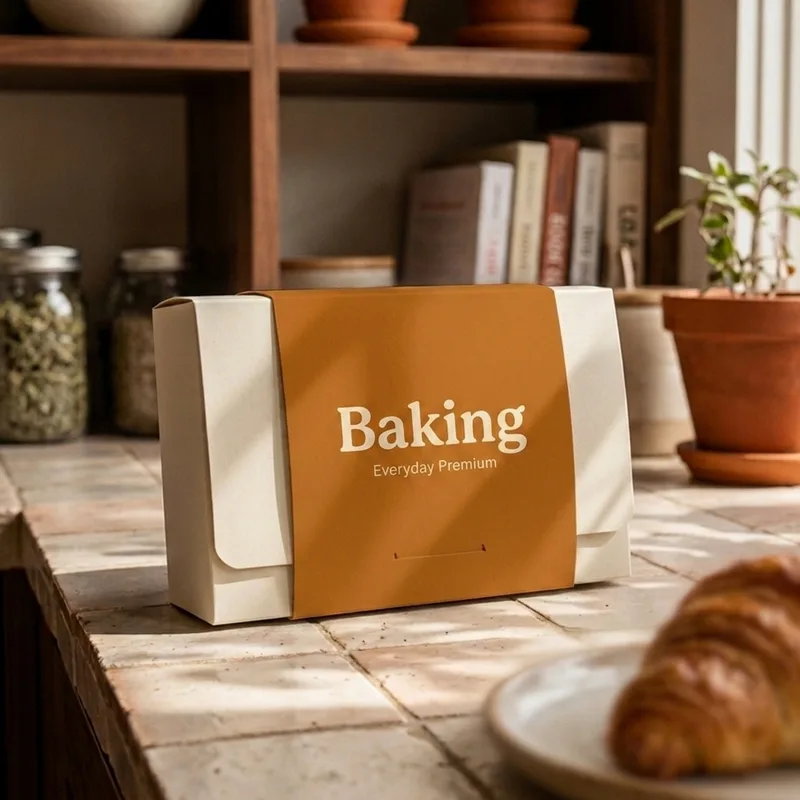

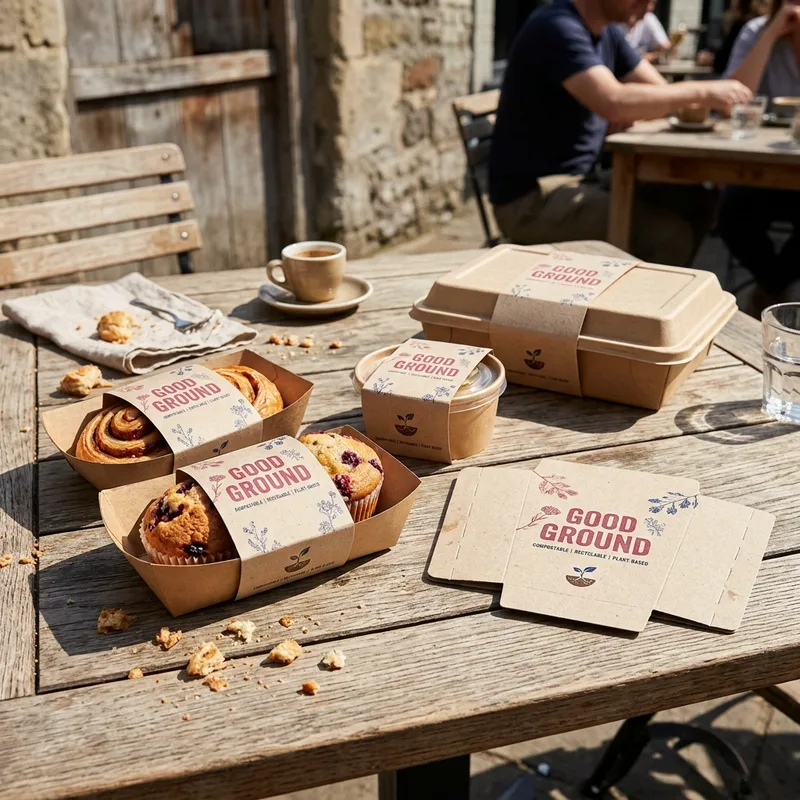
Compostable Sleeves
Paper or paperboard intended for composting; claims only with evidence.
From $1.25/unit
1 answers →What Is a Packaging Sleeve?
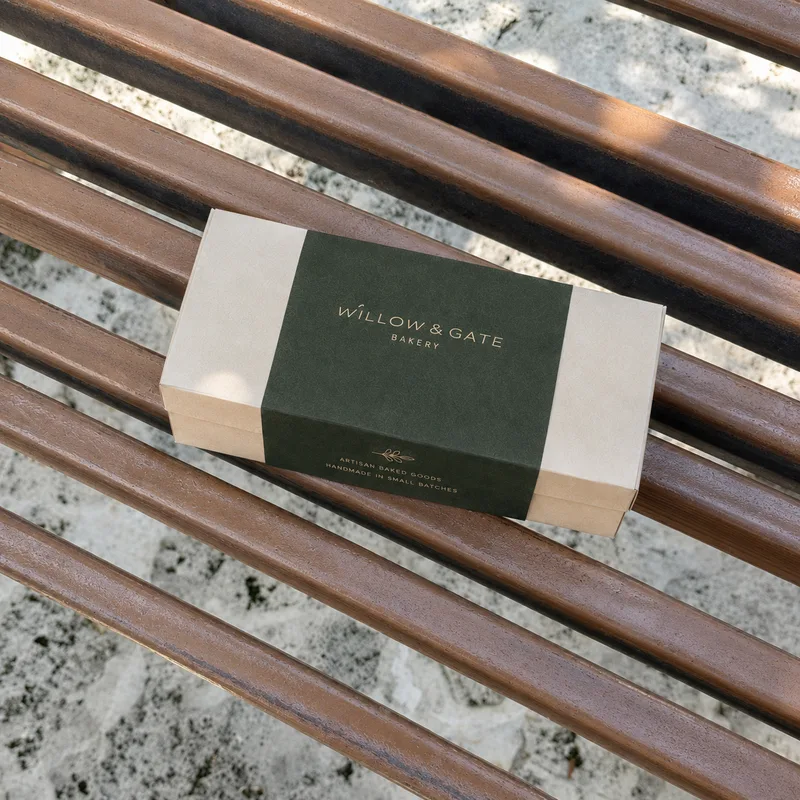
A packaging sleeve is a printed paper or paperboard wrap that slides over a box, product or group of items to brand it. It adds a new exterior without a new box run, so one plain box can carry many scents, roasts or campaigns. The box underneath gives the structural protection.
Key terms
01
Box sleeve
A four-panel tube over a finished box, ends open.
02
Belly band
A narrow band around part of the pack, which stays mostly visible.
03
Cup sleeve
A tapered band around a beverage cup for grip and hand separation.
04
Slipcase
An assembled sleeve, open at both ends, that the box slides into, for a two-stage reveal.
Why Do Sleeves Slide Off, Crush or Hide Copy?
Sleeve problems come from sizing to the wrong thing (the item instead of the packed form) and from what sits under the sleeve. Open a problem to see why it happens and what fixes it.
The sleeve slides off
Why it happensA sleeve stays on by friction. Sized too loose, or in board too light to keep its shape, it has nothing to grip and slides off when the pack is tilted.
How to fix itSize the inside to the finished box plus about 1–2 mm and review the board on a new sample.
The sleeve crushes the stack or creases fabric
Why it happensIt was sized to one item, but it wraps the packed form: a stack, a fold or a bundle that is thicker than the item alone.
How to fix itMeasure the packed form as folded, stacked or bundled, and size the sleeve to that.
Scents or roasts mix up at packing
Why it happensSleeves for different scents or roasts look alike from the end the packer sees, so the wrong sleeve goes on the right box.
How to fix itPrint a scent or roast name or code on the sleeve end.
Warning copy is hidden
Why it happensRequired copy was printed on the box panel the sleeve covers.
How to fix itMove required copy to a panel the sleeve leaves visible, or print it on the sleeve.
The window shows solid board
Why it happensThe sleeve window was placed without a matching opening in the box underneath.
How to fix itAlign the sleeve window with a window in the package below.
Foil cracks on a fold
Why it happensFoil is stiffer than the board. Where it crosses a score, the fold bends it beyond what it can take and it cracks.
How to fix itKeep foil off folds and check on a sample.
Grease marks a bakery sleeve
Why it happensThe sleeve meets buttery or oily food directly, and plain board absorbs the oil.
How to fix itUse a wrap or liner under the sleeve, or confirm a grease-resistant board.
Which Sleeve Structure Should You Choose?
Choose by coverage. A Box Sleeve gives a full new exterior on four sides. A Belly Band names the product or groups items while most of the pack stays visible. A Cup Sleeve grips a beverage cup. A Slipcase adds a surrounding case and a two-stage reveal.
Structures
- Box Sleeve: Best for: a new exterior over one box size.
- Custom Belly Band: Best for: minimal branding with the product visible.
- Cup Sleeve: Best for: cafés and beverage programs.
- Slipcase Box: Best for: gift and collector sets.
| Box Sleeve | Belly Band | Cup Sleeve | Slipcase | |
|---|---|---|---|---|
| Wraps | A finished box | Part of a box, product or group | A beverage cup | An inner box, book or set |
| Coverage | Four sides, ends open | Narrow band | Grip zone | Four sides, full length, both ends open |
| Closure | Seam, slides on | Overlap, adhesive or lock | Seam, slides on | Built case, slides in |
| Board range | Paperboard or E/F-flute | Paper or light paperboard | Paperboard, kraft or corrugated | Paperboard, corrugated or rigid board |
Variants
Which Sleeve Fits Your Product?
Product sleeves are built around one kind of package: a candle box per scent, a coffee box per roast, a folded garment, a soap bar, a perfume box per edition, a bakery stack or a pharma carton. From $0.28 per unit.
| Product | Sleeve | Why a sleeve |
|---|---|---|
| Candles | Candle Packaging Sleeves | Swap the sleeve per scent over one plain box |
| Coffee | Coffee Packaging Sleeves | Roast artwork and copy over a shared box or tin |
| Clothing | Custom Garment Sleeves | Fabric stays visible; light surface coverage |
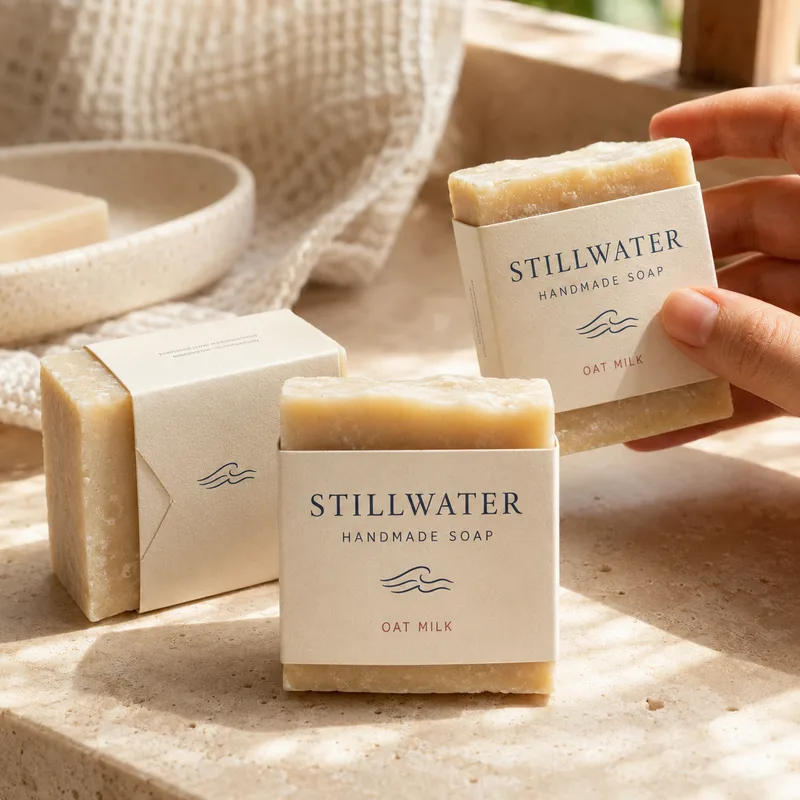
| Soap | Custom Soap Sleeves | Bar visible and scent reaches the buyer |
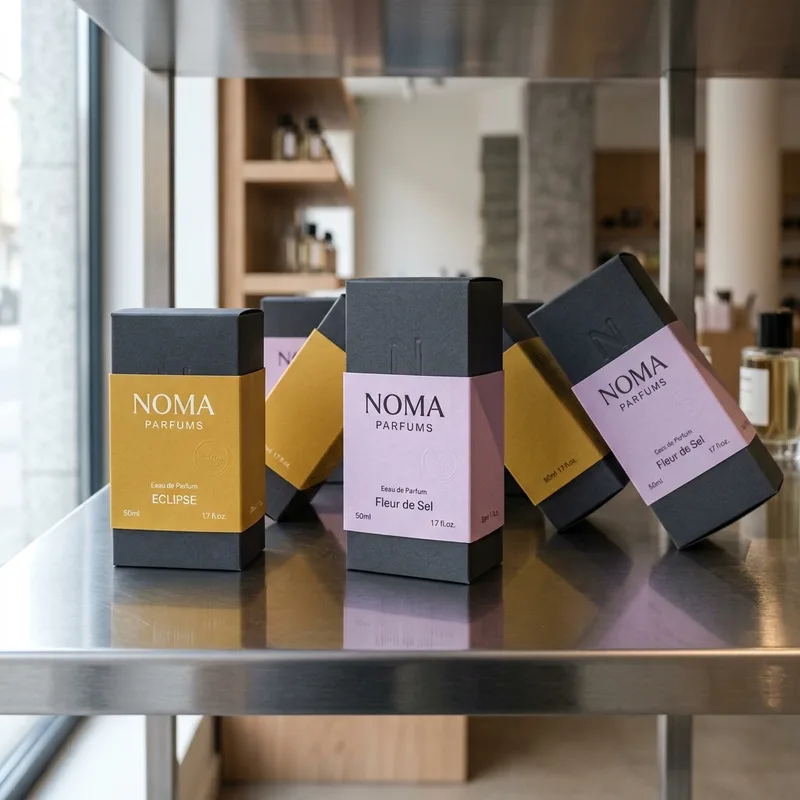
| Perfume | Custom Perfume Sleeves | Swap the sleeve per edition, two-step reveal |
| Cookies and bakery | Bakery & Pastry Sleeves | Brands a wrapped stack, tray or box |
| Pharma | Pharmaceutical Sleeves | Secondary sleeve over a carton |
Note: Industry guidance: Candle · Tea & Coffee · Apparel · Soap · Fragrance · Bakery · Pharma.
Which Board Should a Sleeve Use?
Bands use text-weight paper up to about 18 pt paperboard. Full box sleeves use about 14–28 pt paperboard: 18–20 pt for most retail and gift sleeves, 26–28 pt for rigid gift boxes and large sets. Cup sleeves use 14–24 pt paperboard or E/F-flute corrugated; slipcases go up to rigid board.
| Material | Typical thickness | Typically suited to |
|---|---|---|
| Text-weight paper | About 0.1–0.15 mm | Light bands around soft goods |
| Cover-weight paper | About 0.2–0.3 mm | Bands on gift boxes, stationery, soap |
| About 14–16 pt | About 0.36–0.41 mm | Light cartons, short campaigns |
| About 18–20 pt | About 0.46–0.51 mm | Most retail and gift box sleeves |
| About 22–24 pt | About 0.56–0.61 mm | Larger boxes, frequent handling |
| About 26–28 pt | About 0.66–0.71 mm | Rigid gift boxes, large sets |
| E- or F-flute corrugated | About 0.8–1.6 mm | Large sleeves; hot cups needing more separation |
| Rigid board, slipcase | About 1.5–3 mm | Cased gift and collector sets |
How Do You Size a Sleeve?
Measure the finished outside of the box, then add about 1–2 mm (1/16 in) to width and height for a sliding fit. For a belly band, measure the circumference where it sits and add the overlap or tab. For a cup, measure diameter at the sleeve's top and bottom edges.
| Sleeve | Measure | Allowance |
|---|---|---|
| Box sleeve | Box outside width and height | about +1–2 mm (1/16 in) as a starting allowance; length full or shorter to show the ends |
| Rigid box with wrapped corners | Over the wrap at its widest point | about +1–2 mm (starting allowance) |
| Belly band | Circumference where the band sits | + overlap or tab; about 1 mm per side for a snug fit |
| Cup sleeve | Diameter at top and bottom edge; taper | Height often about 2–3 in (50–75 mm) |
| Grouped or soft items | The packed bundle or fold | — |
Note: One sleeve fits several box or cup sizes only where finished sizes or profiles genuinely match.
Can Sleeves Have Windows and Foil?
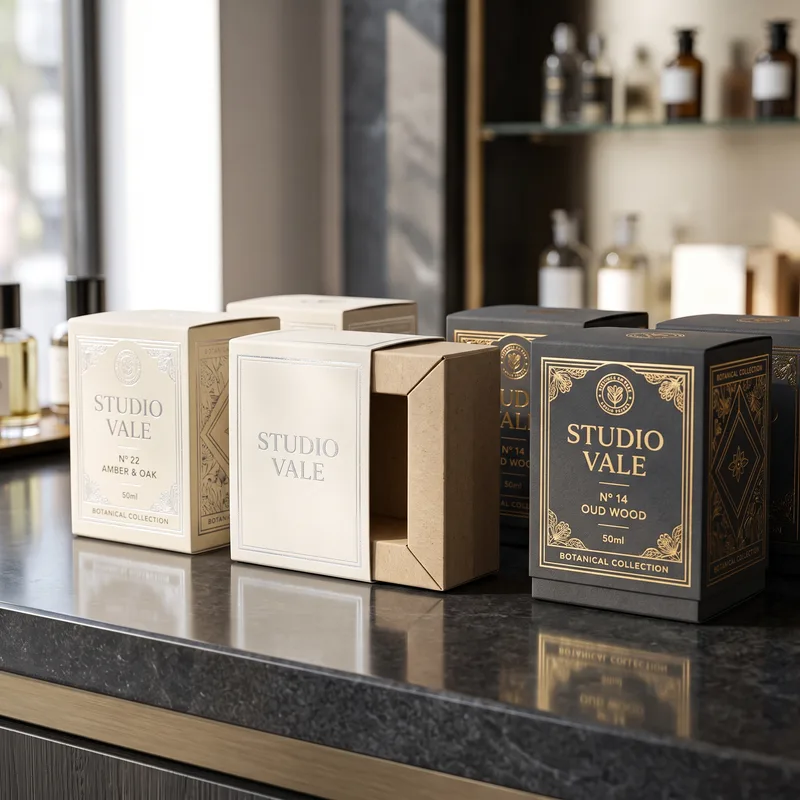
A die-cut window, open or with clear PET film, shows the product, but only when it lines up with an opening or window in the package underneath. Foil stamping adds a metallic logo or name; keep it off folds so it doesn't crack.
Add-ons: die-cut window, tear strip, tongue lock or locking tab, by structure.
How Are Custom Sleeves Printed?
By offset, digital, UV or screen printing, in CMYK and Pantone spot colors, on the exterior only or exterior and interior. Coat with matte, gloss or soft-touch lamination or aqueous coating, and add foil, emboss, deboss, Spot UV or raised 3D UV. Cup sleeve finishes are chosen for grip.
How Do You Order Custom Sleeves?
Send the finished outside size of the box or package, how many designs or scents, the board and finishes, and whether a window must line up with the box. Quotes typically come back within 24 hours; orders dispatch 7 days after proof approval, plus shipping time, with rush available, and orders start at 500 units. Every structure and product sleeve is on the custom sleeves page.
PriceStructures, window and foil sleeves from $0.30 · product sleeves from $0.28
Minimum order500 units
Production7 days from approved proof to dispatch, plus shipping time
RushAvailable on request
Quote replyTypically within 24 hours
SamplesProduced before bulk manufacturing for approval
ShipsUSA and worldwide
What Should You Decide Before Ordering?
Have these answers ready and your quote starts from the right specification.
01
What it wraps
The finished box, tray or bundle, measured as packed.
02
Structure
Box Sleeve, Belly Band, Cup Sleeve or Slipcase.
03
Coverage
What stays visible (warnings, windows) and what the sleeve carries.
04
Range
How many scents, roasts or editions share one base box.
05
Look
Board, window, foil and finish.
06
Quantity and date
500 units minimum; your launch date.
Custom Sleeves dieline templates
Each structure below has a free template generator: enter your size and download a PDF, SVG, DXF or PNG file with bleed and safe zone marked. Before you order, open it in the 3D mockup generator to see your artwork on the folded pack.
- Box Sleeve dieline · see it in 3D: best for branding plain boxes and trays
- Belly Band dieline · see it in 3D: best for small boxes, seals, secondary branding
- Cup Sleeve dieline · see it in 3D: best for tapered hot and cold drink cups
- Slipcase Box dieline · see it in 3D: best for two-stage reveals, sets and gift boxes
All structures in one place: dieline generator.
Custom Sleeve Questions, Answered
Packaging Dock makes custom sleeves to order from 500 units and ships across the USA and worldwide. These are the questions candle, coffee, soap, apparel and gift brands ask most. All sleeves are on the custom sleeves page.
No answers for this product in this topic.
Questions
Why use a sleeve instead of a printed box?
One plain box plus a sleeve per scent, roast or edition means a range change is a new sleeve, not a new box run.
Box sleeve vs belly band?
A box sleeve covers all four sides and leaves only the ends showing; a belly band covers a narrow band and leaves most of the pack visible.
Slipcase vs drawer box?
A slipcase is a separate case over an existing box, book or set; a drawer box has a dedicated tray that is part of the box.
Can a sleeve be used without a box?
Yes, when the product holds its own shape. A belly band can wrap a soap bar, a folded garment or a bundle directly. It doesn't enclose the product, so use it where the product is already protected or stable. See Custom Belly Band.
Can a sleeve bundle several products?
Yes, under one band, when the bundle holds together. Measure the bundle as packed, not each item; irregular or heavy items can shift, so they may need a tray underneath.
Does a sleeve protect the product?
Only its surface. A sleeve adds coverage and branding; protection comes from the box, insert and shipping system underneath.
Are cup sleeves insulated?
They give material-dependent hand separation, not a universal insulation rating. Use 20–24 pt or E/F-flute for hot drinks.
Is a soap sleeve waterproof?
No. Paper and board sleeves absorb water. Whether a sleeve can touch the bar directly depends on the soap's oil and moisture content and the stock, confirmed per order. See Soap Sleeves.
Does a coffee sleeve keep coffee fresh?
No. Freshness comes from the sealed barrier bag, with a one-way valve where freshly roasted coffee is packed while it is still degassing; the sleeve is a printed outer layer for the roast or origin. See Coffee Bags with Valve.
How much do custom sleeves cost?
From $0.30 per unit for the structures (Box Sleeve, Belly Band, Cup Sleeve and Slipcase) at 500 units, and from $0.28 for product sleeves such as soap sleeves. Price depends on size, board, print and finishes.
Are sleeves recyclable?
Most paper and board sleeves are, depending on the material and finishes; foil and laminations change that. See Sustainable Packaging.
Sleeves for campaigns and launches?
Yes. A campaign sleeve puts launch or limited-time artwork over your regular box, so only the sleeve is printed and retired. See Campaign Packaging Sleeves.
Sleeves for holiday editions?
Yes. A holiday sleeve over the year-round box gives a seasonal look without a seasonal box run. See Holiday packaging.
Basics
What is a sleeve box, and what is a sleeve pack?
Both usually mean a box carried inside a sleeve: a box with a printed sleeve over it, or a sleeve-and-tray box where the tray slides out of the sleeve. A sleeve-and-tray box with a dedicated tray is a drawer box.
What is a sleeve in food packaging?
A printed band or sleeve over a bakery box, tray, bag or wrapped stack. The box or wrap holds the food; the sleeve brands it, and only touches unwrapped food where the board, coatings, inks and film are confirmed for that food.
Sleeve, wrap or band: what is the difference?
A sleeve covers all four sides of a box; a band covers a narrow strip and leaves most of the pack visible; a wrap is a general term for either. A printed band also carries the name, scent or offer, which a ribbon doesn’t.
Can a sleeve have a handle?
A handle is not listed as a sleeve option. Sleeve add-ons are a die-cut window, tear strip and tongue lock or locking tab, by structure; ask about anything else with your quote.
Can a sleeve hold a tray?
A sleeve slides over a finished box. A sleeve with its own tray that slides out is a drawer box, where the tray is part of the structure.
Which products need a slipcase instead of a sleeve?
Gift and collector sets, books and boxes that should slide into an assembled outer sleeve, for a two-stage reveal. A slipcase can be built up to rigid board about 1.5–3 mm; a box sleeve is a thin tube open at both ends.
What is shrink sleeve packaging, and is a paper sleeve the same?
A shrink sleeve is plastic film shrunk tight around a container with heat. A paper or paperboard sleeve slides on and stays removable. We make paper and paperboard sleeves, not shrink film.
Cup sleeves
What is a coffee cup sleeve, and how does it work?
A cup sleeve (also called a coffee sleeve) is a paperboard, kraft or corrugated band that slides onto a cup at the grip zone. It adds branding, grip and a layer between hand and cup; that separation depends on the material, not a universal insulation rating.
What are cup sleeves made of, and what size are they?
White SBS, kraft or recycled paperboard, or E/F-flute corrugated. About 14–18 pt suits cold drinks, 20–24 pt everyday hot drinks, and E/F-flute hot drinks needing more separation. Each is sized to the cup’s diameter at the top and bottom edge, with a height often about 2–3 in (50–75 mm).
How are custom cup sleeves printed, with a logo?
By offset, digital, UV or screen printing in CMYK and Pantone spot colors on the exterior, on a custom cup-profile dieline with free design support. Finishes are chosen for grip: uncoated, aqueous coating, foil, emboss or Spot UV where suitable.
Why is the cup sleeve too hot to hold or slipping?
Too hot: the board gives too little separation for the drink, so move to 20–24 pt or E/F-flute. Slipping: the sleeve was made for another cup’s taper, so measure the actual cup or send a sample.
Are cup sleeves recyclable, and where do I buy custom ones?
Paperboard and kraft sleeves are fiber-based; recyclability depends on inks, coatings and local facilities. Packaging Dock makes custom cup sleeves for cafés and beverage programs from 500 units.
Fit and problems
Why is the sleeve too tight to slide on?
It was sized to the box’s nominal size, not its finished outside over wrap and coatings. Measure the finished box or send one, and allow about 1–2 mm on width and height.
Why does the sleeve tear at the glue seam?
A fit that is too tight strains the seam as the sleeve goes on, and light board makes it worse. Check the allowance and board on a sample.
Why does the belly band loosen on soft packs?
The band was sized to the item, not the packed form, or the closure doesn’t hold on a soft surface. Measure the packed bundle or fold, and choose the overlap, adhesive point or locking tab on the dieline.
How do I apply sleeves quickly at packing?
Box sleeves are printed flat and closed into a tube at a seam, so they slide straight onto the box; bands close with their overlap, adhesive point or tab. Orders ship flat.
Cost and SKUs
Are sleeves cheaper than printed boxes, and where is the break-even?
Not always. A sleeve adds a component over a plain box, so it doesn’t use less material than one printed box. Its advantage is in change: when several products share one plain box, a new scent or edition is a new sleeve, not a new box run. Compare a quote for a printed box per SKU against one plain box plus a sleeve per SKU.
How many SKUs justify a sleeve system, and can they run together?
Any range where two or more products share the same finished box size. One dieline then carries a sleeve design per SKU; list the designs and quantities in your quote request.
Wholesale, bulk, and where to buy packaging sleeves?
Packaging Dock makes custom printed sleeves to order from 500 units, priced by quantity and shipped flat across the USA and worldwide.
Can I get a free sample kit?
Yes. Complimentary sample kits ship within two business days, with shipping paid by the customer, and a pre-production sample can check the fit on your box.
Design
How do I design a packaging sleeve?
Start from the custom dieline with the folds and seam marked. Put the name and the product variant on the front, keep foil off folds, and keep required copy on panels the sleeve leaves visible.
Do you provide a sleeve template or a mockup?
Each order gets a custom dieline, and artwork is prepared on it with free design support. A pre-production sample can be checked on your box before bulk production.
Sleeve or a label on the box?
A label sticks to one panel and suits small variant or batch details. A sleeve wraps the box with a full new exterior and can be swapped per scent or edition.
By use
Sleeves for retail packaging and shipping identification?
For retail, a sleeve rebrands a shelf box per SKU or promotion. A sleeve is a presentation layer, so for shipping, the box goes inside a shipping carton.
Is there a compostable sleeve?
Yes, specified in paper or paperboard intended for composting, with inks, adhesives and finishes reviewed. A compostability claim is made only when evidence covers the finished sleeve and the disposal conditions.
Ready to put it together?
Answer a few questions and get a packaging setup with the reason for every choice, or browse every custom sleeves product.