Overview & Specifications
What Are Window Packaging Boxes?
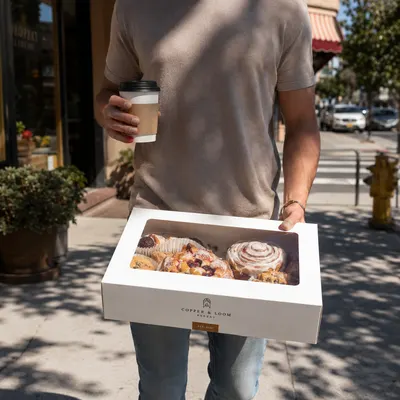
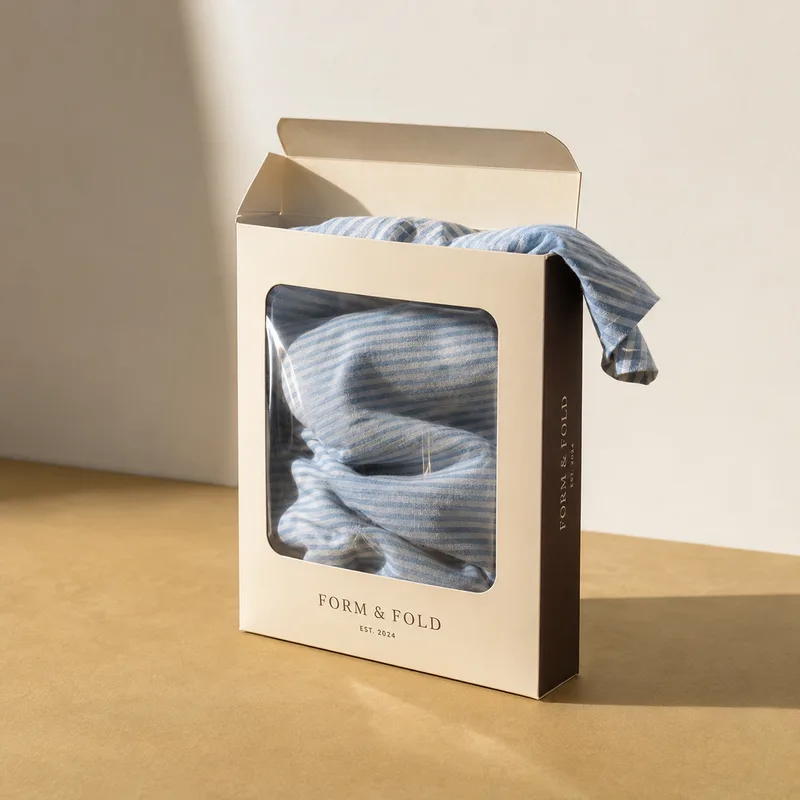
Window packaging boxes are paperboard or corrugated folding cartons with one or more die-cut openings that show the product inside. The opening can stay open or carry a clear film patch glued to the inside panel. The tuck structure controls how the carton opens and closes; the window controls what the shopper sees.
They are part of the Tuck Boxes range.
What it has to do
What a Window Box Has to Get Right
A window box has to show the right part of the product, keep enough board around the opening, hold the product in view, choose open or film correctly and still leave room for printed information. Each need below is matched to the option that meets it.
01
Show
Show the Part That Sells
02
Keep
Keep the Panel Strong
03
Hold
Hold the Product in Line With the Window
04
Choose
Choose Open or Clear Film
05
Leave
Leave Room for Required Information
Which Tuck Structures Take a Window
All five Packaging Dock tuck structures list a die-cut window, with or without film, as an option; final compatibility is checked on the dieline. The structure is chosen for how the carton opens and how much weight the base carries; the window is then placed on the panel that faces the shopper.
| Structure | How It Closes | Typically Chosen When |
|---|---|---|
| Straight Tuck End | Both tucks on the same side | The front panel and window must read cleanly top to bottom |
| Reverse Tuck | Tucks on opposite sides | Everyday re-openable retail cartons |
| Auto Lock | Pre-glued bottom, tuck top | Heavier contents and faster packing |
| Snap Lock | Hand-locked bottom, tuck top | A locked base without pre-gluing |
| Seal End | Glued ends | The carton should stay closed until opened |
A window can also sit next to a hang tab for peg-hook display, provided the tab, closure and window do not share the same board area.
Open Window vs Clear-Film Window
Choose an open window when direct access to the product is acceptable and a film patch when the opening needs a physical cover. The table compares the two.
| Attribute | Open Die-Cut Window | Clear-Film Window |
|---|---|---|
| What covers the opening | Nothing | Clear PET film patch glued inside the panel |
| Product exposure | Product can be touched | Product is covered |
| Dust and handling | Exposed | Physical cover across the opening |
| Typical fit | Soap bars, wrapped items, accessories | Cosmetics, loose or textured items, food in its own wrap |
| Extra production step | None | Window patching |
Window Packaging Box Specifications
Window packaging boxes are specified around window placement, panel strength and the selected tuck structure. Review the specifications below to plan the box.
| Specification | Available Configuration |
|---|---|
| Product Type | Folding carton with die-cut viewing window |
| Category | Tuck Boxes |
| Structure | Straight Tuck End, Reverse Tuck, Auto Lock, Snap Lock or Seal End, chosen by product and packing process |
| Dimensions | Customized around the product and window placement |
| Window | Open die-cut or clear-film patch according to the project |
| Window Material | Clear PET film, where a film patch is used |
| Board | Paperboard 14–18 pt, 20–24 pt or 26–28 pt; E/F-flute or B-flute corrugated |
| Interior | Inserts or supports where required to hold the product in the viewing position |
| Inserts | Paperboard, foam/EVA or molded pulp |
| Print Coverage | Exterior only, exterior + interior, or full inside and outside |
| Print / Finishes | CMYK or spot color; matte, gloss or soft-touch lamination, foil stamping, emboss/deboss and Spot UV, according to the board |
| Production | Window size, panel strength, patch adhesion and product alignment confirmed from the final dieline |
| Starting Price | From $0.85 / unit; final price depends on size, board, window, print, finishes and quantity |
| Minimum Order | 500 units |
| Standard Production | 7 days from approved proof |
| Rush Production | Available on request |
| Shipping | Ships flat, USA and worldwide |
How Do You Size a Window Box?
Size the carton from the product first, then place the window. The window does not change the carton size; it changes which panel faces forward and where the product must sit. The Straight Tuck End sizing guide lists carton allowances.
| Step | What to Record |
|---|---|
| Product | Length, width, depth and the feature to show |
| Inside size | Product plus fit allowance, or the insert's outer size |
| Window | Shape, width, height and position on the front panel |
| Margins | Distance from window to folds, cut lines and tuck flaps (set on the dieline; one supplier guide suggests about 15 mm) |
| Copy space | Panels left for required text and barcode |
Check the Window on a Packed Sample
Pack the real product, close the carton and look at it from shelf height. Check that the right feature shows, the panel stays flat and nothing prints across the cut.
What to Check Before Bulk Production
Review a packed sample with the final window and artwork. Record the approved window position, film choice and insert on the signed-off sample.
| If the sample shows | Review before approval |
|---|---|
| Product drifts from the window | Tighten the fit or add an insert |
| Panel bows around the opening | Reduce the window or raise the board grade |
| Artwork is cut by the window | Move copy away from the die line |
| Film wrinkles or lifts | Review patch size and glue area |
Seven days covers standard production from approved proof once the specification is confirmed; delivery timing is confirmed separately.