Overview & Specifications
What Is a Two Piece Rigid Box?
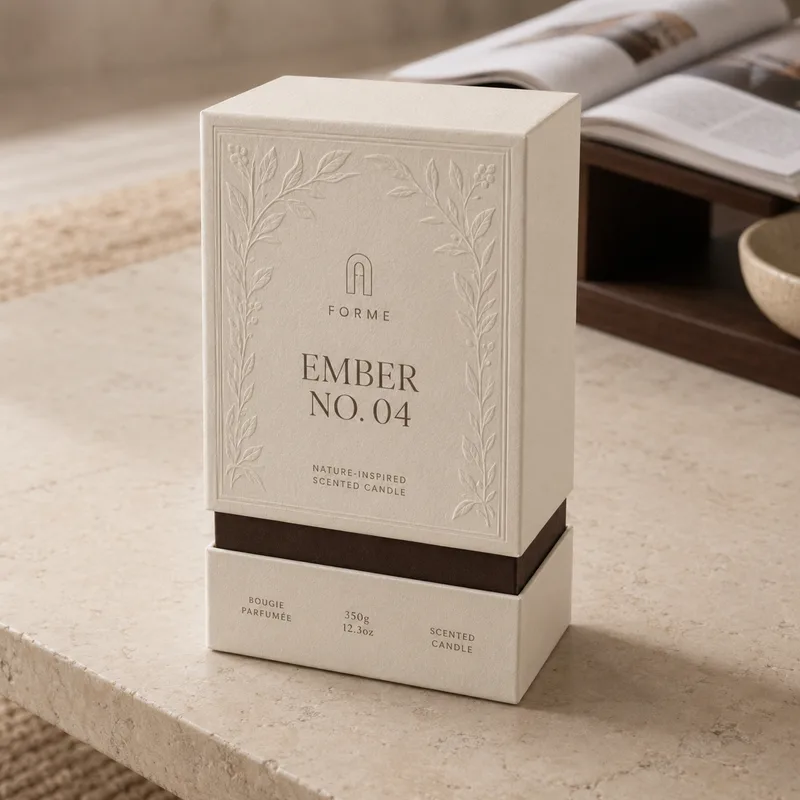
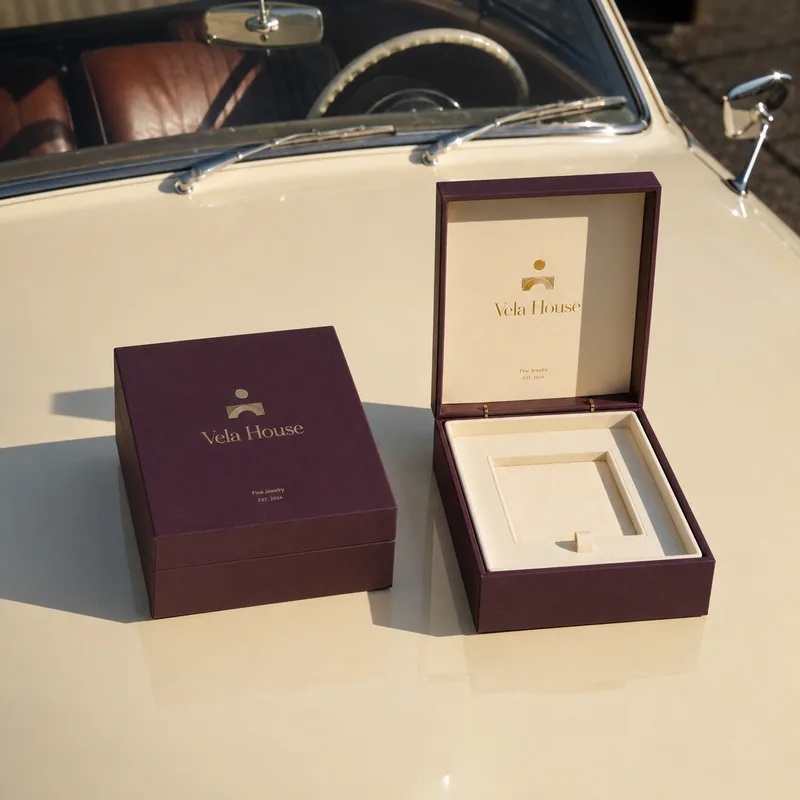
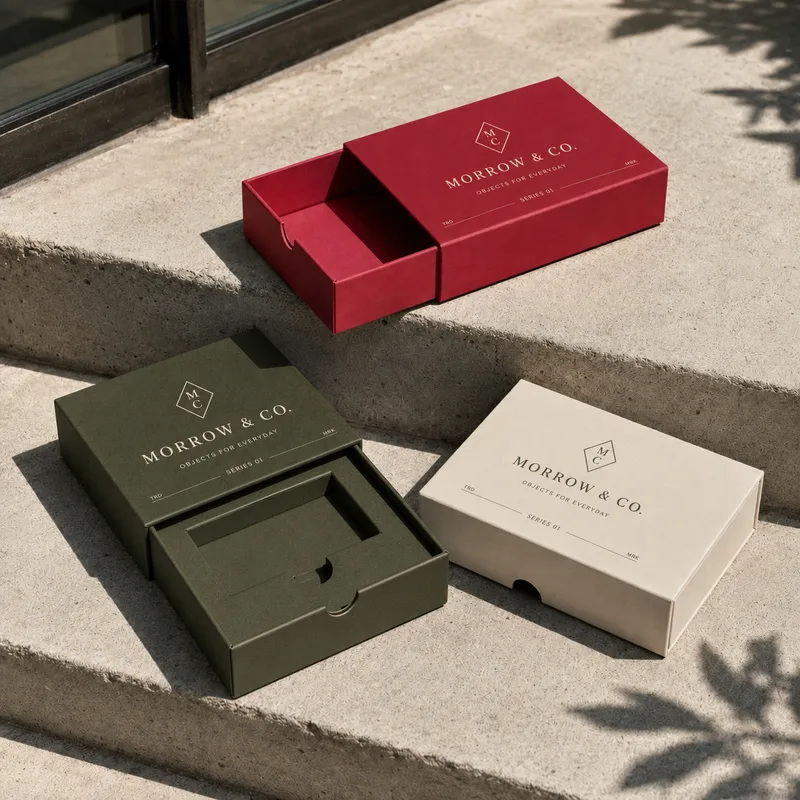
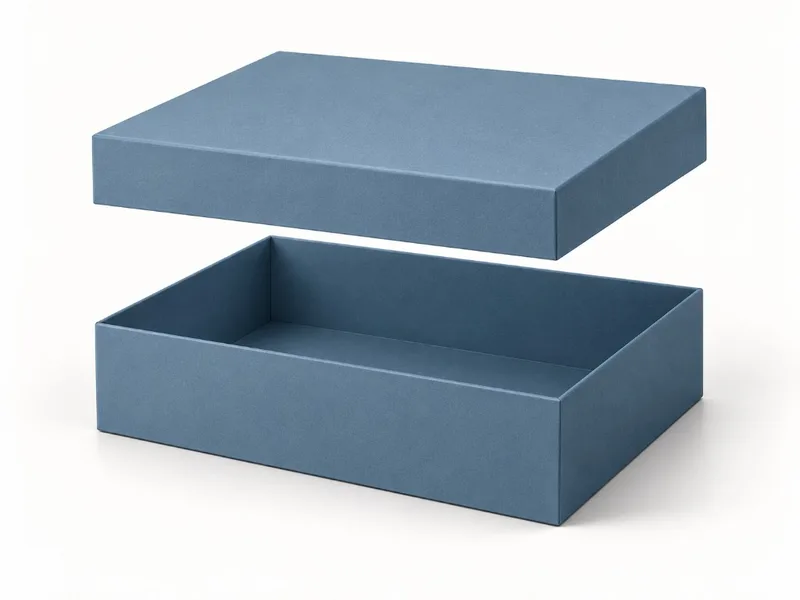
A two piece rigid box is a setup box made of a separate rigid base and a rigid lid that lifts completely off. Both parts are wrapped greyboard, and the lid slides down over the outside of the base when closed. With no hinge, collar or tray, it is the simplest rigid-box architecture, which leaves wide freedom in proportions, finishes and interiors.
How the Lid and Base Fit Together
The format works through two parts sized to one another.
01
Separate Rigid Base
The base holds the product and any insert, with its outer walls forming the surface the lid slides over.

02
Lift-Off Lid
The lid is built slightly larger than the base so it telescopes down over the base walls and lifts fully away for access.
03
Lid-to-Base Fit
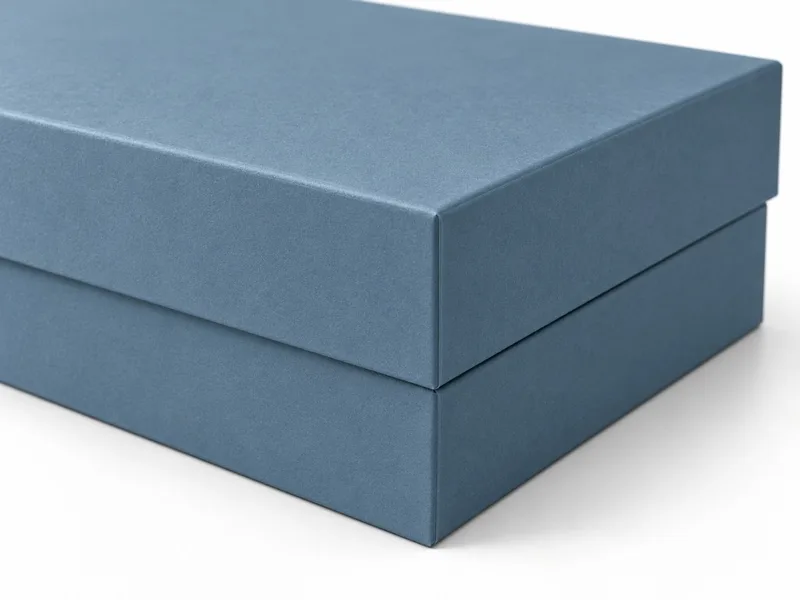
The clearance between lid interior and base exterior sets how the lid feels. A close fit creates more resistance as the lid lifts, while extra clearance gives a looser movement. Board, wrap, dimensions and production tolerance all influence the result, so opening feel is confirmed on a sample.
Anatomy of a Two Piece Rigid Box
-
01
Lid
Top panel and lid walls; the main branding surface when closed.

-
02
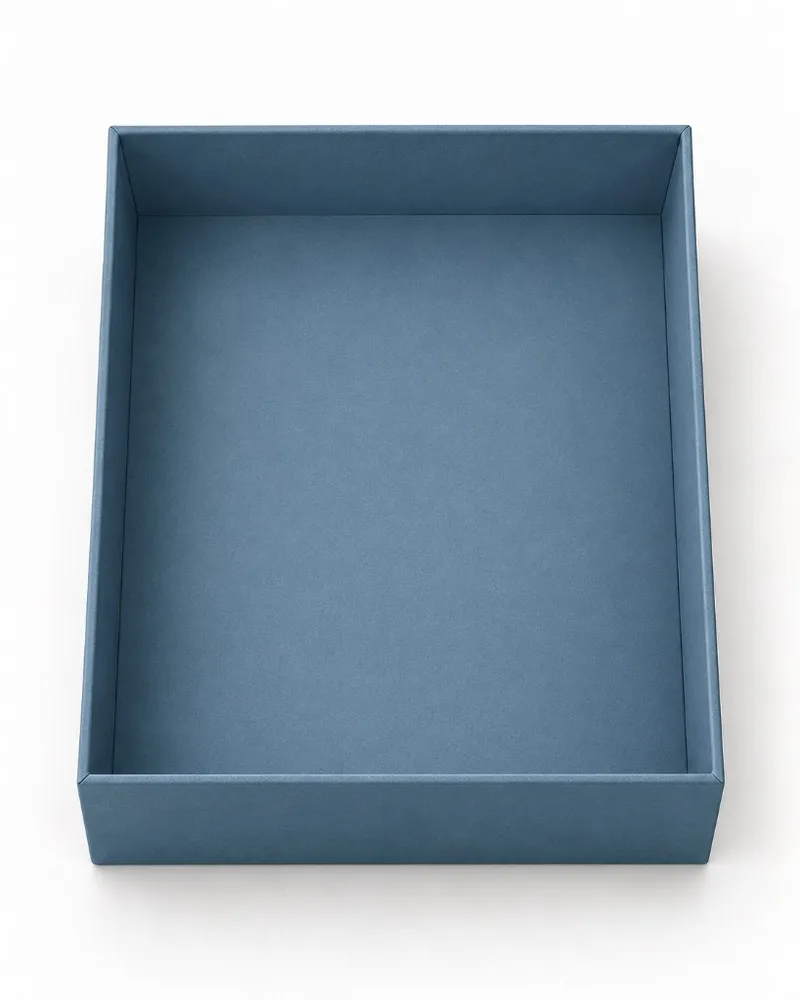
Base
Holds the product; its walls show below the lid on partial-depth designs.
-
03
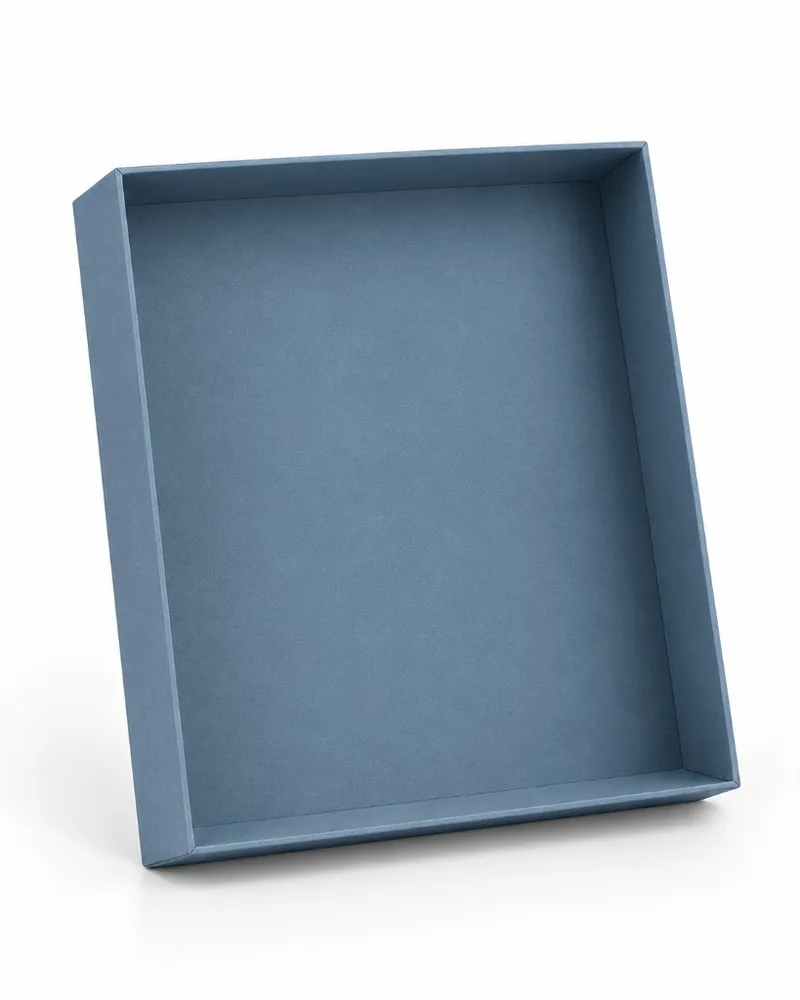
Lid Walls
Set the lid depth and how much of the base stays visible.
-
04
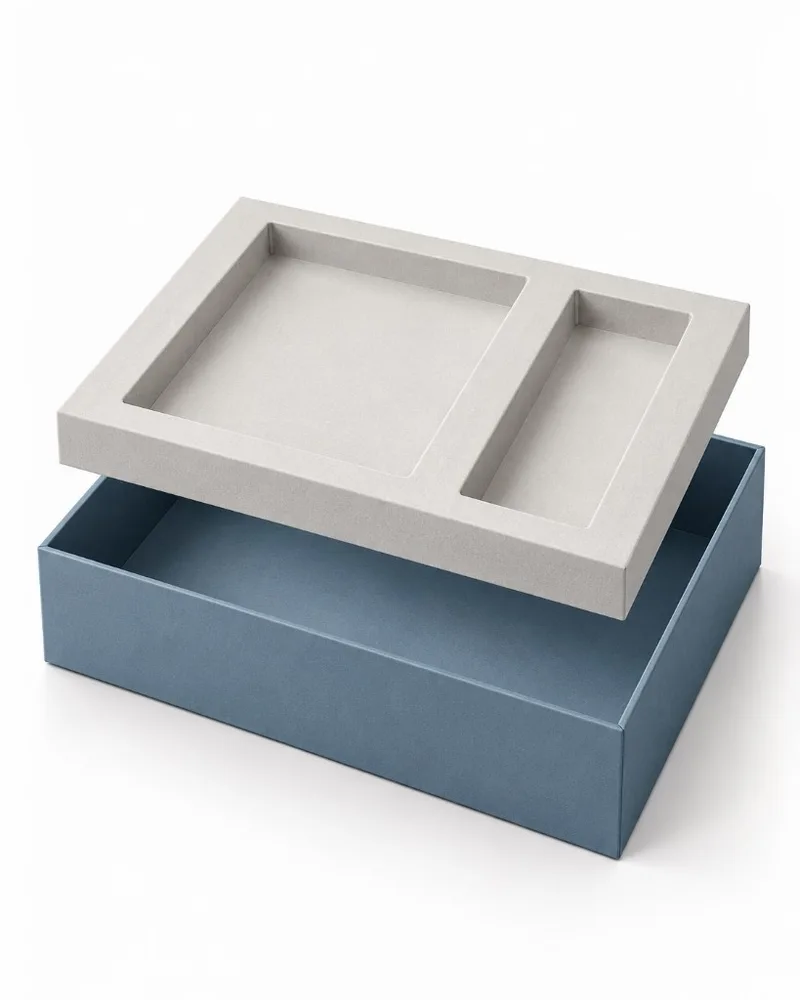
Insert
Optional fitted insert that holds the product in place.
-
05
Wrap Paper
Printed, kraft or specialty paper wrapped over the greyboard of both parts.

On partial-depth lids, the exposed base wall is visible when closed, so design it as part of the exterior; keep key copy away from wrapped edges and corners.
Lid Depth Options
Lid depth is the main styling decision on a two piece rigid box.
| Lid Style | How It Sits | Typically Suited To |
|---|---|---|
| Full telescope | Lid walls cover the full height of the base | Clean closed look, apparel and larger gift boxes |
| Partial telescope | Lid covers part of the base, leaving a visible base band | Contrast reveal between lid and base colors |
| Shallow lid | A short lid over a deeper base | Jewelry, cosmetics and compact presentation sets |
A deeper lid is not automatically better. The right depth depends on box height, product weight, proportions, artwork and how firmly the lid should engage the base.
Application guide
When Is a Two Piece Rigid Box the Right Choice?
A two piece rigid box works well when the full product and insert should be visible the moment the lid comes off, such as cosmetic sets, jewelry, candles, apparel and curated gifts.
-
01
Full-Access
Full-Access Opening
Removing the lid exposes the whole base at once, so presentation sets and fitted inserts are seen in one view. -
02
Flexible
Flexible Proportions
Lid depth, base height and overlap can change without adding hinge hardware, a collar or a sliding tray. -
03
Broad
Broad Rigid-Box Foundation
The simple two-part build supports a wide range of sizes, wraps, inserts and finishes across product categories. -
04
Alternative
When Another Format May Fit Better
If a raised collar and a guided lid suit the product, a Shoulder Neck Rigid Box adds that third layer. For a lid that stays attached, choose a Flip Top Rigid Box on a wrapped spine, or a Hinged Rigid Box for compact jewelry cases. A Custom Drawer Box suits a sliding reveal, and a Collapsible Rigid Box suits brands that need to ship and store empty boxes flat.
Two Piece Rigid Box Specifications
Custom two piece rigid boxes are specified around lid depth, lid-to-base fit, board thickness, wraps, inserts and finishes, with each part built to custom dimensions around the product it holds.
| Specification | Available Configuration |
|---|---|
| Product Type | Setup rigid box with removable lid and base |
| Category | Rigid Boxes |
| Dimensions | Custom L × W × H, built around the product, insert and lid overlap |
| Core Construction | Separate rigid lid + rigid base |
| Lid Depth | Full telescope, partial telescope or shallow lid |
| Base Board | Greyboard, or white-coated duplex board for a cleaner white face |
| Board Thickness | 1.5 mm, 2.0 mm, 2.5 mm or 3.0 mm |
| Wrap Paper | Art, custom printed, kraft, metallic, holographic, pearlescent or textured paper, or fabric/velvet wrap; paper commonly around 120–157 gsm |
| Inserts | Paperboard, foam/EVA or molded pulp; fabric-lined foam and thermoformed PET/PVC trays also offered for rigid boxes |
| Interior Lining | Satin lining available |
| Print Coverage | Exterior only, exterior + interior lid, or full inside and outside |
| Print Methods | Offset, digital, UV or screen printing; CMYK and Pantone spot colors |
| Finishes | Matte, gloss or soft-touch lamination, foil stamping, emboss/deboss, Spot UV and raised 3D UV |
| Lid Fit | Developed around board, wrap and finish build-up; opening feel confirmed on sample |
| Starting Price | From $2.85 / unit; final price depends on size, board, wrap, inserts, finishes and quantity |
| Minimum Order | 500 units |
| Standard Production | 7 days from approved proof |
| Rush Production | Available on request |
| Shipping | USA and worldwide |
How Two Piece Boxes Compare to Other Rigid Box Structures
The lid-off formats differ from the attached-lid formats mainly in what happens to the lid once the box is open.
| Attribute | Two Piece Rigid Box | Shoulder Neck Rigid Box | Flip Top Rigid Box | Custom Drawer Box |
|---|---|---|---|---|
| Opening | Lid lifts fully off | Lid lifts off over a raised collar | Lid lifts on a wrapped spine, stays attached | Tray slides out of a sleeve |
| Parts | Lid + base | Lid + base + inner neck | One unit with attached lid | Sleeve + tray |
| Access to contents | Full, once the lid is off | Full, inside the collar | Broad, lid stays open behind | Gradual, as the tray slides |
| Branding surfaces | Lid, base band | Lid, base and visible neck | Exterior + inside lid | Sleeve exterior + tray |
| Best fit | Full-access gift and retail boxes | Layered reveal with guided lid | Front-opening presentation with inside-lid message | Staged reveal, organized trays |
What Size Two Piece Rigid Box Do You Need?
Size the base from the product outward, then size the lid from the finished base. The base interior holds the product with clearance, the base walls add board and wrap, and the lid must clear that outer size while setting how much of the base it covers.
How Base and Lid Sizes Relate
The figures below are planning references, not fixed manufacturing rules; final allowances depend on product shape, insert, board, wrap and finish.
| Step | Typical Allowance |
|---|---|
| Product to base interior (no insert) | Add about 2–3 mm to length and width, 2–5 mm to height |
| Base interior to base exterior, 1.5 mm board | About +4–5 mm per dimension |
| Base interior to base exterior, 2.0 mm board | About +5–6 mm per dimension |
| Telescoping lid over the base | Adds roughly another 4–6 mm |
| Overall, interior to closed exterior | Often about +8–12 mm |
Typical Board Selection Starting Points
| Box Size (longest side) | Typical Board |
|---|---|
| Up to about 150 mm (6 in) | About 1.5–2.0 mm |
| About 150–250 mm (6–10 in) | About 2.5 mm |
| Over about 250 mm (10 in), or contents over about 1 kg | About 3.0 mm |
Important: These allowances are reference values. Rigid boxes typically carry about ±1–2 mm overall tolerance, and humidity moves paper-wrapped board slightly, so lid fit is confirmed on a sample before production.
If you are unsure, share the product dimensions and weight with the quote request, and the box is sized around them.
Why Does Lid Feel Change Between Boxes?
The same nominal size can open very differently: a heavier wrap or soft-touch film thickens the base walls and tightens the lid, while a thinner build lets it drop. When a slower, controlled lift is part of the brief, it is tuned on a physical sample instead of calculated alone.