Overview & Specifications
What Is a Hinged Box?
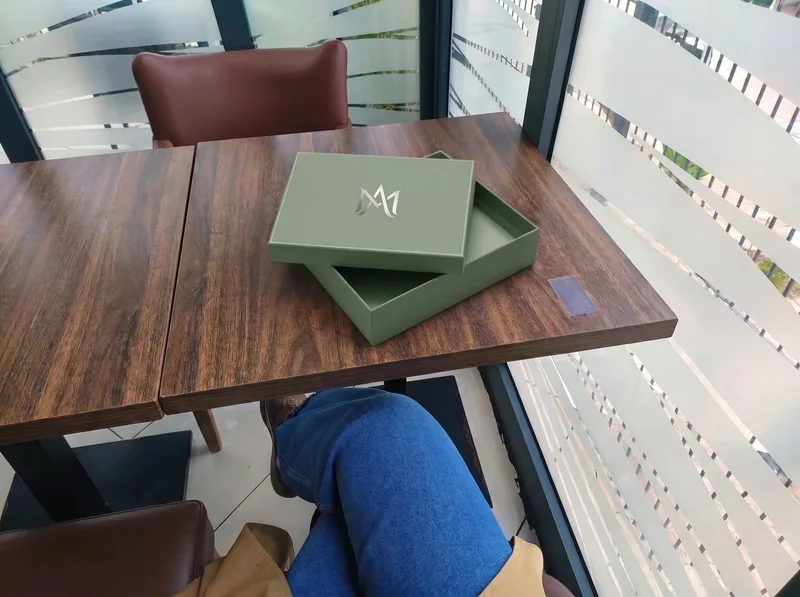
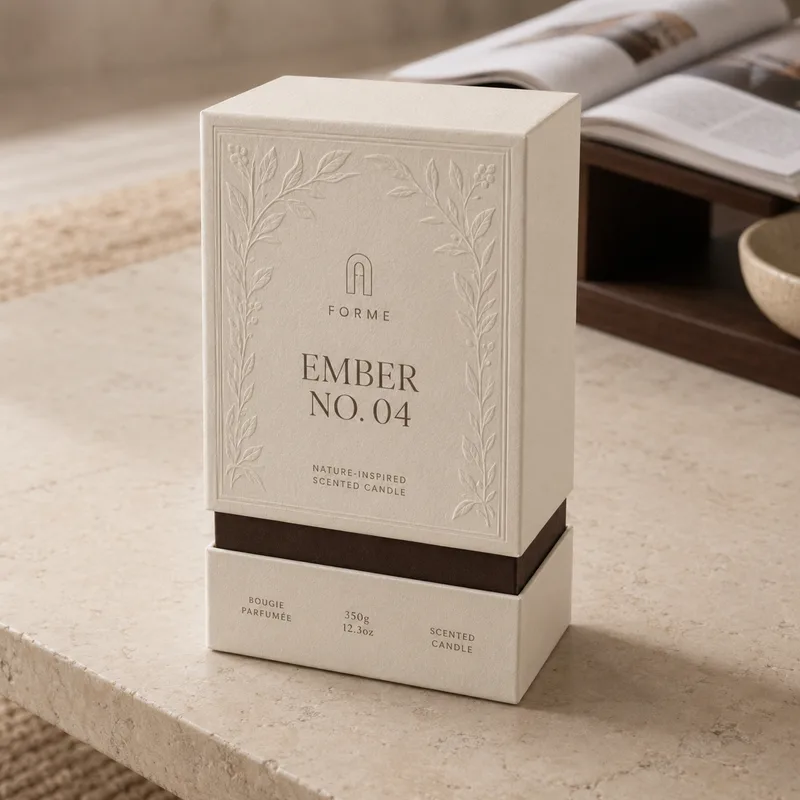
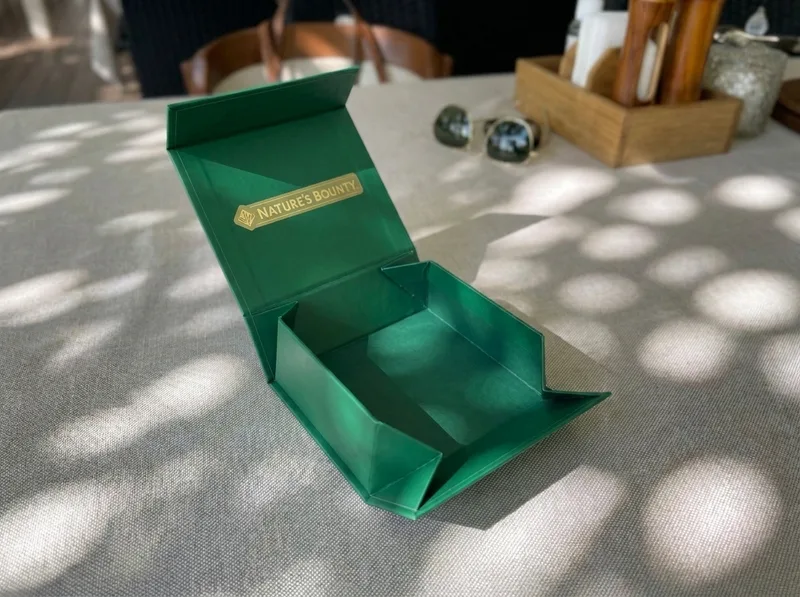
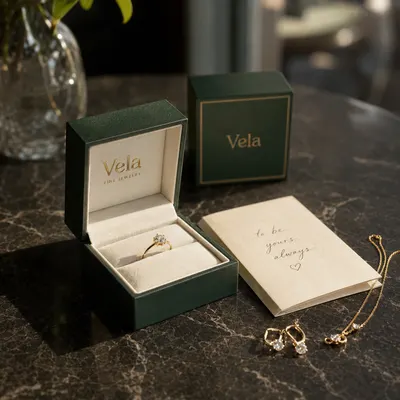
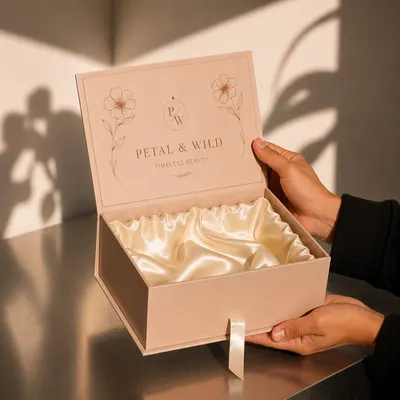
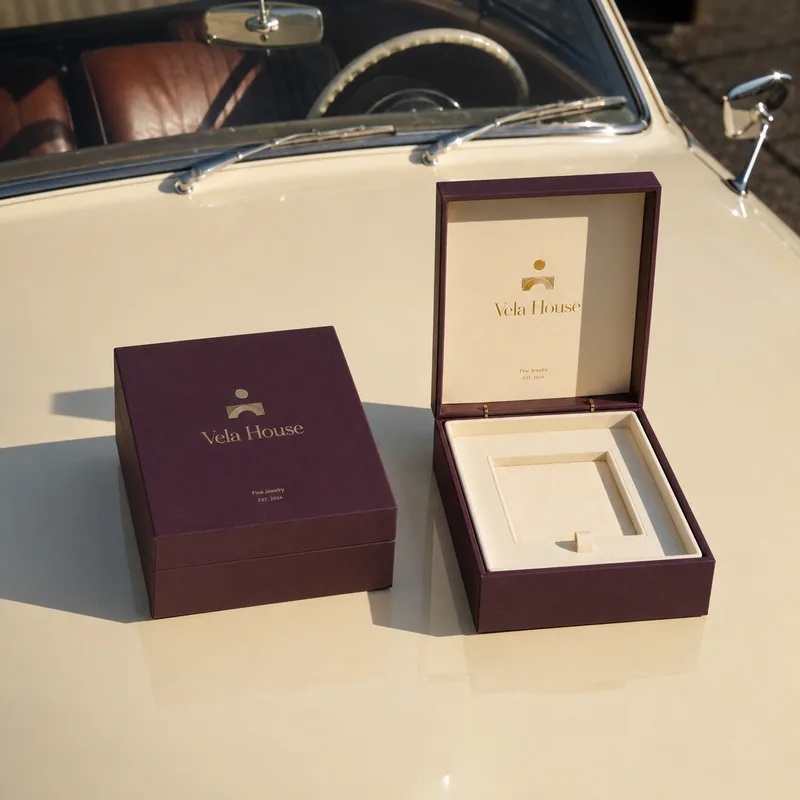
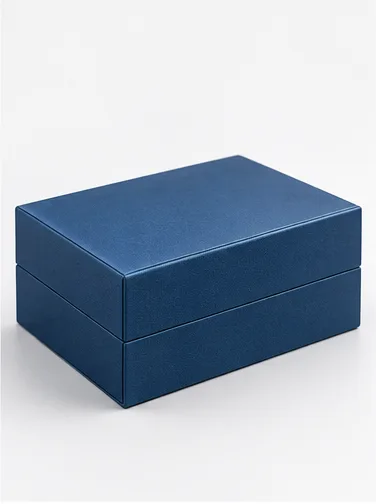
A hinged box, or hinged rigid box, is a compact setup case in which a rigid lid and rigid base are joined by a defined hinge mechanism, usually along the back edge. The lid pivots on that hinge and stays aligned with the base, so the case never comes apart. Packaging Dock uses this structure for ring, bracelet and necklace cases and other compact presentation boxes.
How the Hinge Controls the Opening
The format works through three connected parts.
01
Defined Hinge
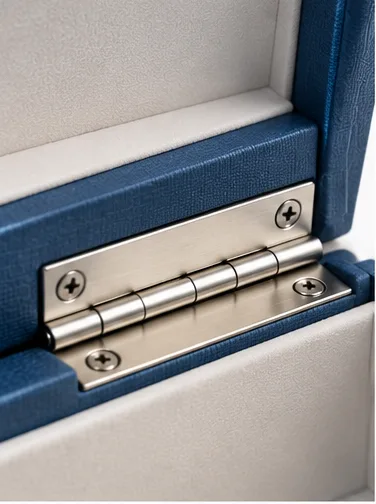
The hinge sets a single pivot line between lid and base, so the lid follows the same path every time it opens and closes.
02
Opening Angle
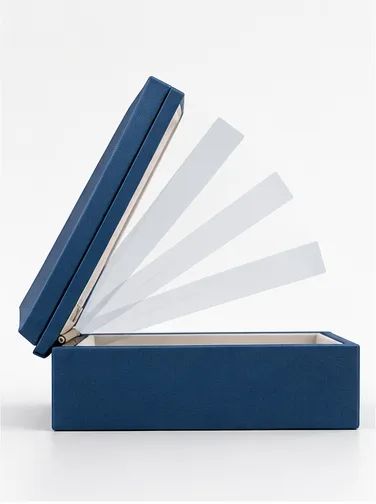
Hinge position and lid proportions decide how far the lid swings and where it rests, which fixes the angle the product is seen at.
03
Closure
A friction fit, magnets or a ribbon can hold the lid shut or limit how far it opens. No closure is built into the structure; it is chosen per project.
Anatomy of a Hinged Box
-
01
Lid
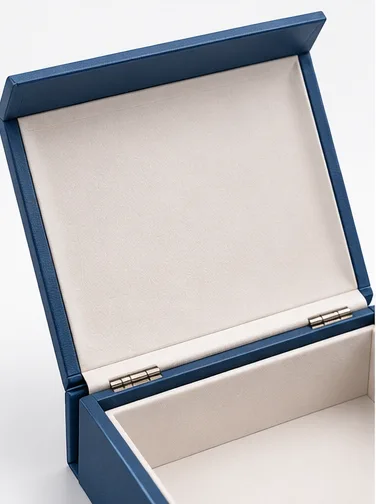
Pivots on the hinge; its inner face frames the product when open.
-
02
Hinge
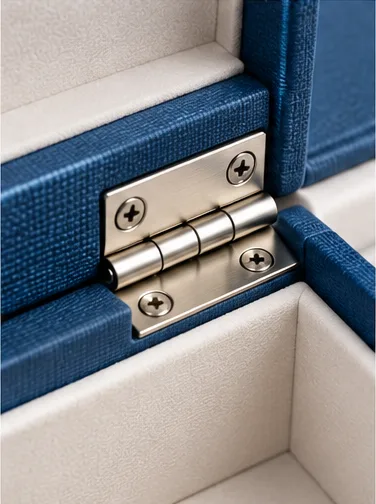
Defined pivot joining lid and base.
-
03
Base
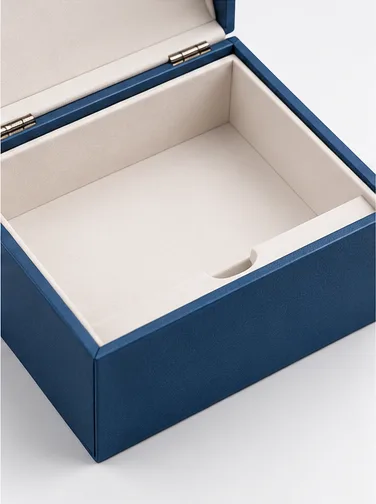
Holds the insert and product.
-
04
Insert
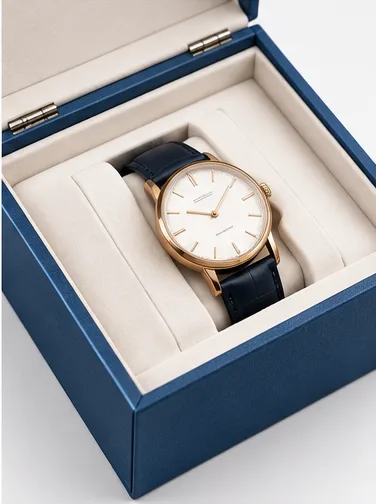
Slot, pad, hook or cavity that positions the item.
-
05
Closure
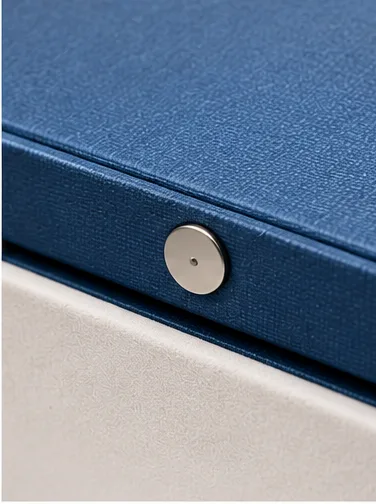
Optional friction, magnetic or ribbon detail.
In a compact case, the inner lid and insert face are seen together at close range, so size logos, small type and any certificate or card placement for that viewing distance.
Hinged Case Formats at Packaging Dock
The hinged structure is the base for three product-fit jewelry cases.
| Format | Insert Style | Typically Suited To |
|---|---|---|
| Hinged rigid box | Insert cut to the product | Keepsakes, accessories, small devices |
| Custom Ring Box | Ring slot or cushion | Engagement, wedding and fashion rings |
| Custom Bracelet Box | Pillow, pad or platform | Bracelets, bangles and watches |
| Custom Necklace Box | Elongated pad, hook or slot | Necklaces, pendants and chains |
Application guide
When Is a Hinged Box the Right Choice?
A hinged box works well for compact, high-value items that should sit centered in a fitted insert and be revealed at a set angle, such as rings, bracelets, watches, necklaces, keepsakes and small electronics. Because the lid stays attached, the case closes again without handling a separate part.
-
01
One
One Piece, Every Time
Nothing to set down or misplace. The case opens and closes as a single object, which suits products taken out and returned often. -
02
Controlled
Controlled, Repeatable Reveal
The hinge fixes the opening path, so the lid frames the product at the same angle each time. -
03
Insert-Centered
Insert-Centered Presentation
A slot, pad or cavity keeps small items aligned with the lid, so the product sits exactly where the eye lands. -
04
Alternative
When Another Format May Fit Better
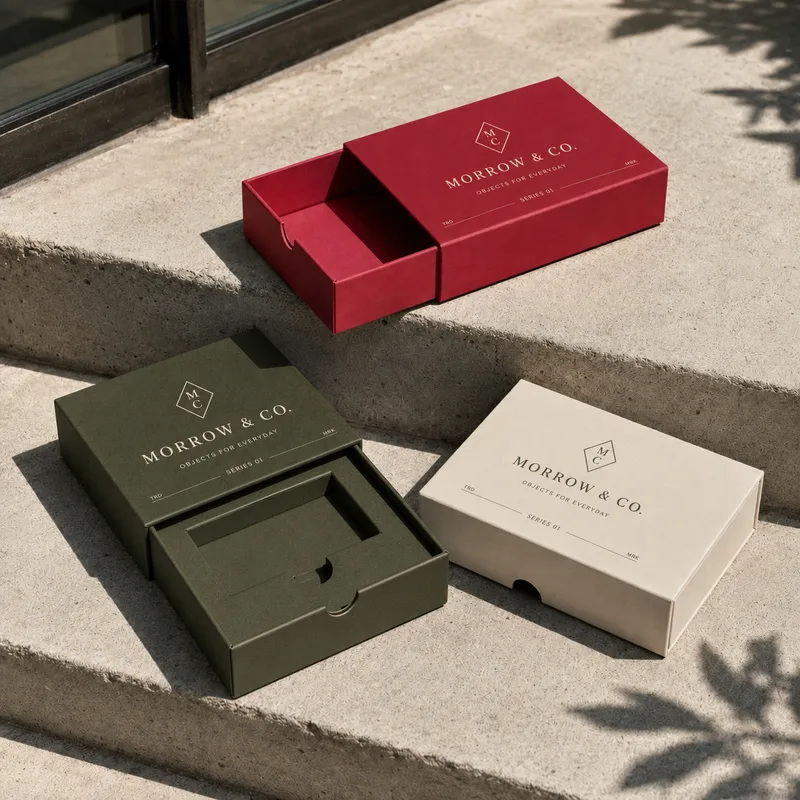
For a larger attached-lid box with a paper-wrapped spine, a broad printed inside lid or a book-style opening, choose a Flip Top Rigid Box. For a lid that comes off completely, choose a Two Piece Rigid Box or a Shoulder Neck Rigid Box. For a sliding tray, see the Custom Drawer Box; when empty boxes must ship flat, see the Collapsible Rigid Box.
Hinged Box Specifications
Custom hinged boxes are specified around hinge position, opening angle, closure, insert fit, board, wraps and finishes, with the base and attached lid built to custom dimensions around the product and the angle at which it should be seen when the case opens.
| Specification | Available Configuration |
|---|---|
| Product Type | Attached-lid hinged setup rigid box |
| Category | Rigid Boxes |
| Dimensions | Custom L × W × H, built around the product, insert and hinge geometry |
| Core Construction | Rigid base + rigid lid joined by a defined hinge mechanism |
| Closure | Friction, magnetic, ribbon or other approved system where required |
| Base Board | Greyboard, or white-coated duplex board for a cleaner white face |
| Board Thickness | 1.5 mm, 2.0 mm, 2.5 mm or 3.0 mm |
| Wrap Paper | Art, custom printed, kraft, metallic, holographic, pearlescent or textured paper, or fabric/velvet wrap; paper commonly around 120–157 gsm |
| Inserts | Paperboard, foam/EVA or molded pulp; fabric-lined foam and thermoformed PET/PVC trays also offered for rigid boxes |
| Interior | Slots, pads, cavities, satin lining, printed inner lid, card or certificate placement |
| Print Coverage | Exterior only, exterior + interior lid, or full inside and outside |
| Print Methods | Offset, digital, UV or screen printing; CMYK and Pantone spot colors |
| Finishes | Matte, gloss or soft-touch lamination, foil stamping, emboss/deboss, Spot UV and raised 3D UV |
| Hinge and Alignment | Hinge position, opening angle and alignment confirmed from final construction |
| Starting Price | From $2.85 / unit; final price depends on size, board, closure, inserts, finishes and quantity |
| Minimum Order | 500 units |
| Standard Production | 7 days from approved proof |
| Rush Production | Available on request |
| Shipping | USA and worldwide |
How Hinged Boxes Compare to Other Rigid Box Structures
Hinged and flip top boxes both keep the lid attached; the difference is the connection between lid and base.
| Attribute | Hinged Rigid Box | Flip Top Rigid Box | Two Piece Rigid Box | Custom Drawer Box |
|---|---|---|---|---|
| Lid connection | Defined hinge mechanism | Paper-wrapped spine | None, lid lifts fully off | None, tray slides from a sleeve |
| Opening path | Pivots to a set angle | Lifts from the front, or opens like a book | Removed entirely | Slides out horizontally |
| Typical scale | Compact cases | Small to large | Small to large | Small to large |
| Signature surface | Insert and inner lid at close range | Broad inside lid seen upright | Lid top and base band | Sleeve exterior and tray |
| Best fit | Rings, bracelets, necklaces, keepsakes | Sets, kits, book-style gift boxes | Full-access gift and retail boxes | Staged reveal, organized trays |
What Size Hinged Box Do You Need?
Size the insert from the product, the base from the insert, and the lid from the base and hinge. In compact cases the insert does most of the work: ring height, bracelet diameter or chain length decides the cavity and overall depth, and small differences change how centered the product looks when the lid opens.
How Insert, Base and Lid Sizes Relate
The figures below are planning references, not fixed manufacturing rules; final allowances depend on product shape, insert, board, wrap and hinge construction.
| Step | Typical Allowance |
|---|---|
| Product to base interior (no insert) | Add about 2–3 mm to length and width, 2–5 mm to height |
| Base interior to base exterior, 1.5 mm board | About +4–5 mm per dimension |
| Base interior to base exterior, 2.0 mm board | About +5–6 mm per dimension |
| Product slot in a fitted insert | Close fit, often within about ±0.5 mm on critical slots |
| Lid over the base | Sized to the base exterior plus hinge and rotation clearance on the dieline |
Typical Board Selection Starting Points
| Box Size (longest side) | Typical Board |
|---|---|
| Up to about 150 mm (6 in) | About 1.5–2.0 mm |
| About 150–250 mm (6–10 in) | About 2.5 mm |
| Over about 250 mm (10 in), or contents over about 1 kg | About 3.0 mm |
Important: These sizing values are references only. Overall rigid-box tolerance is usually about ±1–2 mm, while a ring or watch slot needs a much closer fit, so slot fit, hinge alignment and opening angle are confirmed on a sample.
If you are unsure, share the product dimensions and weight with the quote request, and the box is sized around them.
Why Does Hinge Position Change the Look?
Moving the hinge or changing lid depth changes how far the lid swings and where it stops. A lid that rests just past upright frames the product like a display case; one that falls further back opens the case more fully. No single angle applies to every hinge, so the target angle is set on the dieline and checked on a sample.