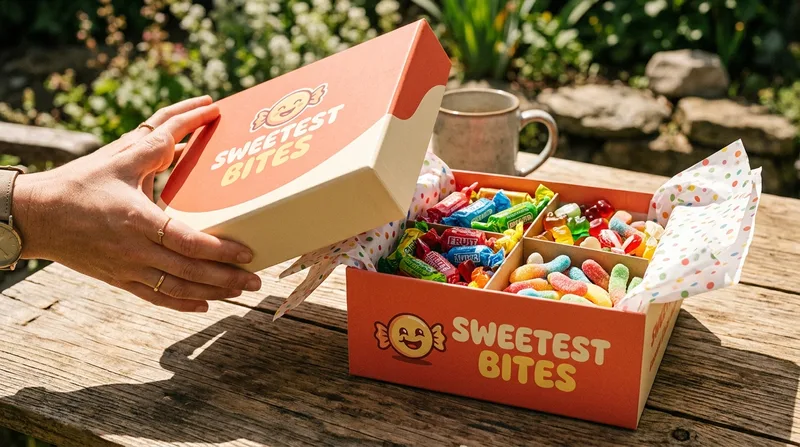
Custom Candy Boxes
Printed retail cartons sized to a set count or weight, with an optional PET window.
From $0.71/unit
7 answers →Packaging Guides/Candy and Sweets
Packaging GuideWhy gummies stick, truffles touch or a box looks half empty, which box, bag, insert or window suits each candy, how to size to the settled fill and what food contact covers for unwrapped sweets. Each answer gives the cause first, then the pack that solves it.
Which Candy Box or Bag Do You Need?Browse candy and sweets packaging →
Each answer below is linked to the product it applies to. Pick a product to see its answers, open its page for sizes and pricing, or compare the full candy and sweets packaging range.
Printed retail cartons sized to a set count or weight, with an optional PET window.
From $0.71/unit
7 answers →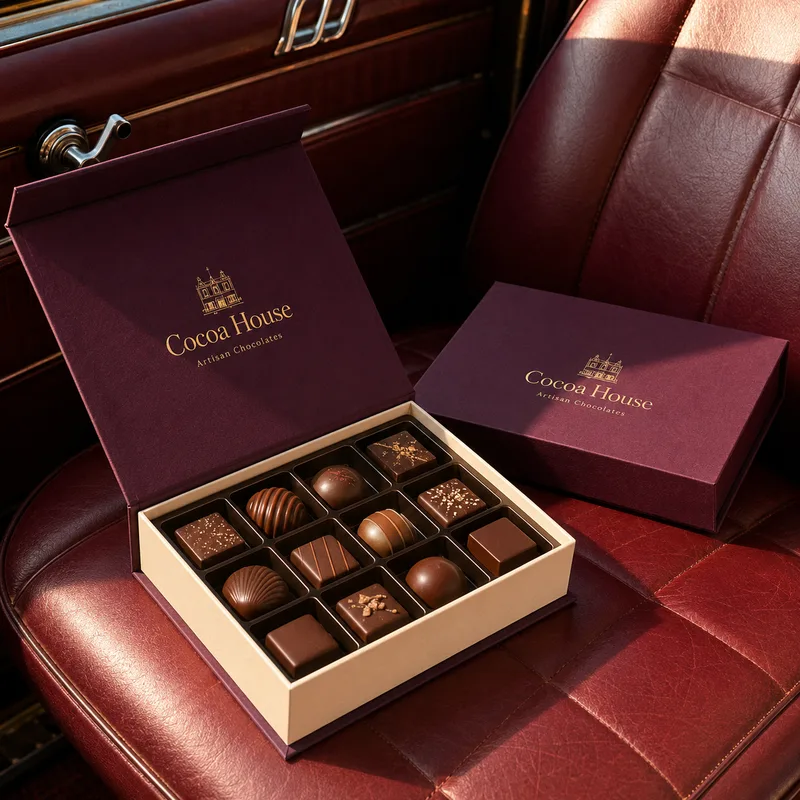
Printed cartons with a cavity insert for truffles and bonbons, or slim boxes for bars.
From $0.71/unit
6 answers →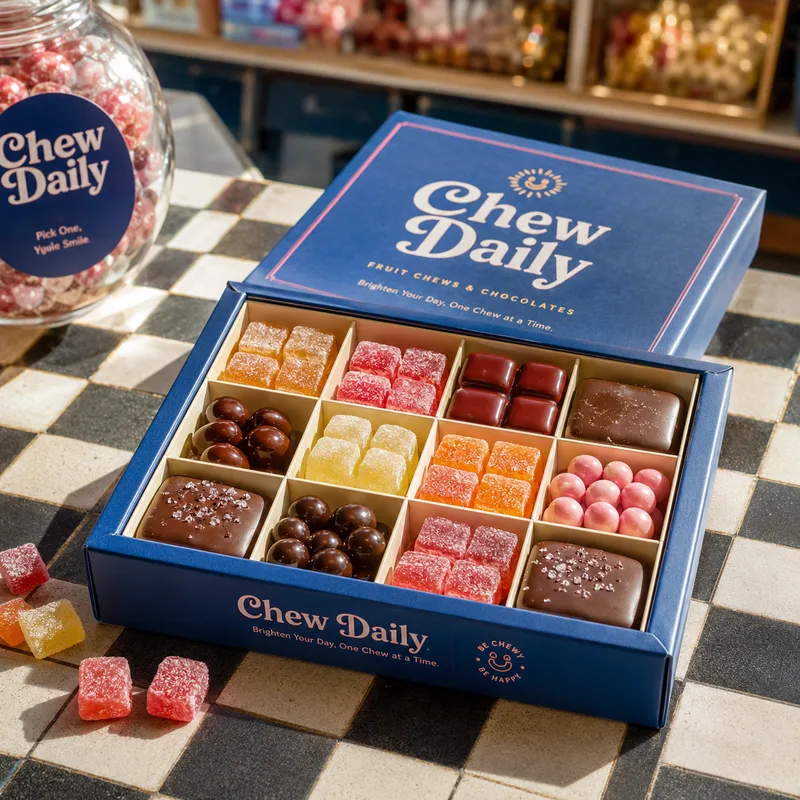
Gift cartons with an insert that holds the assortment in set places, printed inside and out.
From $1.25/unit
2 answers →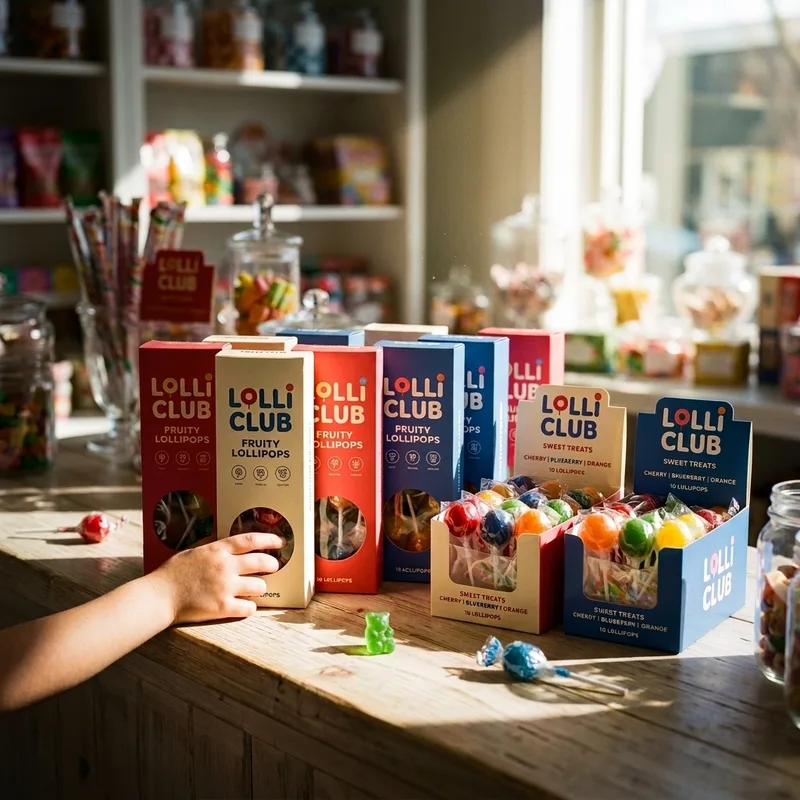
Cartons sized to the head and stick, with a slot or hole per stick.
From $0.77/unit
1 answers →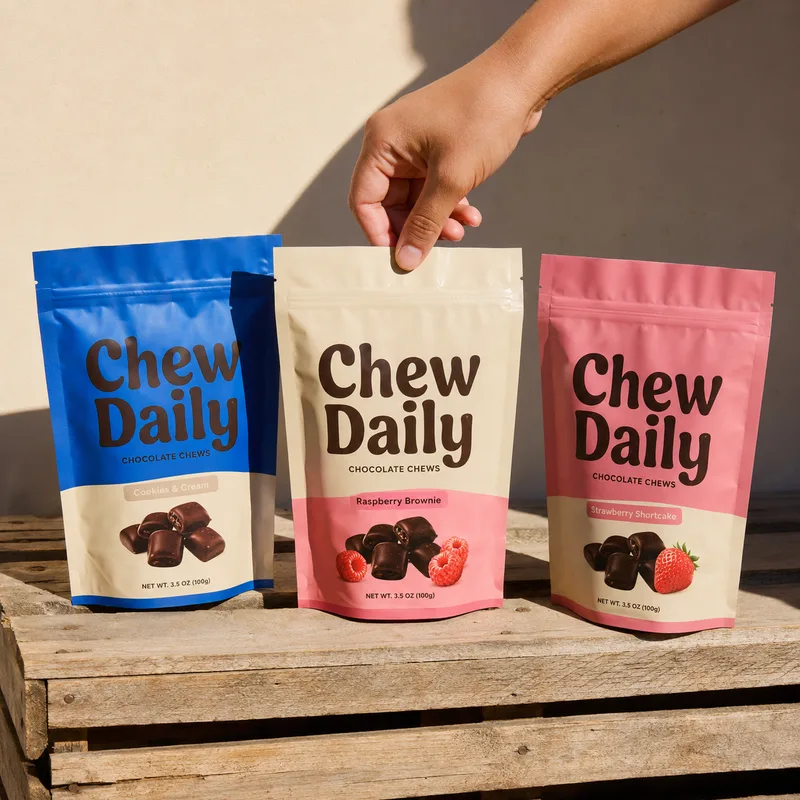
Barrier pouches in Stand Up, Flat Bottom, 3 Side Seal or Back Seal, with zipper and window options.
From $1.25/unit
8 answers →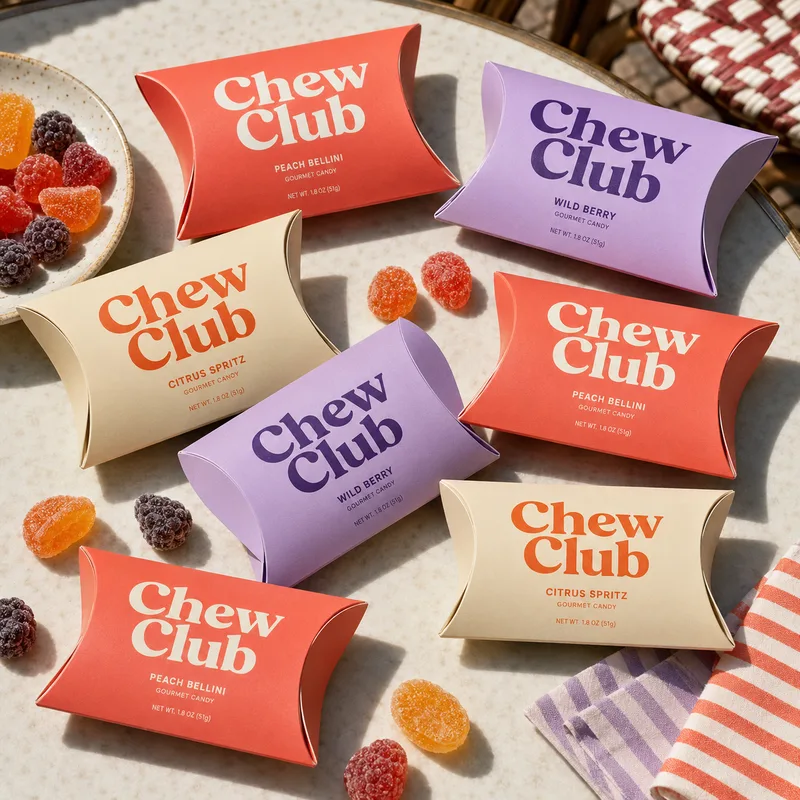
Small curved boxes for a few wrapped sweets or a small candy pack.
From $1.25/unit
1 answers →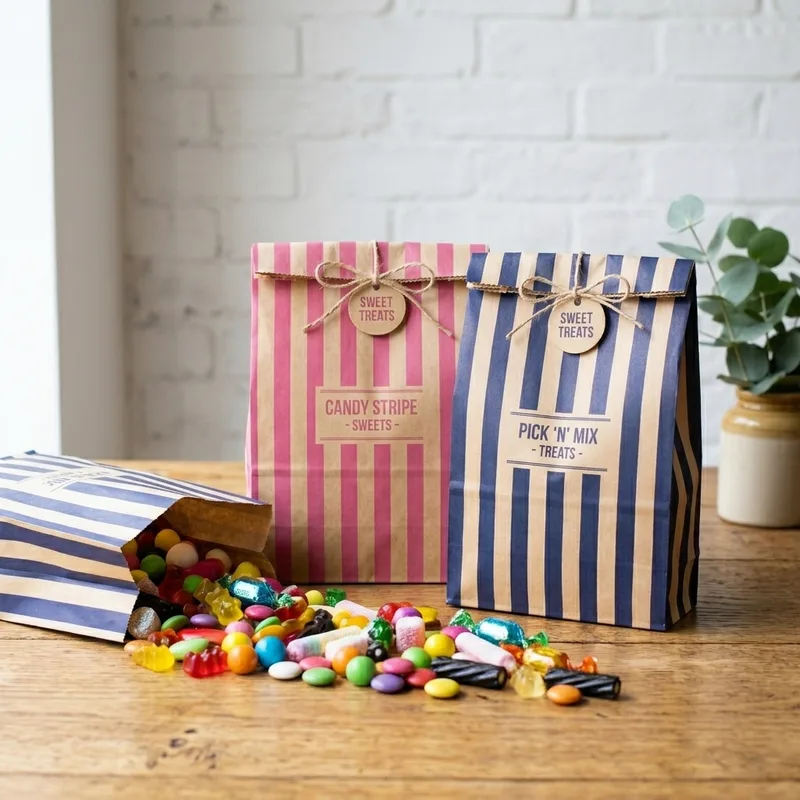
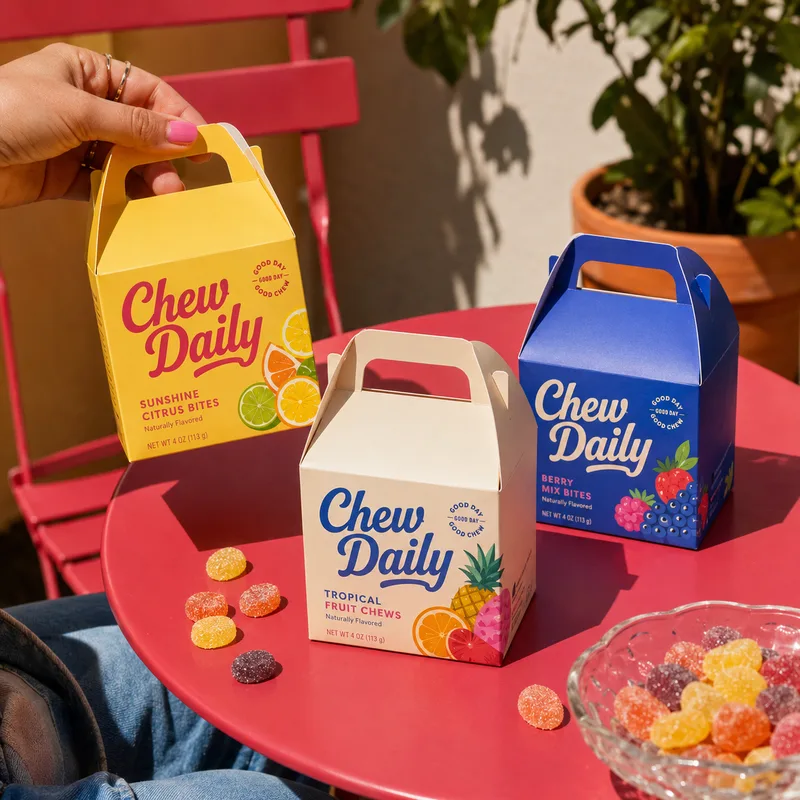
Handled cartons with dividers or inner bags for assortments.
From $1.25/unit
1 answers →
Open a problem to see why it happens and how to fix it.
Why it happensSugar and oil on the candy's surface bond to a sealant not chosen for them, and warmth softens the candy so it presses into the film and into other pieces.
How to fix itMatch the sealant to the candy, and treat heat as a storage and shipping issue: the bag protects against moisture, not heat.
Why it happensLoose or closely spaced cavities let pieces shift together when the box is tilted or carried.
How to fix itSize the cavities to the truffles and space them so pieces can't meet.
Why it happensWithout dividers or inner bags, loose candies of different sizes settle and migrate together as the pack moves.
How to fix itAdd a divider layout or inner bags per candy type.
Why it happensLoose candy settles after filling and in transit, so a box sized to the fresh-poured fill ends up with headspace.
How to fix itSize to the settled fill, confirmed with a trial fill of your candy.
Why it happensThe fill sits above the box height, so the lid is pushed up by the product.
How to fix itIncrease the height or reduce the fill, checked on a filled sample.
Why it happensSlots or holes wider than the stick let it slide and the candy head tip.
How to fix itSize slots or holes to the stick diameter and check with your lollipops.
Why it happensThe board, inks and insert of a box are not food-contact surfaces unless they are specified as such.
How to fix itConfirm the insert and interior surfaces for food contact, or wrap the candy.
Why it happensThe window was placed by the box layout, not by where the candy settles.
How to fix itMove the window over the settled candy, based on the fill or insert layout.
Lead (48): Boxed retail candy goes in a carton with a wide front panel. Truffles and bonbons sit in a cavity insert. Gift assortments use an insert with set places. Loose or bulk candy goes in a resealable barrier pouch. Favors and single portions fit a pillow box.
| Candy | Packaging |
|---|---|
| Everyday boxed retail candy | Custom Candy Boxes |
| Truffles, bonbons, bars | Custom Chocolate Boxes |
| Gift assortments in set places | Candy Gift Boxes |
| Lollipops, single or multi-pack | Custom Lollipop Boxes |
| Loose, bulk or resealable | Custom Candy Bags |
| A few wrapped sweets, favors | Candy Pillow Boxes |
| Pick-and-mix, single-type candy | Paper Candy Bags |
| Carry-out assortments with a handle | Candy Gable Boxes |
| Clear, foil or paper labels | Candy Labels |
From $0.65 per unit.
Lead (45): A box is a rigid-sided carton that stands with a wide front panel and a die-cut PET window, for boxed retail. A Mylar candy bag is a flexible pouch with barrier film and a clear window, for bulk and resealable candy. Freshness depends on the inner pack or the pouch film.
| Candy box | Candy Mylar bag | Candy pillow box | |
|---|---|---|---|
| Format | Tuck carton | Flexible pouch | Curved folding box |
| Typical fill | Retail counts | Loose or bulk | A few wrapped sweets |
| Freshness | Inner pack | Film, seal, shelf-life spec | Inner pack |
| Best for | Shelf retail | Resealable packs | Favors, samples |
Structure detailMylar Bags guide →Tuck Boxes guide →
Lead (44): Size by count or net weight and the settled fill, not the loose pour. For chocolates, record each piece's diameter and height and the layout. For lollipops, the wrapped length, head size, stick diameter and count. For bars, length, width and thickness with the wrap.
Lead (44): Wrapped candy touches only its wrapper. Loose or unwrapped candy needs food-contact board and insert surfaces confirmed for the food type, contact time and temperature, or an inner wrap. Chocolate can mark the board, so check board, coating and liner against it.
Labels: candy needs the same US food label elements as other packaged foods; see the Food & Beverage guide.
Lead (40): Send the candy type, wrapped or loose, count or net weight, layout and seasonal deadline. Quotes typically come back within 24 hours; orders dispatch 7 days after proof approval, plus shipping time, with rush available, and orders start at 500 units.
Have these six answers ready and your quote starts from the right specification. To compare every product side by side, see the candy packaging range.
Packaging Dock makes custom candy packaging to order from 500 units and ships across the USA and worldwide. These are the questions candy makers, chocolatiers and sweet shops ask most. Everything is on the candy packaging page.
No answers for this product in this topic.
Usually one retail format (a candy box, a chocolate box with a cavity insert, or a resealable candy bag), labels for flavors and ingredients, and a gift or favor option such as a gift box, pillow box or paper bag. Homemade candy sells well in a candy bag with a window or a small box with a seal sticker.
Candy, chocolate, gift and lollipop boxes, custom candy bags, pillow boxes, paper bags, gable boxes and labels all start from $0.65 per unit. Every order is made to your specification and priced by quantity.
What does 500 cost? From $325.00 for 500 units at the starting price.
500 units, with a standard turnaround of 7 days from proof approval to dispatch, plus shipping time and rush turnaround available on request.
A box is a paperboard carton that stands with a wide front panel and a PET window, for boxed retail and gifts. A candy bag is a flexible barrier pouch with a clear window and zipper option, for loose, bulk and resealable candy. Chocolates that must stay apart go in a box with dividers.
There’s no fixed size: candy boxes are sized to the count or net weight. Fill a mock-up to the target, measure the settled fill and add headroom.
The box is sized to the cavity insert: 4 pieces as a 2 × 2 grid, 9 as 3 × 3, 12 as 3 × 4, 16 as 4 × 4, 24 as 4 × 6, or rows to suit. Record each truffle’s diameter and height so the cavities fit.
Yes. Custom chocolate boxes use a cavity insert that holds each truffle or bonbon in place, with food-contact board on request for unwrapped chocolate and an optional window.
Why do truffles slide out of the cavities? The cavities are loose or too close. Tighten or space them.
Yes. Slim cartons are sized to the bar and its wrap; a printed sleeve over a wrapped bar is the lighter option.
Yes, as chocolate boxes with a cavity insert sized to each bomb’s diameter and height, or a single box per bomb.
Matte, gloss or soft-touch lamination, foil stamping, emboss or deboss and Spot UV on a printed carton, with interior print and a message area. Rigid gift boxes are on the rigid boxes page.
Yes, single or multi-packs of 3, 6, 12 or another count, with an insert that holds each stick and an optional window over the heads. Size from the wrapped length, head size, stick diameter and count.
Why do sticks slip or poke through? The slots or holes are too wide. Tighten the slot or hole size.
Yes. Candy gift boxes are printed cartons with an insert that holds the assortment in set places, interior print and a message area inside the lid. They don’t need gift wrap; the print does that job.
Yes. Sweet boxes for mithai are sized to the weight sold, with food-contact board on request. Seasonal gift boxes are on the holiday packaging page.
Yes, for carry-out assortments, with dividers, trays or inner bags that keep candy types apart, in Auto Lock, Interlock or Seal End bases.
Custom candy bags in Stand Up, Flat Bottom, 3 Side Seal or Back Seal formats, with a resealable ziplock or hook-and-loop zipper. Gummies suit stand up pouches with a film chosen for moisture balance; hard candy needs strong moisture control.
Sticky or oily candy needs a sealant matched to it, and heat makes sticking worse. Hard candy turns sticky in humidity, so it needs a moisture barrier and a dependable seal.
Yes, flat or tote bags for pick-and-mix, favors and wrapped sweets, with an optional window and a fold, sticker seal or tin tie. Paper isn’t a moisture or oxygen barrier.
A paper bag is for candy eaten soon: pick-and-mix and favors. A barrier pouch with a heat seal and zipper is for candy that sits on a shelf, since paper isn’t a moisture or oxygen barrier.
Cotton candy is light and soaks up moisture, so it needs a sealed barrier bag rather than paper. Custom candy bags are sized by a trial fill of the actual product.
3 Side Seal pouches suit single portions and samples; Stand Up and Flat Bottom bags suit share-size and bulk packs.
A barrier pouch protects against moisture, oxygen and light, depending on the film. Paperboard boxes and paper bags don’t. No packaging protects against heat, so plan storage and shipping around it.
We give no shelf-life figure for packaging. It depends on the candy, the barrier, the seal and storage; validate it on filled samples.
Chocolate boxes provide presentation and separation, not temperature control. Warm-weather shipping needs its own storage and shipping plan.
Bloom comes from tempering, fat migration, moisture and temperature changes, so it starts with the chocolate and how it's stored. An opaque box limits light, but packaging doesn't prevent bloom; keep chocolate cool and stable in storage and shipping.
It was boxed warm, so moisture settled on the window. Let it cool before boxing.
A window shows the candy and sells on sight; a fully printed or opaque pack blocks light, which suits chocolate and coated candy. On boxes the window is a die-cut with a clear PET patch.
Wrapped candy touches only its wrapper. Loose candy needs food-contact board, coatings, inks and insert surfaces confirmed for the food type, contact time and temperature, or an inner wrap.
The same US food label elements as other packaged foods: name, net quantity, ingredients, allergens, the name and place of business, and Nutrition Facts unless an exemption applies.
Yes: flavor labels, seals and ingredient labels in clear, foil or paper for film bags, glass, tins and boxes. Clear labels let candy show on transparent packs.
Not by default. A seal sticker closes a bag or box, but tamper-evident features are specified separately.
No. We make boxes, bags and labels; jars and tins can carry our candy labels.
Candy pillow boxes hold a few wrapped sweets or a small candy pack, ship flat and suit favors and samples. A small gable box carries more and has a handle; a gift box holds a 2–4 piece sampler in set places.
Paper candy bags and pillow boxes suit favors; wedding, shower and birthday packaging is on the life moments page.
Yes. Seasonal editions change the artwork on the same structure, or a sleeve changes it over one box. See the holiday packaging page.
Candy gift boxes with interior print and a message area; campaign and corporate gifts are on the campaigns page.
Pick the format first, then use the window and color to sell: a clear window for gummies, a cavity insert for truffles, flavor colors across a range. Each order gets a custom dieline, free design support and a proof.
Paperboard boxes mostly are, depending on finishes. Multi-layer candy bags depend on the film construction and local rules.
Paper candy bags, boxes and paper labels are paper-based, but paper isn’t a moisture barrier. Windows, films and laminations add plastic.
The candy type, wrapped or loose, count or net weight, the layout and your seasonal deadline.
Ready to put it together?
Answer a few questions and get a packaging setup with the reason for every choice, or browse every candy and sweets product.