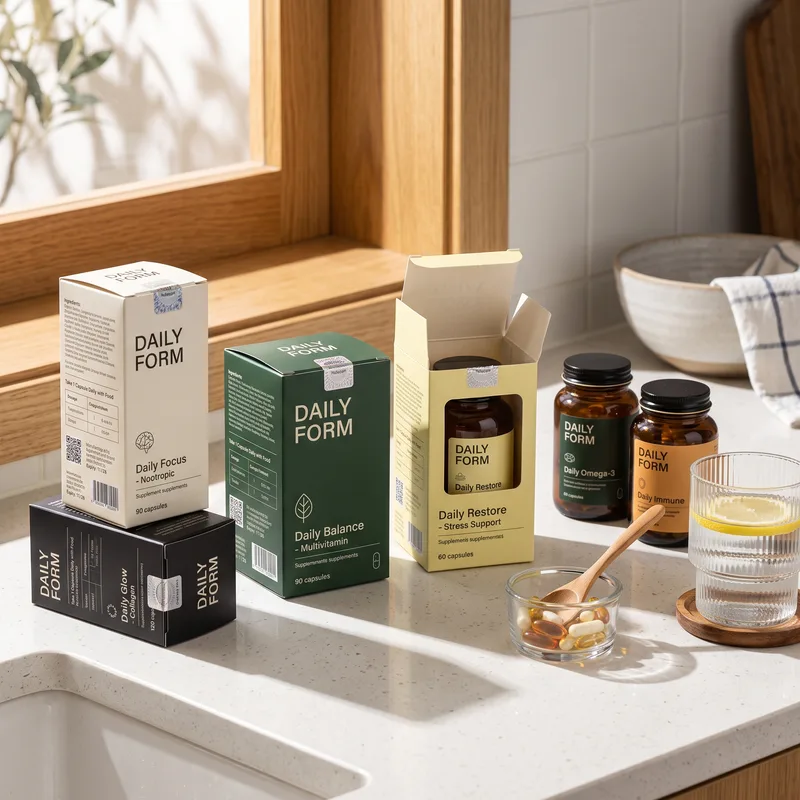
Supplement Boxes
Folding cartons around the bottle or packs, with panels for identity, net quantity and Supplement Facts.
From $0.72/unit
11 answers →Why required copy gets crowded, codes have no space or market versions mix up at packing, which carton, sleeve, label, leaflet space or tamper feature suits each product, and how panels are planned around approved text. Each answer gives the cause first, then the pack that solves it.
Which Pharma or Supplement Packaging Do You Need?Browse pharma packaging →
Each answer below is linked to the product it applies to. Pick a product to see its answers, open its page for sizes and pricing, or compare the full pharma packaging range.
Folding cartons around the bottle or packs, with panels for identity, net quantity and Supplement Facts.
From $0.72/unit
11 answers →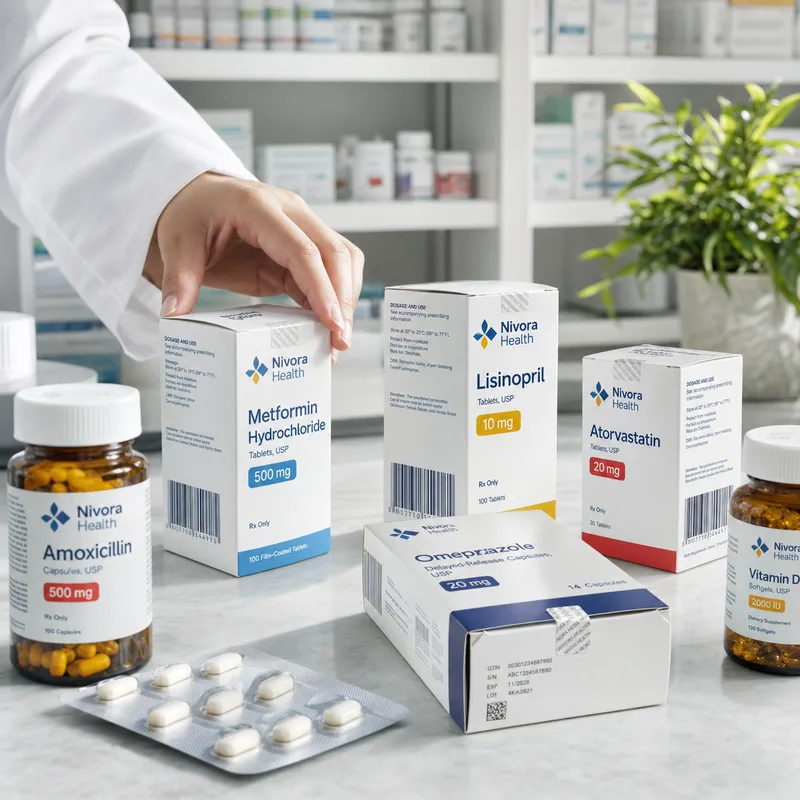
Secondary cartons for bottles, blister cards, tubes and devices, with leaflet space and a code area.
From $1.25/unit
9 answers →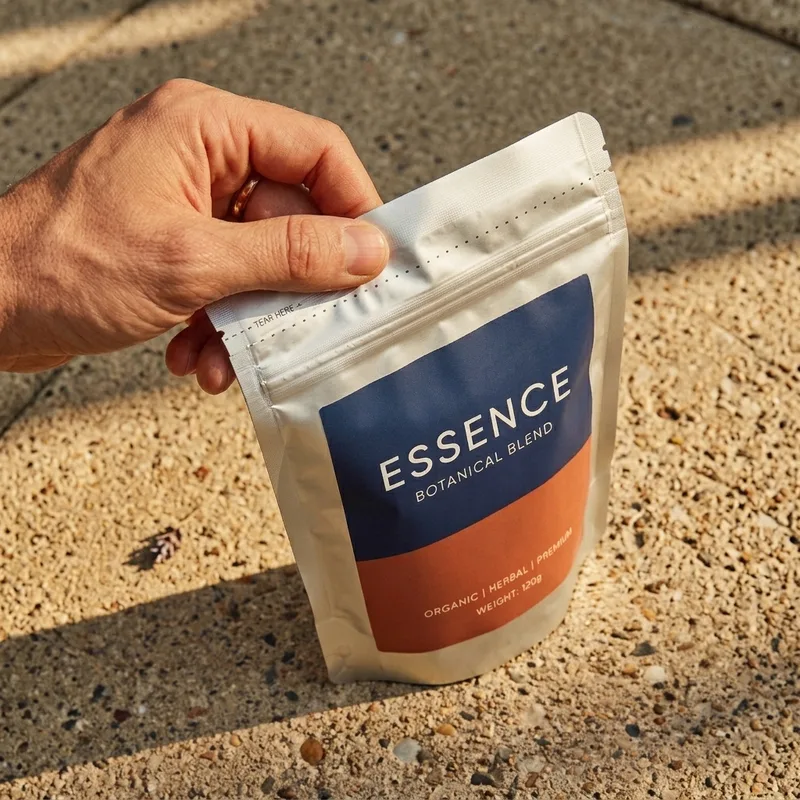
Barrier pouches with a controlled-access zipper, in Stand Up, 3 Side Seal and Spout.
From $0.65/unit
8 answers →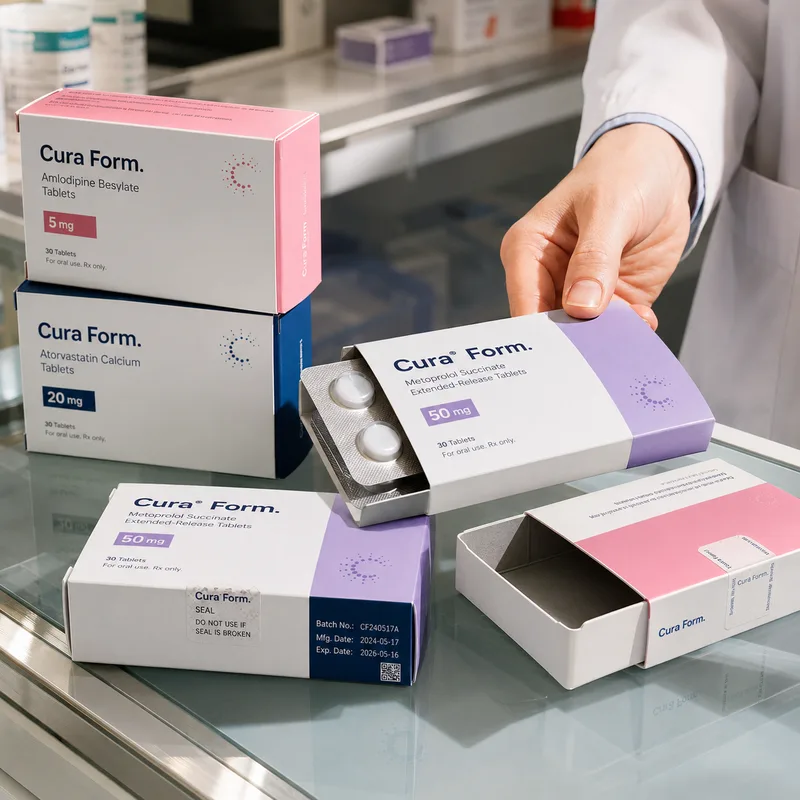
Sleeves that add market, language or promo copy over one carton.
From $1.25/unit
2 answers →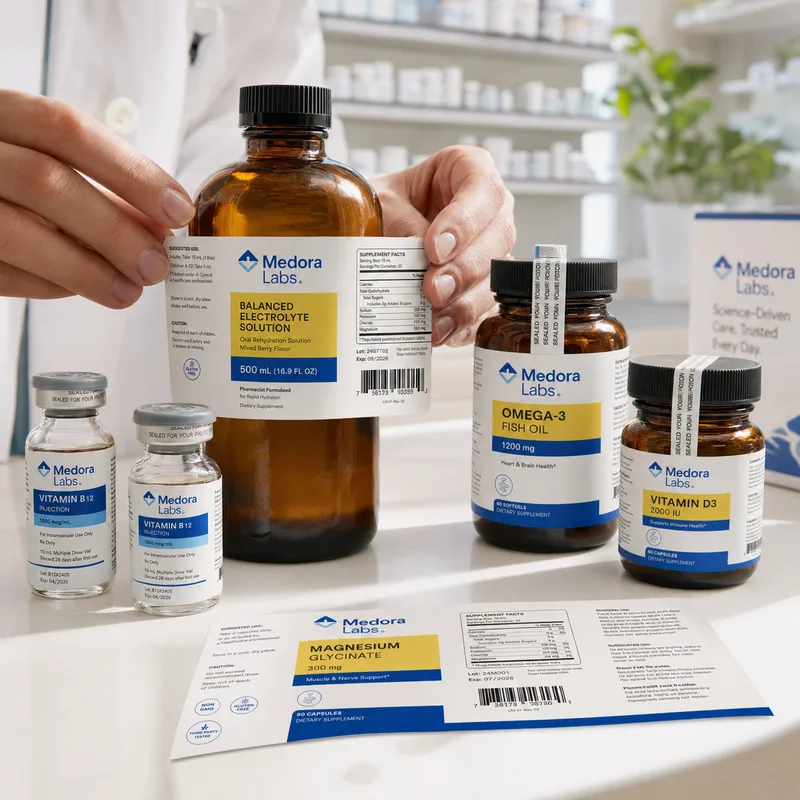
Labels with customer-approved directions, warnings and lot data.
From $1.25/unit
6 answers →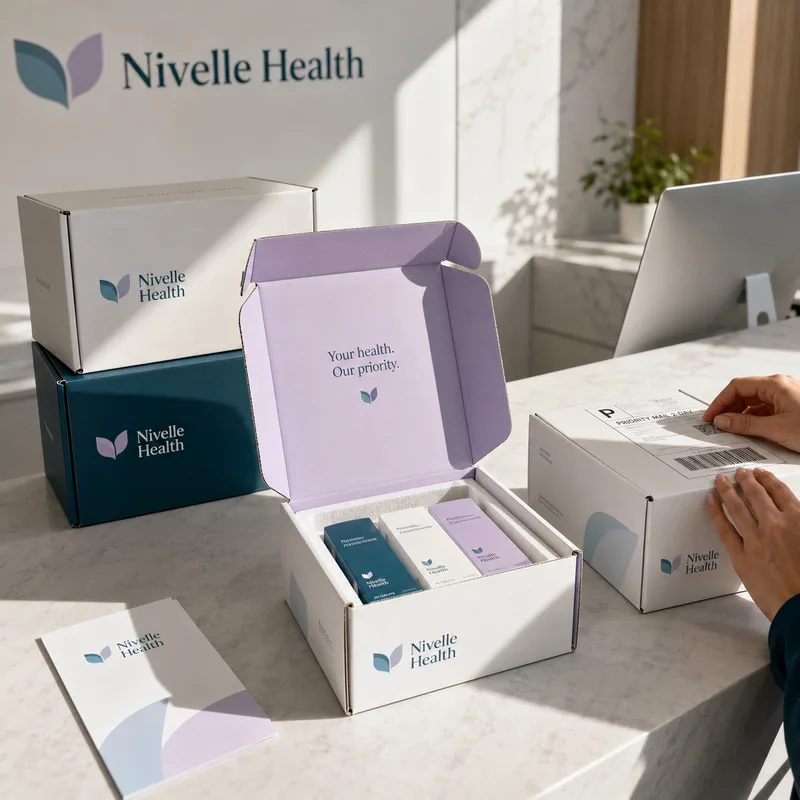
Mailers with dividers and label space for packaged products.
From $1.45/unit
3 answers →Open a problem to see why it happens and how to fix it.
Why it happensApproved text is fixed in length; a carton sized only to the product leaves panels too small to carry it legibly.
How to fix itEnlarge the carton panels, or move secondary copy to another panel or a leaflet where the applicable labeling regulations allow it.
Why it happensCodes are added at packing, so if no blank area was reserved they end up over artwork.
How to fix itReserve an unprinted code area on an end or side panel.
Why it happensA folded leaflet adds thickness the carton wasn't sized for.
How to fix itAdd leaflet space or an insert.
Why it happensThe sleeve covers a panel that carries required text.
How to fix itMove or repeat the copy on the sleeve, or resize the sleeve.
Why it happensSleeves for different markets look alike from the end the packer sees first.
How to fix itAdd a version code on the sleeve end.
Why it happensSupports or literature sit over identification areas once the shipper is packed.
How to fix itRevise supports and keep identification areas clear.
Why it happensWithout dividers, cartons shift and rub against each other in the shipper.
How to fix itSize dividers to the final cartons.
OTC and other drug products go in a medicine box; vitamins and dietary supplements go in a supplement box. Dry products that need controlled access go in a child-resistant pouch. Sleeves change market or language over one carton, and shipping boxes carry packaged products to the customer.
| Need | Packaging | From |
|---|---|---|
| OTC drugs, bottles, blisters, tubes | Medicine Boxes | $1.25 |
| Vitamins, minerals, herbal supplements | Supplement Boxes | $0.72 |
| Controlled-access dry products | Child-Resistant Mylar Bags | $0.65 |
| Market, language or promo versions | Pharmaceutical Sleeves | $1.25 |
| Directions, warnings, lot data | Pharmaceutical Labels | $1.25 |
| Shipping packaged products | Pharmaceutical Shipping Boxes | $1.45 |
Comparisons
Supplement carton vs medicine carton
A Supplement Facts panel and structure/function claims with the FDA disclaimer, vs Drug Facts for OTC drugs under drug rules.
Reverse Tuck vs Seal End
Reverse tuck recloses for cartons opened during use; seal end stays closed until first opened.
Shipping box vs product carton
The shipper carries shipping and handling information; the carton carries the brand's product labeling.
Size from the primary pack and any leaflet: bottle diameter and height with cap, blister card size and stack height for the count, tube length, crimp width and cap diameter, and the folded leaflet's size and thickness. Reserve an end or side panel for lot and expiry codes.
| Primary pack | What to measure |
|---|---|
| Bottle | Diameter and height with the final cap |
| Blister | Card length and width, and stack height for the count |
| Tube | Length, crimp width and cap diameter |
| Leaflet | Folded size and thickness |
Note: Board options on the product pages: Medicine Boxes and Supplement Boxes in paperboard 14–18, 20–24 or 26–28 pt, or E/F- or B-flute corrugated; Pharmaceutical Sleeves in paperboard from about 14 to 28 pt. The grade is chosen for the packed weight and route.
Structure detailTuck Boxes guide →
Plan a principal display panel and an information panel for the supplied copy: Supplement Facts for supplements, Drug Facts for OTC drugs, plus directions, warnings and a reserved area for lot and expiry codes. Finishes are chosen for readability. The customer supplies and approves all regulatory copy.
Neither is automatic. Tamper-evident features are specified and validated separately for the product, and a sleeve or label adds none by default. Child resistance belongs to the finished package; CR Mylar bags carry test documentation for qualifying configurations, confirmed for your exact size, film and closure.
Yes, for products without special transport needs, in a pharmaceutical shipping box with dividers against the cartons. Tamper evidence, insulation, cold-chain components or regulated labels go on a shipper only when specifically designed and verified; special transport needs a complete system specified for that product.
Send the primary pack, leaflet, closure type, approved artwork and code area needs. Material, artwork, codes and closure requirements are confirmed before manufacture. Quotes typically come back within 24 hours; orders dispatch 7 days after proof approval, plus shipping time, and orders start at 500 units.
Have these seven answers ready and your quote starts from the right specification. To compare every product side by side, see the pharma packaging range.
Packaging Dock makes custom pharmaceutical and supplement packaging to order from 500 units and ships across the USA and worldwide. These are the questions pharma, healthcare and supplement brands ask most. Everything is on the pharma packaging page.
No answers for this product in this topic.
Primary packaging holds the product directly (bottle, blister card, tube, pouch); secondary packaging goes around it (carton, sleeve, label, shipper). Packaging Dock makes secondary packaging for pharmaceutical, healthcare and supplement brands, plus child-resistant pouches that hold dry products directly.
Usually a supplement carton around the bottle or packs with a Supplement Facts panel, a label on the bottle, and a shipping box for online orders. Powders and gummies can go straight into a pouch. A label alone suits early batches; a carton adds panel space and shelf presence.
Usually in a bottle or blister card, often inside a printed carton. Packaging Dock makes the carton, label and shipper around them; blister packs, vials and bottles aren’t Packaging Dock products.
Start from the product’s needs (moisture, light, controlled access), the primary pack, the copy you must carry and how it ships. Material, artwork, codes and closure requirements are confirmed before manufacture.
Child-resistant Mylar bags start from $0.65 per unit; medicine and supplement boxes, pharmaceutical sleeves and labels from $0.72; pharmaceutical shipping boxes from $1.45. Final price depends on size, board, print and quantity.
500 units, with a standard turnaround of 7 days from proof approval to dispatch, plus shipping time.
Yes. Medicine boxes are printed folding cartons around a bottle, blister card, tube or device, in Reverse Tuck (reclosable) or Seal End (glued until first opened), with leaflet space where needed. A carton adds room for Drug Facts and directions that a bottle label can’t hold.
A supplement carton carries a Supplement Facts panel and structure/function claims with the FDA disclaimer. An OTC drug carton carries Drug Facts under drug rules.
Yes. Space is built around the folded leaflet’s size and thickness, with partitions or supports where needed. The brand supplies the leaflet.
To change market, language or promotion over one carton without a new carton run. Required box copy must stay visible, and a version code on the sleeve end stops mix-ups at packing.
Pharmacy bags aren’t a dedicated product here. Paper bags are on the paper bags page.
The same cartons, labels and shippers work for veterinary products, with the copy the brand supplies and approves.
A barrier pouch with a zipper holds powder directly; a supplement carton holds a jar or stick packs. Child-resistant pouches suit products that need controlled access.
A bottle in a supplement carton, or a resealable pouch for gummies. Gummies need moisture balance, so the film is chosen for them.
A pouch is flexible and ships flat; a bottle in a carton gives a rigid pack and more panel space. We make the pouch and the carton, not the bottle.
Moisture-sensitive products need a barrier pouch or a sealed primary container; capsules absorb moisture from humid air. Paperboard cartons aren’t a moisture barrier.
Moisture and heat. Choose a film for moisture balance and keep storage cool.
Barrier pouches with a reliable seal limit odor; no pouch is described as fully smell-proof.
Opaque or metallized pouches and full cartons block more light than a window. Skip the window for light-sensitive products.
3 Side Seal pouches suit single doses, and supplement cartons can hold stick packs or sachets by count.
A controlled-access zipper resists simple pull-apart opening and recloses between uses; on Spout pouches it’s a cap. Child resistance belongs to the finished package, and test documentation is available for qualifying configurations, confirmed for your size, film and closure.
Which formats? Stand Up, 3 Side Seal and Spout, from $0.65 per unit.
Certain drugs and household substances require special packaging under the Poison Prevention Packaging Act, enforced by the CPSC. The brand confirms whether its product is covered.
Product in the zipper track or misalignment. Clear the track and press along the full length.
A feature that shows clearly if a pack has been opened. Cartons aren’t tamper-evident by default; glued end flaps alone don’t meet the OTC tamper-resistant requirement, so a feature is specified and validated separately. CR pouches offer an optional tamper-evident heat seal.
Labels and sleeves add no tamper evidence by default. A tamper-evident feature is specified and validated separately for the product.
The statement of identity and net quantity on the principal display panel, and Supplement Facts, ingredients and business details on the information panel. Structure/function claims need the FDA disclaimer. The brand supplies and approves the copy.
Packaging alone doesn’t make a product compliant. Compliance comes from the full package and labeling and is product- and market-specific; the customer supplies and approves all regulatory copy.
Plan the panels for the approved text before artwork. If warnings don’t fit, enlarge the carton or label panel, or move secondary copy to a side panel.
Small labels that add a warning or instruction to a container. Pharmaceutical labels print the warnings and directions you supply and approve.
Yes, where the printing workflow supports variable data. Reserve an end or side panel on cartons for lot and expiry codes.
Measure the bottle’s label area: height and wrap. Count doesn’t set the size; the bottle does.
Lay out the principal display and information panels first, reserve the code area, then the brand. Each order gets a custom dieline, free design support and a proof; finishes are chosen for readability.
Pharmaceutical shipping boxes are Roll End Tuck Top mailers sized around packaged products, with dividers and label space.
Insulation or cold-chain components need a separate project-specific system; a standard mailer isn’t one.
Paperboard cartons mostly are, depending on finishes. Multi-layer pouches, including child-resistant pouches, depend on the film construction and local rules.
A label alone carries the essentials on the container; a carton adds room for full panels, a leaflet and shelf presence.
The primary pack, any leaflet, the closure type, approved artwork and code area needs.
Yes. A pre-production sample can be arranged when the project needs physical approval before the full run.
Ready to put it together?
Answer a few questions and get a packaging setup with the reason for every choice, or browse every pharma product.