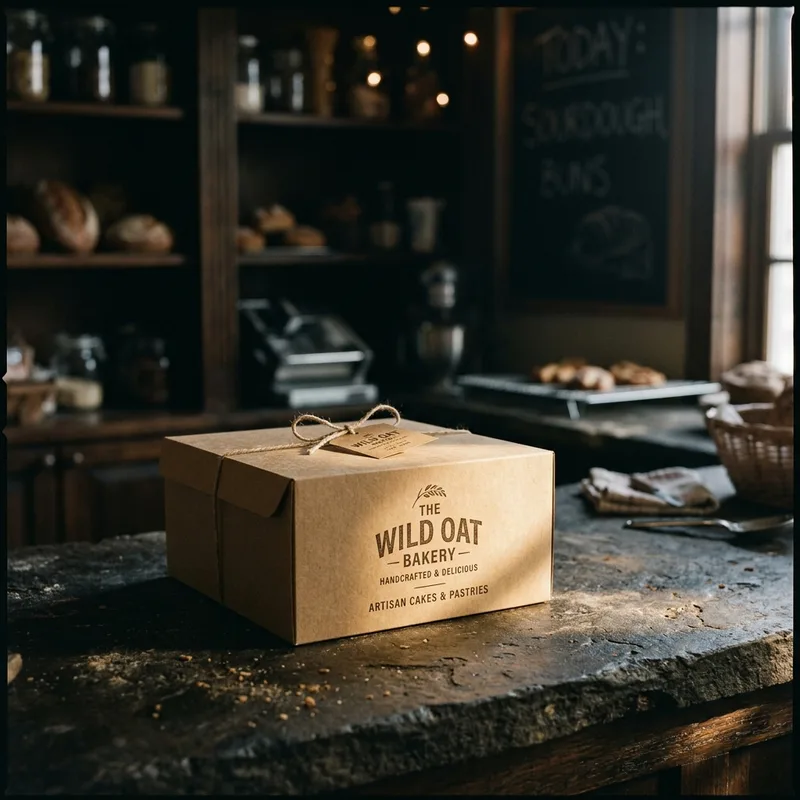
Cake Boxes
Printed boxes sized to the cake on its board, with height for frosting and toppers.
From $1.13/unit
13 answers →Why butter soaks through, frosting sticks to the lid or a cake slides in its box, which box, insert, window or bag suits each bake, how to size around the cake board and what a bakery label must carry. Each answer gives the cause first, then the box that solves it.
Which Bakery Box or Bag Do You Need?Browse bakery packaging →
Each answer below is linked to the product it applies to. Pick a product to see its answers, open its page for sizes and pricing, or compare the full bakery packaging range.
Printed boxes sized to the cake on its board, with height for frosting and toppers.
From $1.13/unit
13 answers →
Low-profile boxes with a paperboard insert that gives each piece its own place.
From $0.77/unit
7 answers →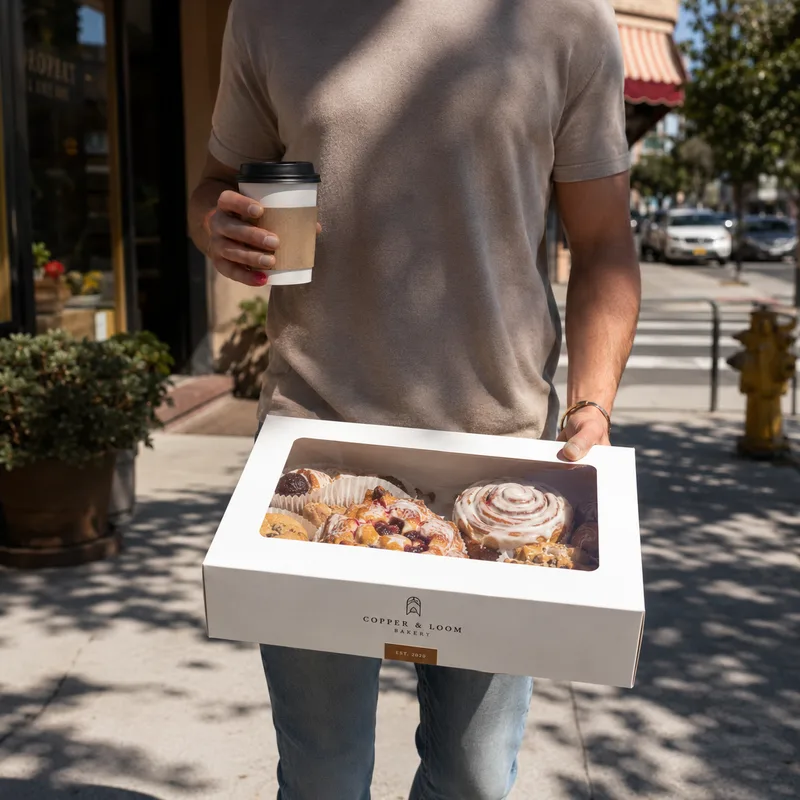
Printed bakery boxes with a die-cut window and clear PET patch over the goods.
From $0.83/unit
4 answers →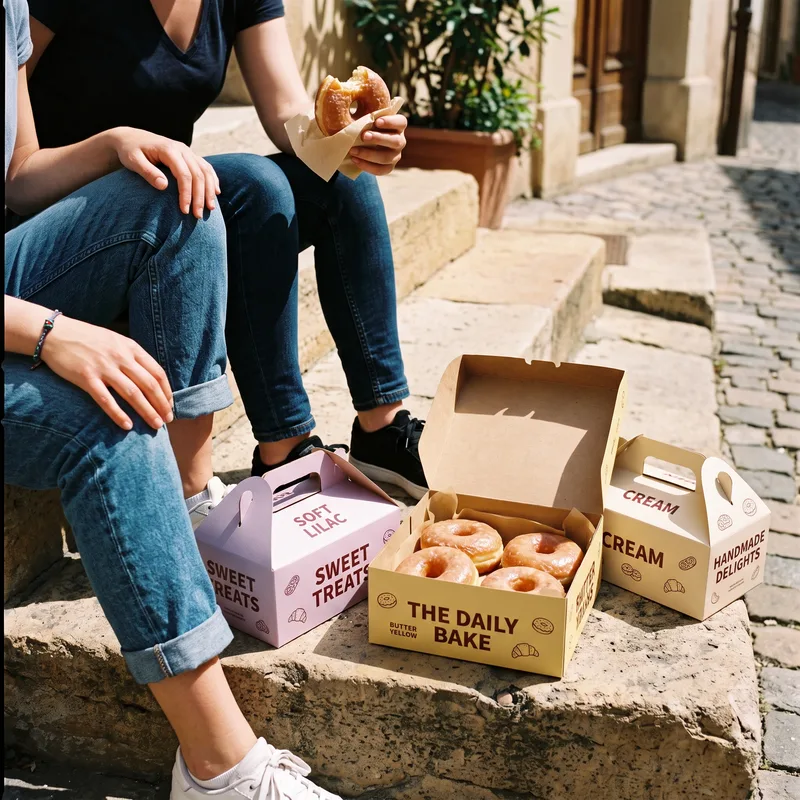
Low, wide boxes laid out for a set count, with a lid that clears toppings.
From $0.96/unit
6 answers →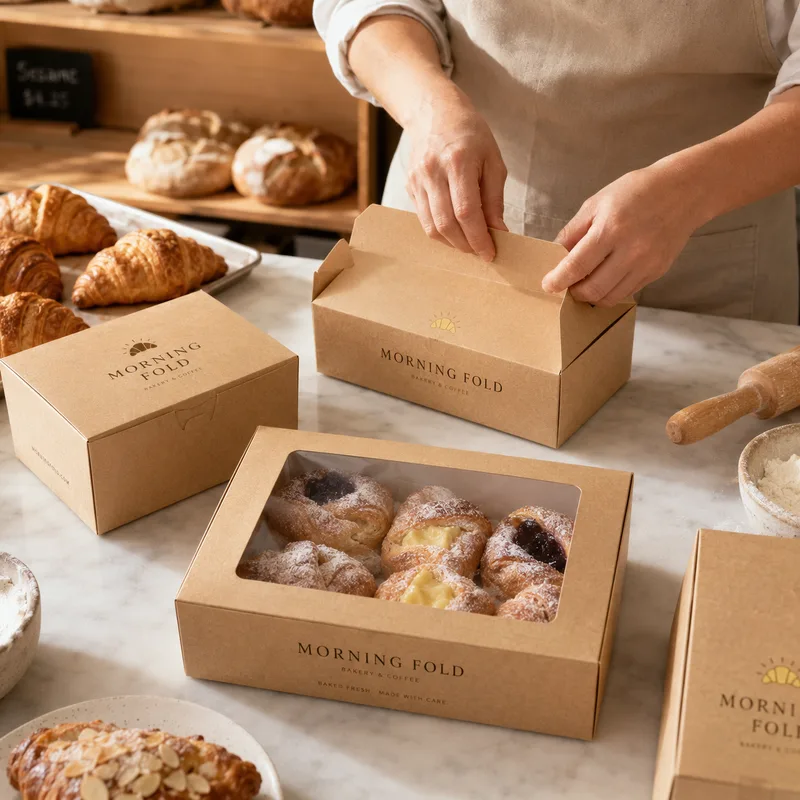
Bakery boxes in brown kraft board, printed with inks planned for the brown surface.
From $0.77/unit
4 answers →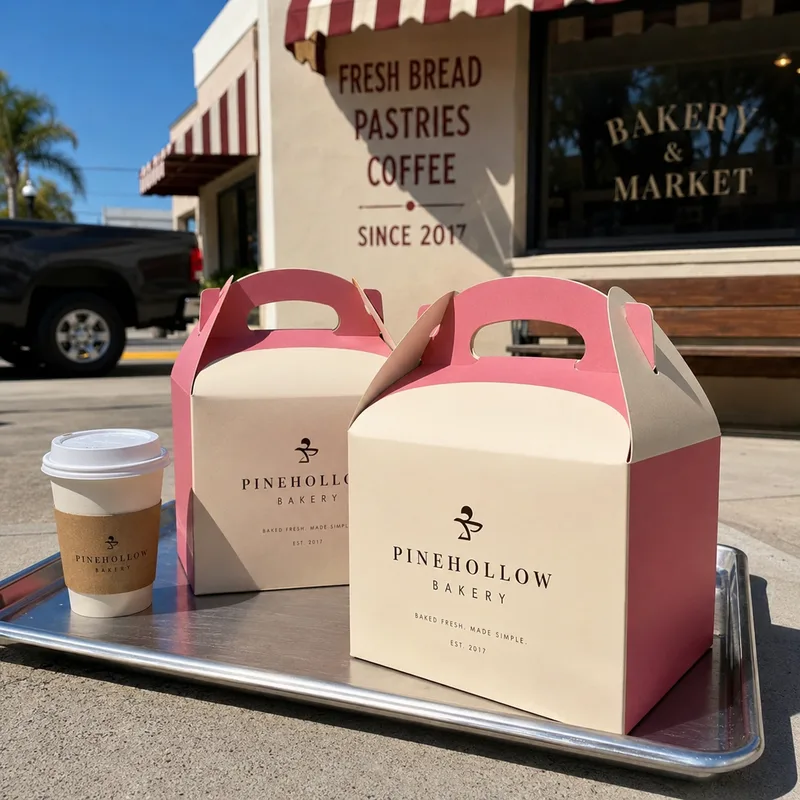
Printed cartons with a built-in handle, cupcake inserts and pastry trays.
From $1.25/unit
5 answers →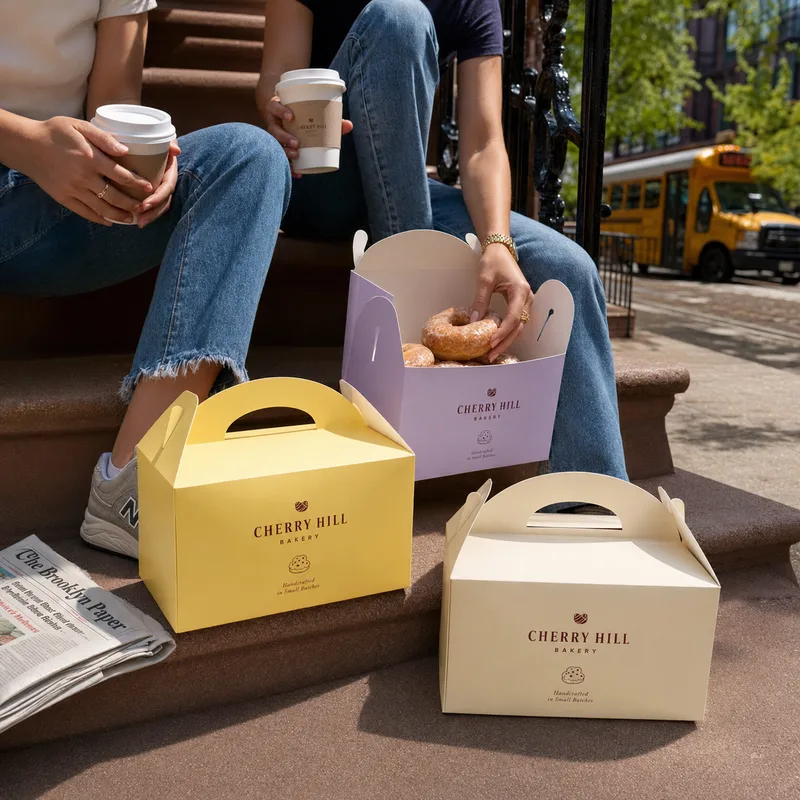
Handled cartons sized around containers and dividers for catering and boxed lunches.
From $1.25/unit
2 answers →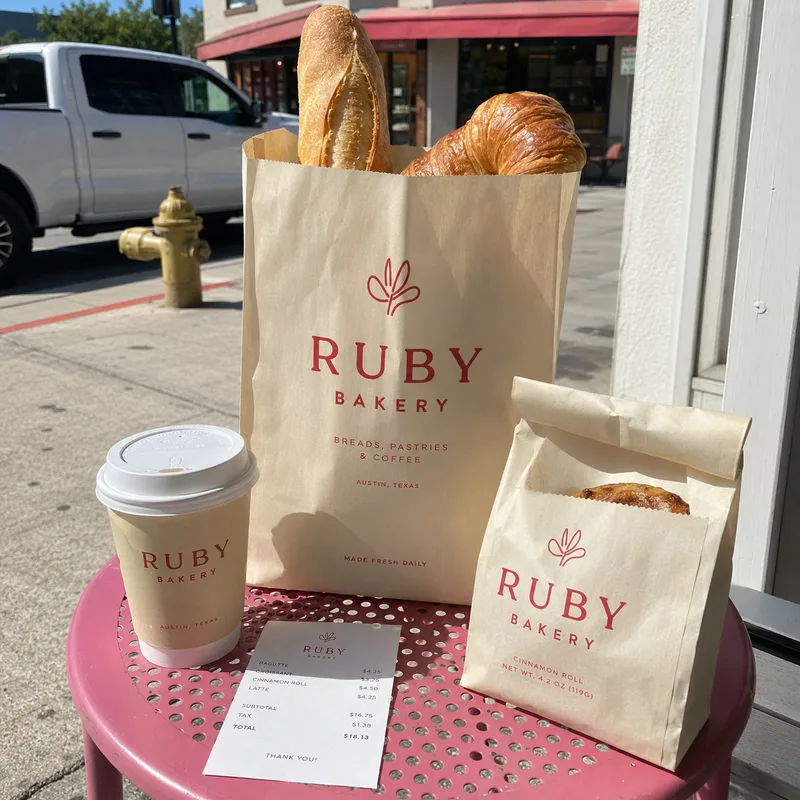
Printed flat or gusseted paper bags for bread, cookies and pastries.
From $1.25/unit
5 answers →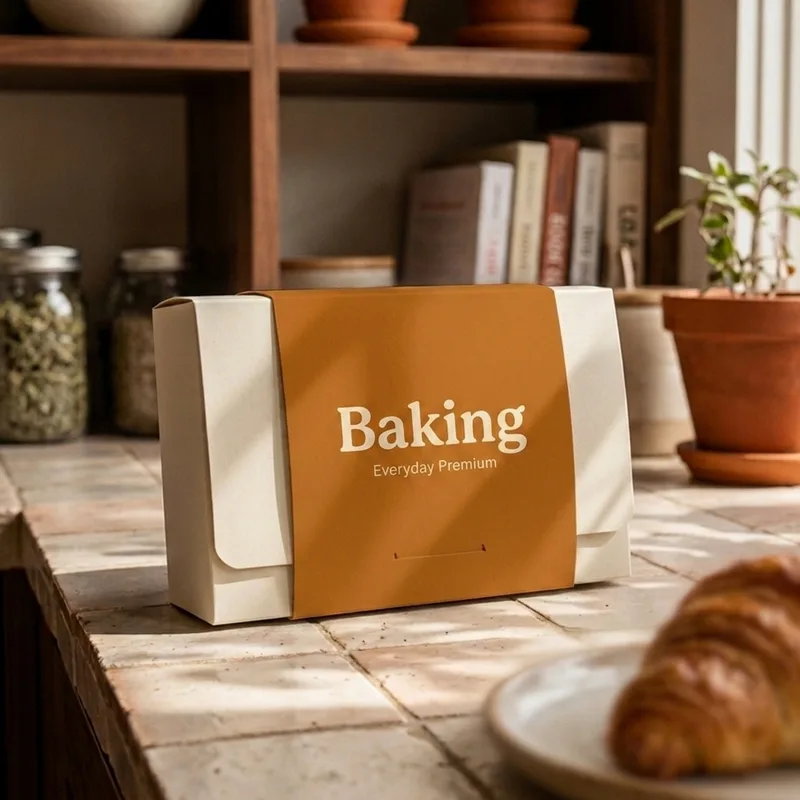
Printed sleeves over a plain box, tray or wrapped stack.
From $1.25/unit
2 answers →
Open a problem to see why it happens and how to fix it.
Why it happensUncoated board is made of paper fibers that draw fats and oils in; warm, buttery bakes release more oil the longer they sit against the board.
How to fix itSpecify a grease-resistant coating, such as a grease-resistant aqueous grade, or a liner chosen for the food, contact time and temperature, and let warm bakes cool before boxing.
Why it happensThe box height was set below the tallest decoration, so the lid or window film presses on it when closed or stacked.
How to fix itSize height to the tallest point including toppers or glaze, with a small clearance checked on a packed sample.
Why it happensA cupcake has a narrow base and a heavy top; with nothing holding the base, it tips at the first turn or brake.
How to fix itUse a cupcake insert with cavities sized to the cupcake base.
Why it happensThe decorated weight sits on a box floor that is only supported at its edges, so a light board grade bows in the middle when the box is lifted.
How to fix itRaise the board grade, use a cake board, and check on a packed sample.
Why it happensWhen the box is larger than the cake board, the board has room to slide and the cake hits the walls.
How to fix itSize the inside to the cake board, with only enough room to lift it in and out.
Why it happensInsert cavities that don't match the pieces let them shift together in transit.
How to fix itSize the insert cavities to the pastries you actually pack.
Why it happensThe window was placed by the box layout, not by where the bakes sit.
How to fix itMove the window over the goods, based on the insert or tray layout.
Why it happensGrease on the board and condensation in the fridge sit between the adhesive and the surface, so a standard adhesive can't hold.
How to fix itChoose an adhesive for grease or refrigeration and test it on the packed box.
Match the box to the bake's height, weight and fragility: tall boxes with a cake board for cakes, low boxes with inserts for pastries and donuts, cupcake inserts in a gable box for carry-out, windows for counter display, and paper bags for bread and plain cookies.
| Bake | Packaging | From |
|---|---|---|
| Whole cakes and slices | Cake Boxes | $1.13 |
| Croissants, Danish, tarts, mixed pastries | Pastry Boxes | $0.77 |
| Display and gift bakes | Bakery Boxes with Window | $0.83 |
| Donuts by the 1, 6 or 12 | Donut Boxes | $0.96 |
| An artisan kraft look | Kraft Bakery Boxes | $0.77 |
| Cupcakes, frosted cookies, carry-out assortments | Bakery Gable Boxes | $1.25 |
| Boxed lunches and catering | Food Gable Boxes | $1.25 |
| Bread, plain cookies, single pastries | Bakery Paper Bags | $1.25 |
| Cookie stacks, bars, boxed sets | Bakery & Pastry Sleeves | $1.25 |
| Seals, flavors, ingredient labels | Bakery Labels | $1.25 |
Comparisons
Cake box vs pastry box
A cake box is sized to the cake board and set by decorations; a pastry box is low-profile, sized to the pastry layout.
Pastry box vs donut box
Pastry boxes use inserts for mixed shapes; donut boxes use a row layout (half dozen in 2 rows of 3; dozen in 3 rows of 4 or 2 rows of 6).
Box vs paper bag
A box holds its shape and takes inserts, for cupcakes and frosted cookies; a bag follows the contents, for bread and plain cookies.
Gable box vs flat box
A gable box carries by its handle, for pickup and catering; a flat box stacks for counters and delivery.
Structure detailTuck Boxes guide →Gable Boxes guide →Paper Bags guide →
Size the base from the cake board's length and width or diameter, and the height from the tallest point including toppers. Record the decorated weight so the base board grade is right, and list every cake size you sell so the range is planned together.
What to record
Note: For donuts, record the largest diameter, the tallest topped or filled donut and the count layout.
Grease resistance comes from the board's coating or a liner, chosen for the food, contact time and temperature. A paperboard box isn't airtight or a moisture barrier, so let warm bakes cool before boxing to avoid condensation, and choose paper bags for crusty bread you want to stay crisp rather than sealed film.
List
Coatings
Aqueous or grease-resistant on bakery boxes; grease-resistant paper on bakery bags.
Freshness
A box protects shape and presentation; it doesn't extend shelf life on its own.
Bread
Paper releases moisture, depending on material, coating and closure; plastic bakery bags aren't offered.
Food-contact board and paper are available on request. Every food-contact surface (board, coating, inks, inserts, window film) is confirmed for the food type, contact time and temperature. Printing on surfaces the food touches is confirmed the same way. Wrapped bakes only touch their wrapper.
Note: We make no general "PFAS-free" or "BPA-free" claim; material requirements are confirmed per order.
US packaged baked goods generally need five things: the product name, the net quantity, the name and place of business, an ingredient list in descending order by weight, and the major food allergens declared. Nutrition Facts apply unless an exemption covers your business. Check FDA and your state's rules.
Note: Cottage-food sellers follow state rules, which often add a "made in a home kitchen" statement. Labels: Bakery Labels · Food Labels.
Send each bake's size and count, the tallest item, packed weight and whether food touches the board. Quotes typically come back within 24 hours; orders dispatch 7 days after proof approval, plus shipping time, with rush available for seasonal peaks, and orders start at 500 units.
Have these seven answers ready and your quote starts from the right specification. To compare every product side by side, see the bakery packaging range.
Packaging Dock makes custom bakery packaging to order from 500 units and ships across the USA and worldwide. These are the questions bakeries, home bakers and cafés ask most. Everything is on the bakery packaging page.
No answers for this product in this topic.
Most bakeries start with three things: a box for the main bakes (cake, pastry or donut boxes), a carry option (a bakery gable box or a paper bag), and labels for seals, flavors and ingredients. One plain box with a sleeve or sticker per product keeps early costs down.
Selling from home or at markets? The same three pieces work. Paper bags and seal stickers suit market stalls; boxes with a window suit gifts and pre-orders.
What is the best packaging for baked goods? The one sized to the bake: tall boxes on a cake board for cakes, low boxes with inserts for pastries and donuts, and paper bags for bread and plain cookies.
Bakery boxes are printed paperboard cartons for cakes, pastries, donuts and cookies. Packaging Dock makes them as tuck cartons that ship flat, with an optional clear PET window, inserts, and food-contact board on request.
Which bakery boxes do you make? Cake boxes, pastry boxes, donut boxes, kraft bakery boxes and bakery boxes with a window, plus bakery and food gable boxes with a built-in handle.
Pastry boxes start from $0.77 per unit, window bakery boxes from $0.83, cake boxes from $1.13, and donut boxes, kraft bakery boxes, gable boxes, paper bags, sleeves and labels from $0.77. Final price depends on size, board, print, finishes and quantity.
What does 500 pastry boxes cost? From $385.00 for 500 units at the starting price; 500 cake boxes start from $565.00.
500 units, with a standard turnaround of 7 days from proof approval to dispatch, plus shipping time and rush turnaround available on request.
No. A paperboard box protects shape and presentation; it is not airtight and is not a moisture barrier, so it does not extend shelf life. How long a bake lasts depends on the bake itself, how it is wrapped and how it is stored.
Are cupcake boxes airtight? No. Cupcake boxes are paperboard cartons, like every bakery box.
How long do donuts or cookies last in a box? There is no figure we can give for packaging alone; it depends on the recipe and storage.
Food-contact board and paper are available on request. Every surface that touches the food, including board, coating, inks, inserts and window film, is confirmed for the food type, contact time and temperature. Wrapped bakes touch only their wrapper.
Does food packaging need FDA approval? We do not describe boxes as FDA approved. The food-contact materials are confirmed per order for your food and conditions.
Which board touches the food? Paperboard from 14 to 28 pt or E/F- or B-flute corrugated, with food-contact board on request and an aqueous or grease-resistant coating.
We make no general "PFAS-free" or "BPA-free" claim. Material requirements are confirmed per order for your food and the market you sell in.
Specify a grease-resistant coating, such as a grease-resistant aqueous grade, or add a liner. Plain board absorbs butter, glaze and frying oil, so marking is checked on a packed sample before approval.
Why does grease soak through? Uncoated board wicks fat from buttery doughs, glazes and fried bakes.
Let bakes cool before boxing. Warm goods release steam, which condenses on the lid or window and softens the bake.
Why does the window fog up? The goods were boxed warm, so steam settled on the PET window.
Yes, with food-contact board confirmed for the food, contact time and temperature. Say so in your quote; otherwise use a liner or wrap.
Can the window film touch the food? Only when the selected PET film is confirmed for that contact and those conditions.
A paper bag suits bread: paper releases moisture, so crusts stay drier than in sealed film. A box suits bakes that need their shape held. Packaging Dock makes paper bakery bags only, not plastic bread bags.
Do bread bags keep bread fresh or stop mold? We make no freshness or mold claim. Moisture release depends on the paper, coating and closure.
Why does bread go soggy or stale in a paper bag? Soggy: it was bagged warm. Stale: paper lets moisture out, which is the trade-off for a crisp crust.
Are paper bread bags waterproof? No. Paper is not a moisture barrier; grease resistance depends on the paper and coating.
Bread bag or bread box? A bag goes home with the customer and follows the loaf; a box holds a set shape and takes inserts.
Tell us how the bakes are stored when you quote, so the board, coating and label adhesive are chosen for it. Bakery labels can be made with an adhesive for refrigeration, so seals stay on in the fridge.
Can a cake box go in the fridge? Yes, as part of a chilled cake order; the seal sticker needs a cold adhesive.
The box is not a moisture barrier, so cookies take up moisture from the air or from softer bakes packed beside them. Keep crisp cookies apart from moist bakes, and wrap them if crispness matters.
We do not rate bakery boxes or bags for microwave use. Take the bake out of the packaging before heating.
Size the base from the cake board (length and width, or diameter) and the height from the tallest point including toppers. Standard inside sizes are 6 × 6 × 5, 8 × 8 × 5, 10 × 10 × 5 and 12 × 12 × 6 in, before any insert; any other size is made custom.
Why is my cake box too short? The height was set from the cake, not the tallest decoration or topper.
What about sheet cakes or 9 × 13 pans? Measure the board the cake sits on and order a custom size around it.
Yes. Height is set by the tallest point, including toppers, and the board grade is set by the decorated weight, so record both and the base is checked on a packed sample.
Yes. A cake board is the flat base the cake sits on; it carries the weight and sets the box size. Without one, a heavy cake can flex the box base.
Why does the box sag under a heavy cake? The board grade is too light for the decorated weight. Raise the grade, use a cake board and check a packed sample.
Yes, a die-cut window with a clear PET patch, placed over the cake. Size the height so frosting clears the lid and window.
Why does frosting stick to the lid or window? The box height is below the tallest decoration.
Use a box sized to the cake board so the cake can’t slide, with height clear of the decorations. Carry it by the base and keep it level on a flat surface in the car.
Why does the cake slide inside? The box is larger than the cake board. Tighten the inside size to the board.
Yes, as bakery gable boxes: printed cartons with a built-in handle, sized around the bake or insert. Handle strength is checked against the packed weight.
Yes. Slice boxes are sized to the slice and its height. Bento or lunchbox cakes are boxed the same way: a cake box sized to the cake, confirmed when quoting.
Inside. Box sizes are given as inside dimensions before any insert, because the bake has to fit the inside. The outside is slightly larger by the board thickness.
Cake boxes are tuck cartons that ship flat. Open the carton, form the bottom (an Auto Lock bottom locks as it opens), load the cake and tuck the lid closed. The construction is confirmed on your dieline.
How do cupcake or gable boxes close? Gable boxes form the base with Auto Lock, Interlock or Seal End, then close into the built-in handle.
With a cupcake insert: a paperboard, corrugated or molded pulp insert with a cavity for each cupcake base, in a bakery gable box. The insert is laid out for the count you sell, and the height is set by the tallest frosting.
Why do cupcakes tip over? Nothing holds the base. Add an insert sized to the cupcake base.
How tall is a cupcake box? There is no fixed height; it is set by your tallest cupcake, including frosting and toppers.
A pastry box with an insert for gift sets, a paper bag for plain cookies, or a sleeve over a wrapped stack. Seal stickers close bags and individually wrapped cookies.
Paper bag or box for cookies? A box holds frosted or fragile cookies in place; a bag suits sturdy, plain cookies.
Single, half dozen (2 rows of 3) and dozen (3 rows of 4 or 2 rows of 6); other counts are set by the layout. Height is set by the tallest topped or filled donut, so toppings clear the lid.
Why do donuts stick to the box? Toppings touch the lid (raise the height) or glaze marks the board (use a grease-resistant coating).
It’s optional. A clear PET patch shows the toppings at the counter; a closed lid gives the full panel to print.
In a pastry box with a paperboard insert that gives each piece its own place. Record each piece’s size, the count and the tallest piece; the layout is confirmed when quoting.
Why do macarons break in transit? They move. Tighten the insert cavities around each piece.
Do you make croissant boxes? Yes. Pastry boxes are low-profile boxes for croissants, Danish, tarts and small pastries.
They are made as pastry or cake boxes sized to the item: low boxes for brownies, bars and tarts, deeper boxes for pies. The layout and size are confirmed when quoting.
To sell on sight: a die-cut window with a clear PET patch shows the bakes at the counter and in gift orders. A closed box gives the full lid to branding and suits takeaway and delivery.
Does a big window weaken the box? It can. Window size and margins are balanced against lid strength on the dieline.
Why does the window show the box, not the goods? It sits away from the bakes. Move it over the goods.
Yes. Paperboard inserts hold pastries and cakes; gable boxes take cupcake inserts, pastry trays, dividers or liners in paperboard, corrugated or molded pulp.
Kraft gives an artisan, natural look on brown board; white gives bright, full color. Colors print differently on kraft, so confirm them on a printed proof on the actual board.
Can I get pink or gold boxes? Yes, in CMYK or Pantone spot color, with foil stamping for metallic accents.
Yes. A printed bakery sleeve slides over a wrapped stack, tray, box or bag to brand it, so one plain box can carry a sleeve per product.
Yes. Bakery stickers come as seals, flavor stickers and ingredient labels, on rolls or sheets, with stock and adhesive chosen for grease, moisture and refrigeration.
Sticker seal or printed box for a small bakery? A plain box with a printed seal keeps early costs low; a fully printed box carries the brand on every panel.
Ribbon is not a listed bakery box option. A printed sleeve or a seal sticker gives a finished closure instead; ask in your quote if you need ribbon.
US packaged baked goods generally need the product name, net quantity, the name and place of business, ingredients in descending order by weight, and the major food allergens. Nutrition Facts apply unless an exemption covers your business. Check FDA and your state’s rules.
Which allergens must be declared? Milk, eggs, fish, shellfish, tree nuts, peanuts, wheat, soybeans and sesame.
Generally yes. Cottage-food rules are set by each state and often add a "made in a home kitchen" statement, so check your state’s rules before printing.
Yes. Boxes print in CMYK and Pantone spot color, exterior only, exterior plus interior, or full inside and outside, with matte, gloss or soft-touch lamination, foil stamping, emboss or deboss and Spot UV, according to the board.
Can the inside be printed? Yes. Interior print on food-contact surfaces is confirmed for the food and conditions.
Yes. Each order gets a custom dieline showing the base, headroom and any window, and artwork is prepared on it with free design support. The proof is approved before production.
Start from how the box sells: a window where customers buy on sight, a full printed lid where the brand does the work, and one base box with a sticker or sleeve per flavor for a wide range. Kraft reads artisan; white carries bright color.
Yes. Packaging Dock makes custom bakery boxes to order from 500 units and ships them flat across the USA and worldwide. Quotes typically come back within 24 hours.
Yes. Complimentary sample kits ship within two business days; the customer covers shipping. A pre-production sample can also be packed with your bakes before the full run.
Yes. Pack the bakery box inside a shipping mailer with cushioning, so it travels through the parcel network protected.
Each bake’s size and count, the tallest item, the packed weight, whether food touches the board, and every box size you need. Several sizes can share one design, with the artwork laid out per dieline.
Orders dispatch 7 days after proof approval, with rush turnaround available on request. US shipping typically takes 3–7 business days after dispatch.
Yes. Any bakery box can be printed in seasonal artwork, and holiday gift and treat boxes are on the holiday packaging page.
Yes. Cake and slice boxes carry wedding cake home, and favor boxes are on the life moments page.
Yes. A window bakery box or a pastry box with an insert presents a gift set; add a sleeve or seal sticker for the finish.
Clean paperboard is widely accepted, but local programs often reject grease-soiled board, so check local rules. Kraft and recycled options are on the sustainable packaging page.
Can I recycle donut and cookie boxes? Where the board is clean enough for your local program; greasy boxes are often rejected.
Kraft board alone does not prove it. A compostable claim depends on the finished package and needs its own evidence.
Plain, clean paper bags are accepted in many paper recycling programs; grease, laminations and windows change how a bag is handled, so check local rules.
A PET window is a separate material from the board. Some programs ask you to remove it first; check local rules.
A tin tie has a wire core, so it is usually removed before the bag goes for recycling. Check local rules.
A cake box is sized to the cake board and its height is set by the decorations. A pastry box is low-profile, sized to the pastry layout, with an insert for mixed shapes.
A box holds its shape and takes inserts, for cupcakes and frosted cookies. A bag follows the contents, for bread and plain cookies.
A clamshell is a clear plastic container; a bakery box is printed paperboard with an optional PET window. Packaging Dock makes the box, and seal stickers for clamshells, not the clamshell.
A gable box carries by its handle, for pickup and catering; a flat box stacks for counters and delivery. Food gable boxes take dividers for containers and boxed lunches.
Bakery paper bags come in standard kraft, grease-resistant paper or white art paper. Wax and parchment bags are not offered.
Ready to put it together?
Answer a few questions and get a packaging setup with the reason for every choice, or browse every bakery product.