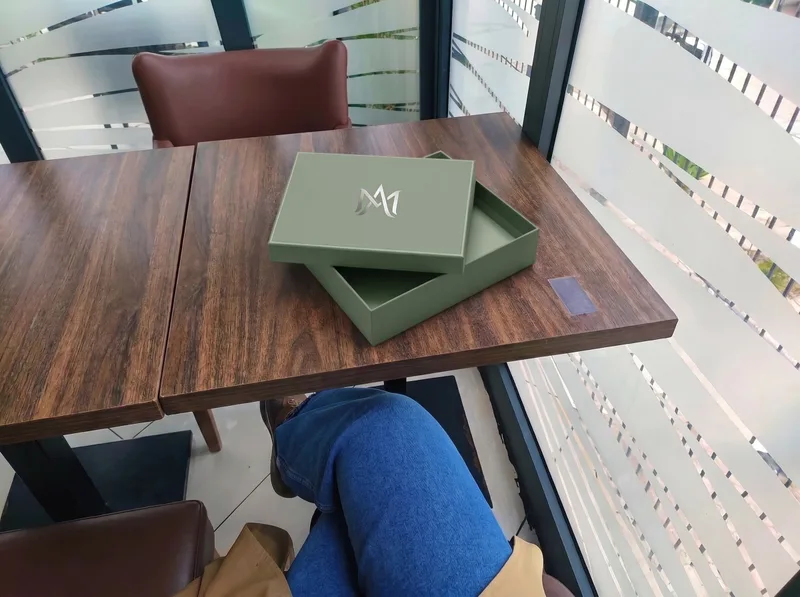
Custom Two Piece Rigid Boxes
Lid lifts fully off; full telescope, partial or shallow lid.
From $1.84/unit
4 answers →Why a lid sticks or slides off, which of the six rigid structures fits the reveal you want, how inserts, magnets and wraps change the fit, and when a box that ships flat saves money. Each answer gives the cause first, then the box that solves it.
Each answer below is linked to the product it applies to. Pick a product to see its answers, open its page for sizes and pricing, or compare the full rigid boxes packaging range.
Lid lifts fully off; full telescope, partial or shallow lid.
From $1.84/unit
4 answers →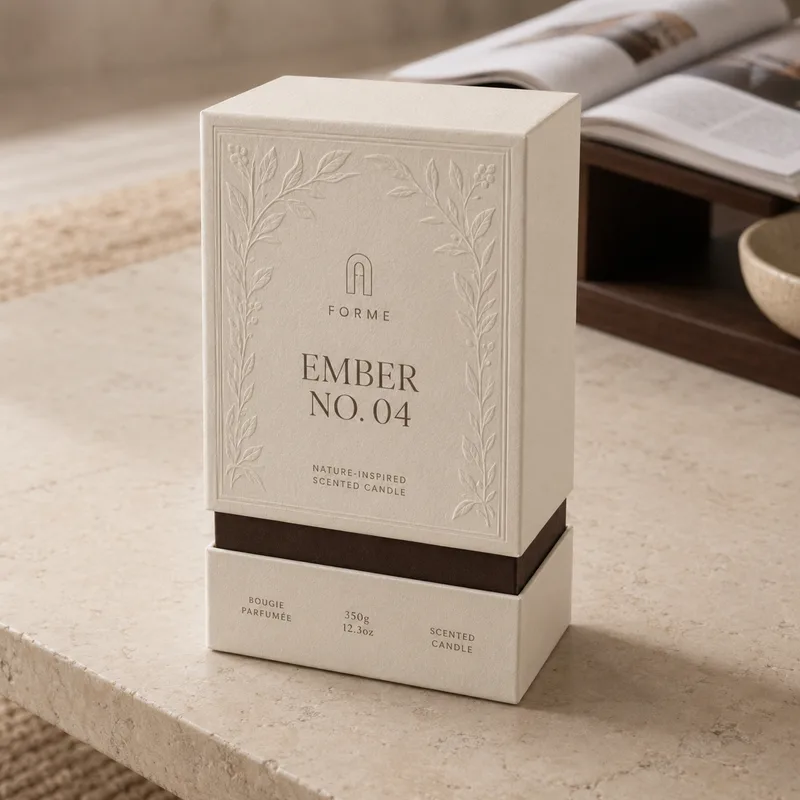
Lid lifts off over a raised neck, visible or concealed.
From $2.21/unit
8 answers →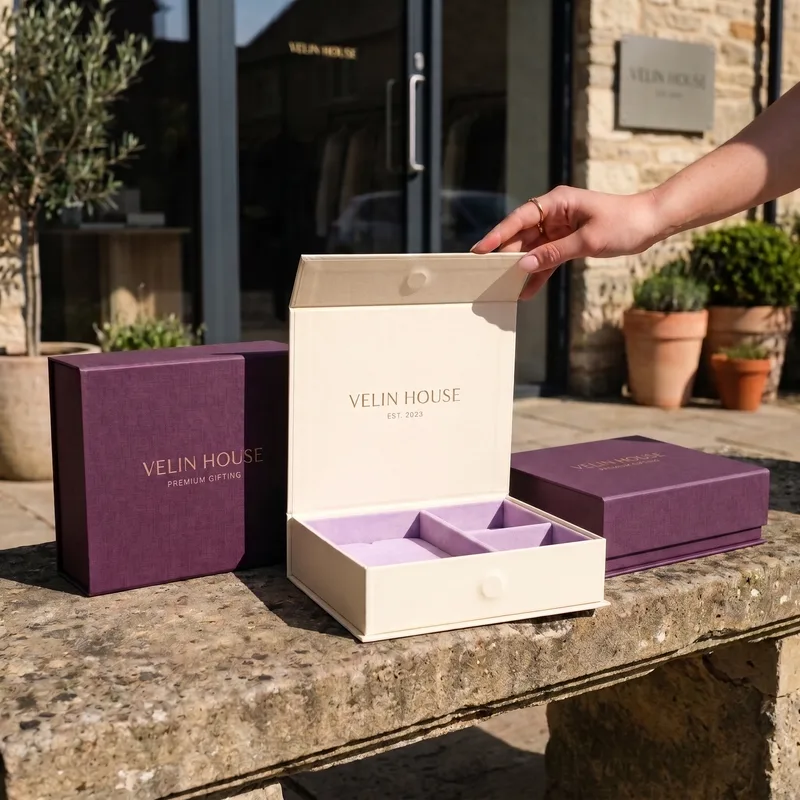
Flip top with concealed magnets and an inside-lid message.
From $2.14/unit
4 answers →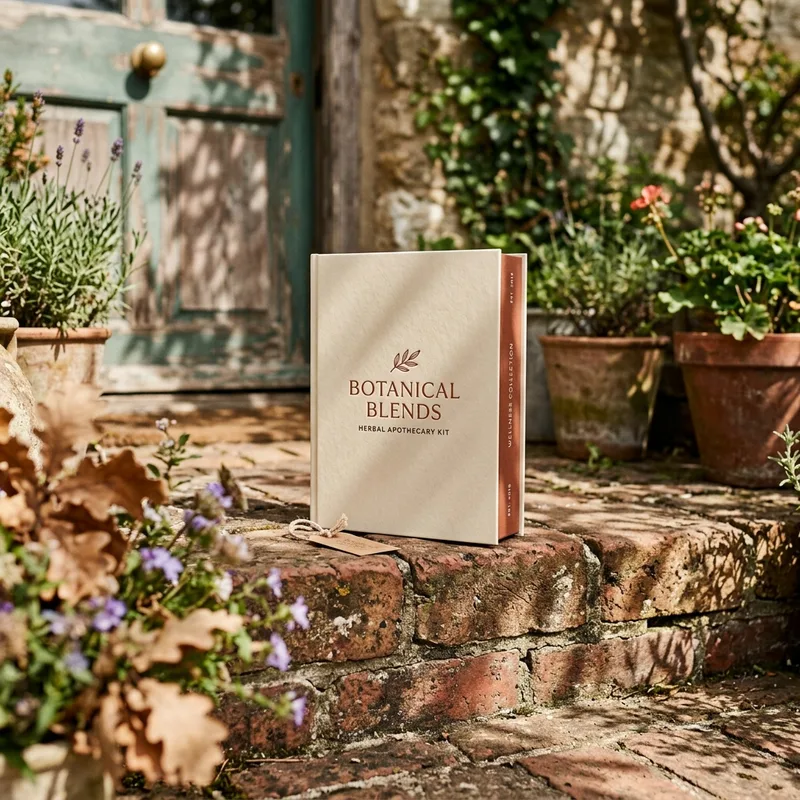
Side-opening flip top that opens like a hardcover.
From $2.85/unit
5 answers →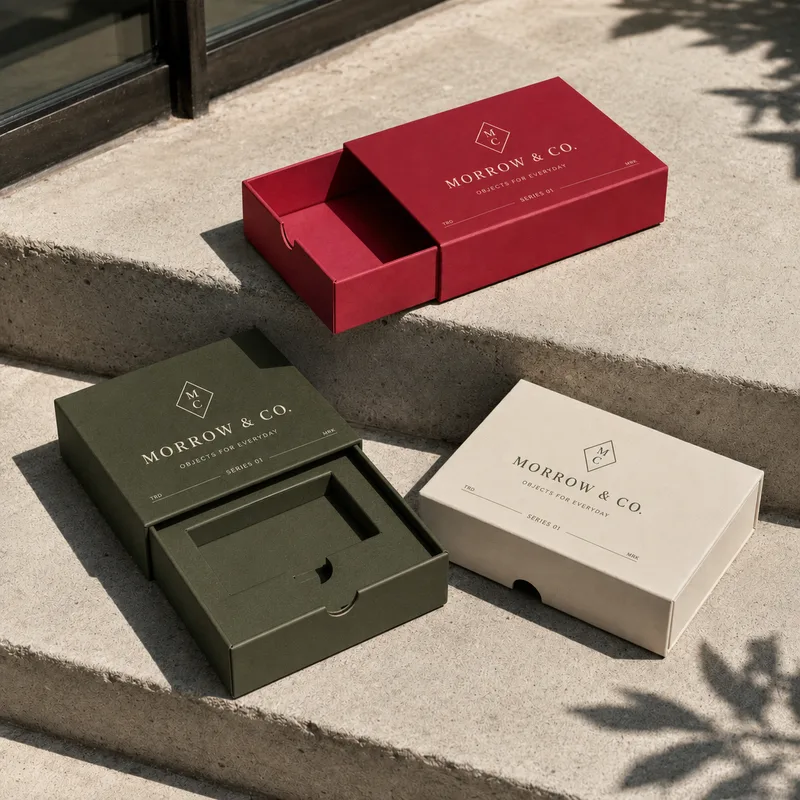
Tray slides out of a rigid sleeve for a staged reveal.
From $2.85/unit
5 answers →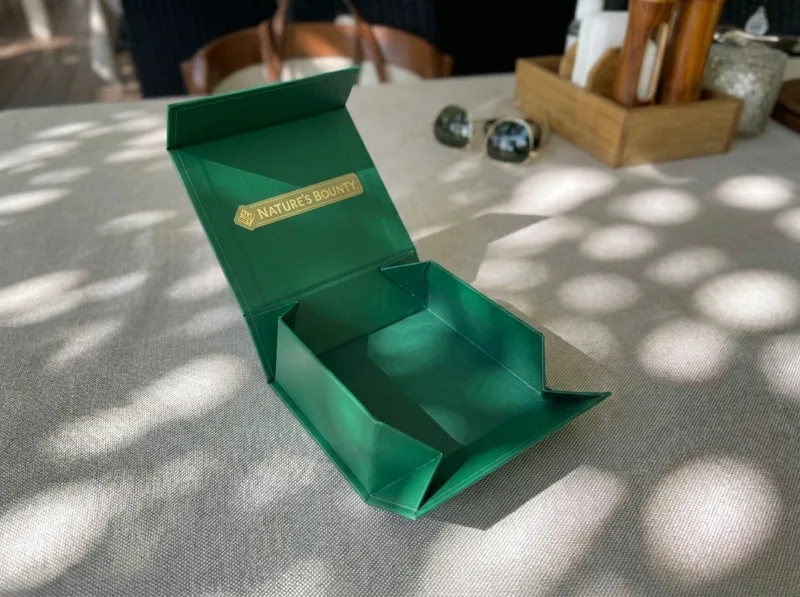
Flip-top look in a box that ships and stores flat.
From $2.85/unit
3 answers →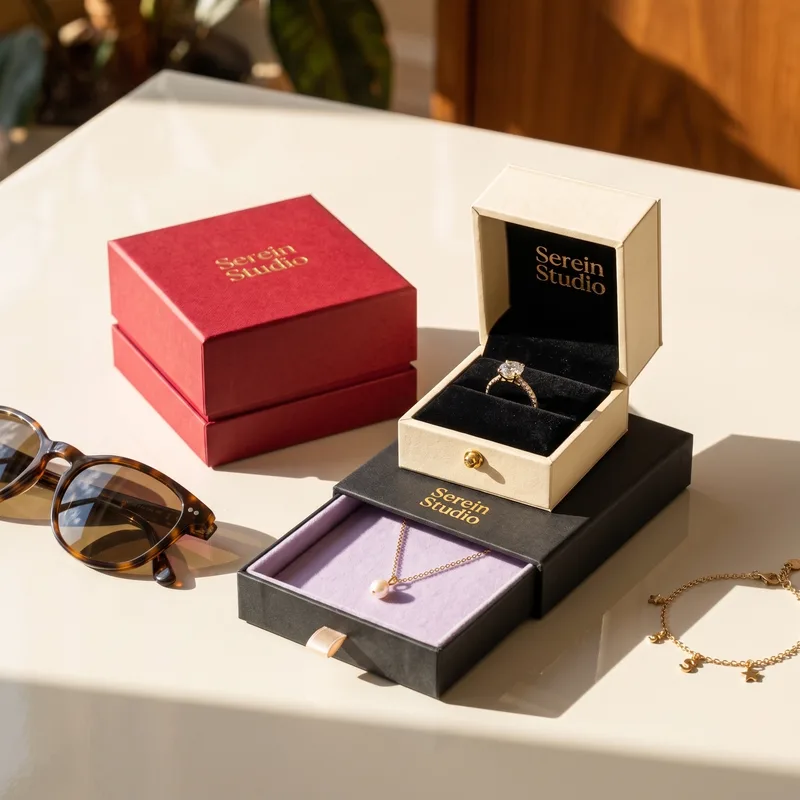
Drawer, Flip Top, Two Piece or Shoulder Neck boxes with compartments by jewelry type.
From $1.25/unit
1 answers →
Shoulder Neck, Flip Top or Drawer box with a fitted bottle insert.
From $2.16/unit
2 answers →
Shoulder neck box with the vessel centered in the neck.
From $1.25/unit
2 answers →
Two Piece or Shoulder Neck boxes with fitted compartments.
From $1.25/unit

Satin over the base, insert face, inside lid or full interior.
From $2.24/unit
3 answers →A rigid box, also called a set-up box, is a box built from thick greyboard or duplex board wrapped in paper, fabric or a specialty material. Unlike a folding carton, it holds its fixed shape from the factory, so it keeps clean edges through handling and display and is often kept and reused by the customer.
Greyboard
Dense recycled paperboard that forms the structural core.
White-coated duplex board
A grey core with a smooth white face, for a cleaner white interior or print face.
Wrap
The printed or specialty paper (or fabric) glued over the board, commonly around 120–157 gsm.
Set-up vs collapsible
Set-up boxes arrive assembled; a collapsible rigid box arrives flat and is raised before packing.
Rigid box problems come from fit more than strength: board, wrap and finish all add thickness, so lids, drawers and inserts are tuned on a sample. Open a problem to see why it happens and what fixes it.
Why it happensEvery layer adds thickness: the board, the wrap paper, laminations and foil. Humidity then swells or shrinks the board a little. A lid sized from the product alone ends up too tight once wrapped, or loose if the wrap is thinner than planned.
How to fix itSize from the product with the allowances below, then confirm the opening feel on a sample in the final board and wrap before production.
Why it happensThe cavity was sized to the box, not the product, or the insert was cut to a nominal size rather than the real item. Any free space lets the product move each time the box is tilted.
How to fix itUse an insert cut to the actual product (paperboard, foam/EVA or molded pulp) and check it on a sample with the real item.
Why it happensA rigid box is presentation packaging. Sent through the parcel network as the outer carton, its wrapped corners take the drops and stacking loads directly and dent.
How to fix itPack it inside an outer shipping carton for parcel delivery; protection depends on the full pack, insert and packed weight.
Why it happensThe tray and sleeve each carry board plus wrap, so the clearance between them changes with the wrap paper and humidity. Too little and it sticks; too much and the tray slides out.
How to fix itCritical drawer fits are commonly tuned to around ±0.5 mm and confirmed on a sample in the final materials. See Drawer Boxes.
Why it happensA collapsible box folds at set zones every time it is set up. Foil and Spot UV are stiffer than the wrap, so where they cross a fold zone they crack as it flexes.
How to fix itKeep fine text, foil and Spot UV clear of fold lines on the dieline.
Why it happensThe magnets' strength has to match the lid's weight and the product's push. Too weak and the lid drifts open; too strong and it snaps shut and feels cheap.
How to fix itMagnet type, count and placement are set around the lid and confirmed on a sample. See Magnetic Closure Boxes.
Why it happensSet-up rigid boxes ship and store at full box volume, so a carton of finished boxes is mostly air.
How to fix itFor large or rolling programs, use a Collapsible Rigid Box that ships flat and sets up at packing.
Choose by how the box should open and what the customer sees first. Two Piece gives full access, Shoulder Neck a layered reveal, Flip Top an inside-lid message, Drawer a staged slide-out, Hinged a compact case, and Collapsible the same flip-top look in a box that ships flat.
| Two Piece | Shoulder Neck | Flip Top | Drawer | Hinged | Collapsible | |
|---|---|---|---|---|---|---|
| Opening | Lid lifts fully off | Lid lifts off over a neck | Lid lifts on a spine, stays attached | Tray slides out | Lid pivots on a hinge | Attached flip-top lid |
| Parts | Lid + base | Lid + neck + base | One unit | Sleeve + tray | One unit | One unit, once raised |
| Access to contents | Full | Full, inside the collar | Broad | Gradual, as the tray slides | Front and top | Broad |
| Main branded surface | Lid top and base band | Lid, base, visible neck | Inside lid, seen upright | Sleeve and tray | Insert and inner lid | Flip-top reveal |
| Arrives | Set up | Set up | Set up | Set up | Set up | Flat |
Application styles start from a structure and are built around one product: a ring slot, a long necklace pad, a bottle cavity, a candle neck or a multi-item set. Start from the product below, then open its page for sizes, inserts and pricing.
| Product | Box | Structure | From |
|---|---|---|---|
| One ring or a ring pair | Custom Ring Boxes | Hinged | $1.25 |
| Necklace or pendant | Custom Necklace Boxes | Hinged | $1.37 |
| Bracelet, bangle or watch strap | Custom Bracelet Boxes | Hinged | $1.67 |
| Jewelry sets and collections | Jewelry Gift Boxes | Drawer, Flip Top, Two Piece or Shoulder Neck | $1.25 |
| One perfume bottle | Custom Perfume Boxes | Shoulder Neck, Flip Top or Drawer | $2.16 |
| Fragrance sets and discovery vials | Fragrance Gift Boxes | Flip Top | $2.47 |
| Candle jar or tin | Rigid Candle Boxes | Shoulder Neck | $1.25 |
| Skincare routine or makeup set | Custom Cosmetic Rigid Boxes | Two Piece or Shoulder Neck | $1.25 |
| PR kit or story-led launch | Book Style Rigid Boxes | Flip Top, side-opening | $2.85 |
Note: Industry guidance: Jewelry · Fragrance · Candle · Cosmetics & Skincare.
Board thickness follows box size and packed weight: about 1.5–2.0 mm for boxes up to about 6 in on the longest side, about 2.5 mm from 6 to 10 in, and about 3.0 mm above 10 in or for contents over about 1 kg. The wrap sets the look and feel.
| Box size (longest side) | Typical board |
|---|---|
| Up to about 150 mm (6 in) | About 1.5–2.0 mm |
| About 150–250 mm (6–10 in) | About 2.5 mm |
| Over about 250 mm (10 in), or contents over about 1 kg | About 3.0 mm |
Art paper
Smooth coated paper for detailed printing.
Custom printed paper
Artwork and brand colors across every visible surface.
Kraft paper
Natural uncoated paper with visible fibers.
Metallic, holographic or pearlescent paper
Shine, color shift or soft sheen without separate foil.
Textured paper
Embossed specialty paper for a tactile surface.
Fabric or velvet wrap
A soft textile surface.
Note: Board options are greyboard or white-coated duplex, in 1.5, 2.0, 2.5 or 3.0 mm.
The insert holds the product in place and decides what the customer sees first. Paperboard suits kits and paper-led builds, foam cushions fragile items, fabric-lined foam gives a soft fitted hold for jewelry, molded pulp gives a natural fiber support, and thermoformed trays give precise cavities.
Paperboard
Die-cut and folded platforms, dividers and supports.
Foam (EVA, PU or EPE)
Precision-cut cavities that cushion the product.
Fabric-lined foam
Foam faced with velvet or satin.
Molded pulp
Formed paper fiber supports.
Thermoformed PET or PVC
Heat-formed trays with precise cavities.
| Satin coverage | What it does | Typically suited to |
|---|---|---|
| Base or tray only | Soft surface under the product | Boxes where the lid carries print |
| Insert face | Satin over the pad or cavity | Rings, necklaces, bracelets, keepsakes |
| Inside lid | Satin panel seen as the box opens | Hinged and two piece presentation boxes |
| Full interior | Base, walls and lid lined | Keepsake and commemorative boxes |
Note: Satin lining is available on every rigid structure. See Satin Lined Boxes.
A lid stays shut by friction fit, concealed magnets, a ribbon, a hook-and-loop dot or a metal clasp. Drawers open with a ribbon pull, thumb notch or die-cut finger access. Handles, pockets, card slots, ribbon lifts and windows are added where the structure allows.
Magnetic closure
Magnets hidden under the wrap give a repeatable snap shut; small discs around 10 × 2 mm are a starting reference on suitable builds.
Friction fit
Close lid-to-base tolerances, for lighter contents and a simpler build.
Ribbon closure
A tied ribbon as a gift detail.
Hook-and-loop dot
Reusable dots that secure a flap.
Metal lock or clasp
Decorative hardware.
Child-resistant button
A press-and-slide mechanism for controlled access.
Drawer pulls
Ribbon pull for deeper trays and heavier contents, thumb notch for slim boxes, die-cut finger access for small trays.
Ribbon lift
Lifts the product out of its insert.
Pocket or card slot
For instructions, certificates or cards.
Handles
Leather, plastic or twisted rope.
Windows
Die-cut with clear film, or open.
Measure the product, add clearance for the interior, then add board and wrap for the exterior. Without an insert, add about 2–3 mm to length and width and 2–5 mm to height; 1.5 mm board adds about 4–5 mm per dimension and 2.0 mm board about 5–6 mm. Confirm on a sample.
| Step | Typical allowance |
|---|---|
| Product to interior, no insert | +2–3 mm length and width, +2–5 mm height |
| Product in an insert | Insert thickness on each side + 1–2 mm |
| Interior to exterior, 1.5 mm board | About +4–5 mm per dimension |
| Interior to exterior, 2.0 mm board | About +5–6 mm per dimension |
| Telescoping lid over the base (Two Piece) | Roughly another 4–6 mm |
| Interior to closed exterior (Two Piece) | Often about +8–12 mm |
Note: Treat these numbers as reference values; final fit is set on the dieline and sample.
By offset, digital, UV or screen printing, in CMYK and Pantone spot colors, on the wrap before it is glued to the board. Print the exterior only, the exterior and inside lid, or full inside and outside, then add a lamination and finishes on selected areas.
Offset
Consistent high-resolution results on larger runs.
Digital
Shorter runs, faster setup and variable artwork.
UV
Prints direct to the surface and cures instantly.
Screen
Bold, dense ink coverage.
Laminations
Gloss (shine and scuff resistance), matte (low glare) or soft-touch (velvet-like feel).
Finishes
Embossing, debossing, foil stamping, Spot UV and raised 3D UV.
Dieline and design
A custom dieline with free design support.
Set-up boxes arrive ready to pack but store and ship at full volume. Collapsible rigid boxes arrive flat, take far less space before use, and are raised and secured before packing. Choose collapsible for large or seasonal programs where storage or freight matters more than skipping a setup step.
| Set-up (Flip Top) | Collapsible | |
|---|---|---|
| Arrives | Set up | Flat |
| Storage before use | Full box volume | Lower; depends on box size and case packing |
| Setup before packing | None | Raise walls and secure |
| Assembly | — | Corner lock, adhesive or magnetic elements |
| Best fit | Ready-to-pack gift boxes | Limited storage, rolling or seasonal programs |
Note: Assembled correctly, a collapsible box handles as a rigid box; strength depends on board, size, joints and assembly method.
Send the product dimensions and weight, quantity, structure, closure, insert and finish preferences. Quotes typically come back within 24 hours; orders dispatch 7 days after proof approval, plus shipping time, with rush available, and orders start at 500 units. A sample confirms lid fit, insert fit and closing feel before production. Every structure and application style is on the rigid boxes page.
Steps: consultation, structure selection, design and sampling, production, quality check, delivery.
Most rigid boxes are recyclable, depending on the wrap material and finishes used. The greyboard core is dense recycled paperboard, FSC-certified board and paper are available where applicable, and molded pulp gives a paper-fiber insert. A kept box also stays in use as storage.
Magnets, foam and plastic trays
Separate from the board before recycling where local rules require.
Claims
Depend on the final materials; print only what your construction supports.
Have these seven answers ready and your quote starts from the right specification.
Each structure below has a free template generator: enter your size and download a PDF, SVG, DXF or PNG file with bleed and safe zone marked. Before you order, open it in the 3D mockup generator to see your artwork on the folded pack.
All structures in one place: dieline generator.
Packaging Dock makes custom rigid boxes to order (six structures plus application styles for jewelry, fragrance, cosmetics and candles) from 500 units, and ships across the USA and worldwide. These are the questions jewelry, beauty, fragrance and gift brands ask most. All boxes are on the rigid boxes page.
No answers for this product in this topic.
Packaging that holds a fixed shape, such as rigid boxes, as opposed to flexible packaging like pouches that takes the shape of its contents. Flexible options are on the Mylar bags page.
A rigid box holds a fixed shape once assembled and feels sturdier. A folding carton is lighter paperboard that ships flat and is formed at packing. Choose rigid for gift-led and higher price points, folding cartons for shelf retail at larger volumes.
A rigid box is wrapped board built for presentation. A corrugated box uses fluted board built for transit. For parcel shipping, the rigid box goes inside a corrugated shipper.
Not usually. A rigid box uses thick greyboard (1.5–3.0 mm) wrapped in paper; a standard cardboard box is folding board or corrugated and ships flat.
Board thickness, a clean wrapped edge, the wrap paper, the closure action and a fitted insert. Weight and edge quality are felt before the print is seen.
When the box is part of the product: gifts, jewelry, fragrance and kits that customers keep. For high-volume shelf products, a folding carton usually costs less.
No. A rigid box is paper-wrapped board: the wrap and a lamination resist scuffs and light handling, but edges, joints and the board itself absorb water. Keep boxes dry in storage, and ship them inside an outer carton if they may meet moisture.
Products where the box is part of the product: jewelry, fragrance, cosmetics sets, electronics, gifts and PR kits. The structure sets the reveal: a Two Piece lid lifts off, a Drawer slides out, a Flip Top opens like a book and can carry an inside-lid message. For parcel shipping, the rigid box goes inside an outer carton.
Two Piece gives full access once the lid is off and shows the lid top and base band. A magnetic Flip Top keeps the lid attached, snaps shut and shows an inside-lid message upright.
A drawer reveals the contents gradually as the tray slides out. A book style cover opens like a hardcover, showing an inside-cover page beside the contents, which suits PR kits and collector editions.
The neck guides the lid down and frames the product. A visible neck leaves a contrast band showing when closed; a concealed neck hides it for a seamless exterior.
How tall is the neck? For a concealed neck, about equal to the inside depth of the lid; for a visible neck, the lid depth plus the band you want exposed.
A lid whose walls slide over the base. Full telescope covers the full height of the base; partial telescope leaves a visible base band; a shallow lid sits over a deeper base.
A hinged box pivots on a defined hinge mechanism to a set angle and suits compact cases. A flip top lifts on a paper-wrapped spine and suits small to large sets.
A flip top with the spine on one side, so the cover opens like a hardcover. The side spine changes the dieline, not the interior sizing.
The six live structures are rectangular: Two Piece, Shoulder Neck, Flip Top, Drawer, Hinged and Collapsible. Double door, round, tube and triangular rigid boxes aren’t listed options; send the shape for a custom quote review.
It depends on the reveal you want: a lift-off lid shows the whole product at once, a magnetic flip top shows a message inside the lid, a drawer reveals it gradually, and a book style opens like a hardcover beside the contents.
Greyboard or white-coated duplex board, wrapped in art, printed, kraft, metallic, holographic, pearlescent or textured paper, or fabric or velvet.
Grams per square meter: the weight of the wrap paper glued over the board. Rigid box wraps are commonly around 120–157 gsm; heavier wraps feel more substantial but add thickness to every fold and edge.
Yes. Kraft paper is a wrap option, and custom printed or specialty papers give any color, including black and white. The wrap color is separate from the board inside, so one structure can come in several colors.
Yes. On a Shoulder Neck box the neck has its own wrap, so it can match the lid or contrast with it for a visible band when the lid lifts. See Shoulder Neck Box.
There’s no single load rating. Board thickness follows box size and packed weight (about 3.0 mm for contents over about 1 kg), and the fit is confirmed on a packed sample. Box weight depends on size and board, and is confirmed with the quote.
No. Double wall is a corrugated term. Rigid boxes use solid greyboard or duplex in 1.5, 2.0, 2.5 or 3.0 mm, chosen by size and weight.
Folding box board is the lighter paperboard used for cartons that ship flat. Greyboard is the dense recycled board that forms a rigid box’s core, wrapped in printed or specialty paper.
Board is cut and formed into the base and lid, then the printed or specialty wrap is glued over it. Fit, edges and closing feel are confirmed on a sample before production.
Foam for fragile items and a cushioned cavity, paperboard for kits and paper-led builds, molded pulp for a paper-fiber support. Fabric-lined foam suits jewelry.
Yes. Multi-cavity inserts organize sets by item and viewing order, for example vial count and spacing in a discovery set.
Yes, on Flip Top, Hinged and other attached-lid builds: print the exterior and inside lid, or full inside and outside.
Send the product's largest width, depth and height, or a physical sample. Critical slots are cut close, often within about ±0.5 mm.
No. The magnets sit hidden under the wrap, in the lid front and the base front, so the closure looks clean and the box snaps shut without a visible catch.
Choose magnets for a hidden, repeatable snap shut on a box opened many times; choose ribbon for a tied gift detail.
Yes. Handles in leather, plastic or twisted rope are offered as add-ons, attached through the board for carrying gift boxes and sets.
Yes: a die-cut window with clear film, or an open die-cut window. On a rigid box the window is cut through board and wrap, so it is placed where the panel stays stiff.
Yes. A metal lock or clasp can be added for keepsakes and high-value sets. If the product needs a child-resistant closure, raise it at quote so the structure and any certification requirement are reviewed for your product.
Every box is custom. Jewelry boxes have standard inside sizes, for example 2 × 2 × 1.75 in for a single ring and 8 × 2 × 0.9 in for a long necklace or slim bracelet box.
Inside dimensions, and say whether an insert goes in. The exterior is built from the interior plus board and wrap.
Standard inside sizes, before the insert: single ring 2 × 2 × 1.75 in, slim ring 2.5 × 1.5 × 0.9 in, small pendant 2.5 × 2.5 × 1.25 in, deeper pendant 3 × 3 × 1.5 in, medium necklace 5.25 × 3.75 × 0.9 in, long necklace and long bracelet about 8 × 2 in. Larger and double ring boxes are custom quotes.
Yes. Each order gets a custom dieline for the board and wrap, with free design support. You can also generate one at your size: Two Piece Box dieline.
Lay artwork on the dieline across lid, walls and any inside panels. On collapsible boxes, keep fine text, foil and Spot UV clear of fold lines.
Maximum bottle width and depth, overall height with the final cap or sprayer, shoulder and base shape, and filled bottle weight.
From the real vessel and lid. Two jars sold as 8 oz can differ: a jelly jar is about 3.75 in tall and 2.5 in wide; a tureen jar about 2.5 in tall and 3.8 in wide.
Yes. Every box is made to your inside dimensions, from small jewelry cases to large gift boxes; give the A4 or A5 item size and the box is sized around it. Board thickness rises with size.
A box sized close to the product or insert, with even clearance. Without an insert, add about 2–3 mm to length and width; with an insert, the insert thickness plus 1–2 mm.
Start from the reveal, then the materials: a magnetic flip top with a printed inside lid, a shoulder neck with a contrast collar, satin-lined inserts, textured or metallic wrap with foil or emboss on the logo. Free design support comes with every custom dieline.
Yes. A colored or specialty wrap with no print, or with a single foil logo, is a common choice: the wrap carries the look and the foil carries the brand.
Satin lining is applied in production over the base, insert face, inside lid or full interior, on every rigid structure, with slots sized to include it.
Often, yes. It depends on the product and how much the designs differ, and is confirmed once we see your designs. Each size has its own dieline.
Application styles start from $1.25 per unit and structures from $1.84. Price depends on size, board, closure, insert, finishes and quantity.
Setup, tooling and sampling are fixed costs shared across the run. At larger quantities each box carries less of them, so the unit price falls as quantity rises.
Yes. A prototype can be made for approval before bulk production, in your selected board and wrap where those materials are available for sampling, so lid fit, insert fit and closing feel are checked on the real box.
Yes, a sample kit of materials, finishes and box styles, so you can feel wraps and compare structures before you choose.
7 days from proof approval, with rush available on request. Allow time before that for the sample and proof, and after it for shipping.
Yes. Packaging Dock makes custom rigid boxes to order, from 500 units, and ships across the USA and worldwide.
Yes. Keep the approved structure and dieline, and only the artwork changes, so a reorder skips the structural sampling.
They hold up well in transit, but for parcel shipping a rigid box normally goes inside an outer shipping carton.
Only the Collapsible Rigid Box ships flat and sets up at packing. Every other structure arrives set up at full box volume. See Collapsible Rigid Box.
Raise the walls along the fold zones and secure them by the specified method: corner lock, adhesive or magnetic elements. It takes seconds per box and gives a rigid box that shipped flat.
Flat-bottom down, in their cartons, in a dry place, since humidity moves paper-wrapped board slightly. Don't stack beyond the carton's capacity.
Yes: hinged ring, necklace and bracelet boxes built around the piece, and jewelry gift boxes with compartments for sets. See Jewelry packaging.
Yes: Custom Perfume Boxes hold one bottle in a fitted insert, and Fragrance Gift Boxes hold sets. See Fragrance packaging.
Yes: Rigid Candle Boxes are shoulder neck boxes built around the vessel, with an insert that holds the jar. See Candle packaging.
Yes: Two Piece or Shoulder Neck boxes with compartments for routines and sets. See Cosmetics packaging.
Yes, as a Flip Top or book style box with a cavity insert for truffles and bonbons; food contact is assessed per order for the food. Printed chocolate cartons are on the candy page.
Yes. A Two Piece or Drawer box sized to the folded garment or the pair suits gifts and high-end retail; everyday clothing and shoe boxes are folding cartons on the apparel page.
Yes. Holiday editions print seasonal wraps on the same rigid structures, and holiday gift boxes are on the holiday packaging page.
Yes. Shoulder Neck, Drawer or magnetic Flip Top boxes with satin lining suit keepsakes and memory boxes, and are made to be kept. Wedding and event boxes are on the life moments page.
Yes. Book Style boxes suit story-led kits with an inside cover for the message, and Flip Top or Drawer boxes suit product reveals. See PR packaging.
Yes. A watch sits on a pillow insert in a bracelet box; tea and coffee gift sets go in a Two Piece or Flip Top box with cavities for tins or pouches.
Yes, in a Two Piece, Shoulder Neck or Drawer box with a cavity insert for each bottle or glass; heavier contents over about 1 kg use about 3.0 mm board.
A rigid box with a multi-item insert replaces a hamper basket, which isn’t a Packaging Dock product. Pair it with a matching paper bag, or put a smaller box inside a larger one for a box-in-box reveal.
Yes. A slim Flip Top or Drawer box with a card slot, sized to the card, turns a gift card into a gift.
Neither is a listed product. Send the use and size with your quote request, and it is reviewed against the rigid structures that are offered.
Humidity and storage. Board too thin for the box size also flexes. Store boxes flat and dry, and size the board to the box (about 2.5 mm from 6 to 10 in, 3.0 mm above).
Damp storage or a wrap that doesn’t suit the board. Corners and edges are checked on the sample; keep boxes dry before packing.
Screen colors don’t match ink on paper, so specify Pantone spot colors and approve a printed proof. Foil cracks when it crosses a fold. Black wraps show scuffs and fingerprints; gloss lamination adds scuff resistance.
It wasn’t raised and secured by its assembly method (corner lock, adhesive or magnetic elements). Strength depends on board, size, joints and assembly.
The ribbon pull suits deeper trays and heavier contents and is confirmed on a sample. An insert that doesn’t fit was cut from estimated sizes; send the real product or its exact dimensions.
Ship the ring box inside a jewelry shipping box sized to its outside dimensions. For gifting, the printed box needs no wrap; add a ribbon or a paper gift bag.
Set-up boxes arrive assembled at full box volume, packed in outer cartons; collapsible boxes arrive flat and set up at packing.
Yes. Packaging Dock makes custom rigid boxes to order from 500 units for brands across the USA and ships worldwide; quotes typically come back within 24 hours.
Ready to put it together?
Answer a few questions and get a packaging setup with the reason for every choice, or browse every rigid boxes product.